Answer: For robust, commercial-grade kitchen ventilation, choose a high-CFM, weather-ready exhaust fan with durable construction and easy installation. This guide highlights five top options, explains who each is best for, and helps you compare performance, noise, and durability at a glance. Ideal buyers include restaurant operators, food trucks, commercial kitchens, warehouses, and workshop spaces needing reliable heat and smoke removal.
Summary table of selected products:
| Product | CFM | Motor/Power | Best For | Notes |
|---|---|---|---|---|
| VEVOR Commercial Kitchen Exhaust Fan (1616 CFM) | 1616 | 375W motor | Medium to large commercial kitchens, food trucks | Weatherproof, direct drive option |
| PrecisionAuto 1400CFM Upblast Roof Exhaust | 1400 | 250W direct drive | Restaurants, warehouses, heavy-duty spaces | Weather-resistant stainless steel option |
| iLIVING 12″ Wall Mounted (960 CFM) | 960 | Thermo-control with variable speed | Smaller kitchens, garages, workshops | Automatic shutters, UL listed |
| Broan-Nutone L400 (434 CFM) | 434 | Standard centrifugal wheels | Compact spaces requiring strong extraction | Flexible duct direction |
| iLIVING 20″ Wall Mounted (3368 CFM) | 3368 | 910–980 RPM, Thermospeed controller | Large open-area kitchens, warehouses | High airflow with shutters |
VEVOR Commercial Kitchen Exhaust Fan, 1616 CFM

Best for moderate-sized kitchens and outdoor-ready setups. This fan provides 1616 CFM airflow with a 375W direct-drive motor, designed to pull smoke and heat efficiently from commercial environments. A weatherproof construction suits rooftop or outdoor installations where exposure to rain or wind is a concern. The inclusion of a copper-like motor configuration supports durable operation with reduced maintenance needs. Strengths include strong suction and corrosion resistance, making it suitable for food trucks, open kitchens, and warehouses that require rapid venting.
Who it’s best for: restaurants, food trucks, or commercial kitchens needing reliable high-velocity ventilation without excessive noise. Better for outdoor installation where weather resistance is critical. Caution: installation should ensure proper ducting and roof clearance to maximize the 1616 CFM performance.
PrecisionAuto 1400CFM Upblast Roof Exhaust Fan
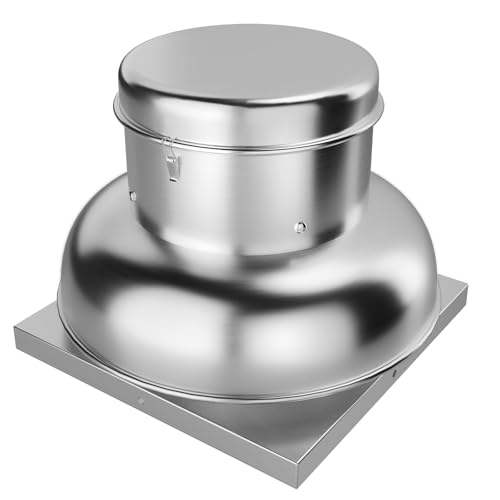
Best for fast, high-volume venting in larger kitchens and workshops. This upblast roof exhaust delivers up to 1400 CFM with a high-speed direct-drive configuration, designed to remove heat, fumes, and smoke efficiently from commercial spaces. Its weather-resistant stainless or aluminum construction provides longevity in outdoor installations. A lower-noise profile compared to some high-CFM units helps maintain a more comfortable environment for staff. Caution: ensure roof mounting is correctly flashed to prevent leaks in wet conditions.
Who it’s best for: busy restaurants, large kitchens, and food trucks that require strong exhaust without aggressive noise. Choose this if you need durable outdoor-rated performance with straightforward maintenance.
iLIVING 12″ Wall Mounted Shutter Exhaust (960 CFM)

Best for compact kitchen spaces or smaller facilities needing controlled ventilation. This unit delivers 960 CFM with automatic shutters and a Thermospeed controller for variable speed and temperature regulation. The build uses galvanized steel and aluminum components for durability and corrosion resistance. It’s UL certified and designed to minimize noise (less than 65 dB), making it a practical choice where quiet operation matters. Caution: 12-inch models may require closer duct routing to achieve optimal performance in larger rooms.
Who it’s best for: small to mid-sized kitchens, garages, or workshops where precise, quiet ventilation is a priority. Better for applications needing shutter protection and thermal control in a compact footprint.
Broan-Nutone L400 High Capacity Ventilator Fan

Best for reaching a balance between space, airflow, and duct practicality. The L400 provides 434 CFM with two centrifugal blower wheels and a 2.3 Sones acoustic profile, powered by 120V. It includes a sturdy metal duct connector suitable for horizontal, vertical, or inline configurations with an adapter. This makes it a versatile option for kitchens requiring reliable exhaust without excessive space for large hood systems. Caution: not the highest CFM in tight spaces; improve with strategic duct routing or higher-CFM units if needed.
Who it’s best for: compact kitchens or food prep areas where space is limited but strong ventilation is still needed. Choose this if you want flexible duct orientation and easy installation.
Voltset 8-Inch Kitchen Exhaust Fan (535 CFM)

Best for economical but effective ventilation in smaller kitchens, basements, or garages. This 8-inch fan delivers 535 CFM with a copper motor and all-metal, corrosion-resistant construction. It’s designed for wall mounting and includes mounting hardware for quick setup. It’s suitable for spaces where budget-conscious yet durable ventilation is desired. Caution: 8-inch ductwork may limit maximum CFM in very large areas; consider larger units for open-plan kitchens.
Who it’s best for: smaller commercial kitchens, home basements, or workshop spaces that require reliable exhaust without overkill in airflow. Choose this if you need a cost-effective wall-mount option with solid durability.
Buying Guide: Key Considerations For Industrial Kitchen Exhaust Fans
- Ventilation needs: Match CFM to space size and heat load. Kitchens typically benefit from higher CFM to rapidly remove heat and smoke.
- Installation site: Roof-mounted versus wall-mounted units affect duct routing, weather exposure, and noise. Outdoor-rated housings are essential for rooftop placement.
- Motor type and efficiency: Direct-drive motors reduce maintenance but may be louder; look for efficiency ratings and thermal protection features.
- Durability: Corrosion-resistant materials (galvanized steel, aluminum) extend life in kitchens with humidity, steam, and grease exposure.
- Noise considerations: Noise levels below 70 dB are often preferable in active workspaces; variable-speed controls help manage noise during low-activity periods.
- Control options: Thermostats or thermostatic controls and variable-speed controllers improve comfort and energy efficiency by matching ventilation to temperature and occupancy.
- Duct compatibility: Check duct size, length, and angles. Poor duct design can diminish airflow and increase noise or energy use.
- Maintenance access: Choose units with accessible housings and replaceable parts to reduce downtime and service costs.
Frequently Asked Questions
- What size exhaust fan do I need for a kitchen?
CFM requirements depend on room size, heat load, and cooking equipment. A professional assessment or a widely used rule of thumb (roughly 1 CFM per square foot of space for moderate use, higher for heavy cooking) helps guide selection.
- Are roof-mounted fans better than wall-mounted for kitchens?
Roof-mounted fans are common for larger kitchens and outdoor installations, offering weather protection and duct routing flexibility. Wall-mounted units are easier to install in smaller spaces or retrofit scenarios.
- Should I choose a high-CFM or variable-speed fan?
High-CFM models quickly remove heat and smoke, useful for peak cooking periods. Variable-speed fans offer energy efficiency and quieter operation during off-peak times.
- What maintenance is required for industrial exhaust fans?
Regular inspection of housing, motor, and ductwork; clean grease buildup; verify shutter operation (for shutter fans); and replace worn belts or bearings as needed.
- Is weatherproofing important for kitchen exhaust fans?
Weatherproof or corrosion-resistant housings are important for outdoor installations or climate-exposed spaces to prevent rust and ensure longevity.
- Can I install an exhaust fan myself?
DIY installation is possible for some wall-mounted units with basic electrical and mounting skills. Roof-mounted or outdoor installations often require professional installation to ensure proper sealing and safety.