Answering the question “which epoxy patch kit is best for industrial floors?” this guide highlights top concrete patch products designed for heavy use, chemical exposure, and long-lasting repairs. Each option is described for clarity on who benefits most, along with practical limitations to consider. This selection targets buyers such as facility managers, warehouse supervisors, garage operators, and maintenance teams seeking robust, fast-curing fixes that minimize downtime.
Summary table of selected products
| Product | Best For | Why It Was Chosen |
|---|---|---|
| ArmorPoxy Epoxy Mortar Patch Kit | High-traffic industrial floors | Industrial-grade 100% solids epoxy mortar for heavy-duty repairs and durability |
| Rust-Oleum Concrete Patch & Repair (4 pack) | Fast curing, paintable within 8 hours, strong surface | |
| BLACK STAR Perfect Patch | 100% epoxy strength with concrete performance, quick cure | |
| TuffPatch CR 608 | Ultra chemical resistance and quick return to service | |
| QuestMark 2125 Quick Setting (2 gal, light gray) | Fast setting with strong bond for heavy traffic |
ArmorPoxy Epoxy Mortar Patch Kit

Best for: Industrial facilities with heavy foot and equipment traffic. This kit uses 100% solids epoxy mortar for durable repairs in garages, warehouses, and other demanding environments. It creates a smooth surface ready for coatings after curing, making it ideal for projects that’ll receive coatings or sealants shortly after repair.
Why chosen: Its industrial-grade composition provides exceptional compressive strength and long-term durability. The kit is designed to fill cracks, holes, and spalls comprehensively, improving adhesion before top-coat applications. It withstands impacts and heavy use typical of commercial floors.
Limitations: Like most solvent-free epoxies, surface preparation quality matters. Mixing and curing conditions influence performance; ensure clean, dry surfaces for best results. Not ideal for shallow, cosmetic repairs where quick, non-structural fixes are acceptable.
Rust-Oleum 301012-4PK Concrete Patch & Repair

Best for: Concrete cracks and holes in indoor or outdoor settings where a paintable finish is preferred. The four-pack option makes it cost-effective for large repair projects or multi-site needs.
Why chosen: The patch cures fast and forms a hard surface stronger than concrete, enabling faster project turnover. It is paintable or coating-ready within 8 hours, which is advantageous when downtime must be minimized.
Limitations: It is a patch-and-fill solution, best used for structural improvements rather than all-encompassing resurfacing. For extensive spalling or widespread damage, additional repair methods may be required.
BLACK STAR Perfect Patch
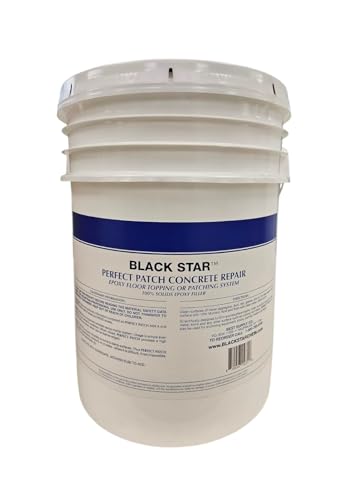
Best for: High-load surfaces needing strong epoxy performance, such as walkways, ramps, or areas subjected to forklift traffic. Quick cure supports faster reopening of repaired spaces.
Why chosen: Features a 100% epoxy formula with strong restoration of concrete strength, capable of supporting heavy traffic. Quick setting time reduces downtime and helps maintain productive operations.
Limitations: The data highlights high strength; ensure proper ventilation and surface prep to realize full performance. It’s a robust option, but not a one-size-fits-all for non-structural cosmetic repairs.
TuffPatch CR 608 Chemical Resistant Kit

Best for: Industrial environments with chemical exposure, including battery rooms and containment areas. The formula resists acids, alkalis, and aggressive solvents, even under continuous liquid contact.
Why chosen: It cures rapidly (4-5 hours at 75°F), enabling quick return to service. It bonds to dry or moist concrete, which broadens its applicability on imperfect or moisture-prone substrates.
Limitations: The high chemical resistance intensity may require precise mixing and proper setup to avoid over- or under-curing. Ensure environmental controls meet the product’s cure conditions for best results.
QuestMark 2125 Quick Setting Epoxy

Best for: Rapid repairs on industrial floors where downtime must be minimized. It’s suitable for cracks, holes, and pits across warehouses and manufacturing spaces.
Why chosen: It offers a quick-setting formula with a strong bond suitable for heavy traffic environments. The patch remains durable under demanding industrial conditions and supports timely re-occupation of repair zones.
Limitations: Higher-speed curing requires careful scheduling to prevent premature movement during application. Follow recommended temperatures and mixing ratios for best outcomes.
PC Products PC-Masonry Epoxy Adhesive Paste
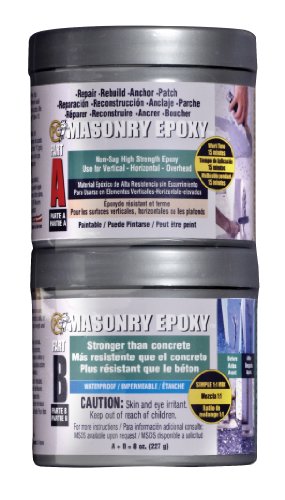
Best for: Masonry repairs where moisture is a concern, and both indoor and outdoor applications are needed. It’s well-suited for repairing cracks on deteriorating masonry surfaces beyond simple concrete patches.
Why chosen: This two-part epoxy paste resists moisture and bonds to both wet and dry surfaces. It works across a broad temperature range, expanding its utility for varying job-site conditions.
Limitations: It’s primarily a paste designed for cracks and missing material; for large flat patches, a mortar-style repair or additional leveling may be necessary.
Buying Guide: Key Considerations for Industrial Epoxy Concrete Patches
What type of epoxy patch should I choose?
Two-part epoxy patches offer strong, durable repairs for high-traffic areas. Mortar-based blends excel on larger voids and spalls, while quick-setting formulations minimize downtime on busy floors.
How important is chemical resistance?
Environment dictates choice. Floors exposed to acids, alkalis, solvents, or constant moisture benefit from chem-resistant patches (such as novolac-based products) to prevent early failure.
What about cure time and return to service?
Short cure times reduce downtime but require precise mixing and environmental control. If downtime is severe, select a fast-setting option with a clear return-to-service window and compatible top-coats.
Should I consider moisture on the substrate?
Some formulations bond to damp concrete, while others require dry surfaces. If moisture is present, select products specifically rated to bond on moist substrates to avoid delamination.
Coating compatibility and top-coat readiness
Many industrial floors receive coatings or sealants after patching. Choose patches that create a smooth surface and follow guidelines for priming and top-coating compatibility to maximize longevity.
Practical application tips
- Prepare the surface thoroughly: clean, repair, and roughen as needed for optimal adhesion.
- Follow exact mixing ratios and pot-life times to ensure proper curing.
- Control ambient temperature and humidity according to product instructions.
- Use appropriate personal protective equipment (PPE) and ventilation when working with epoxy systems.
Frequently asked questions
- What is the fastest epoxy patch for industrial floors? Answer: Quick-setting epoxy patches typically cure within a few hours, allowing earlier traffic, depending on the product and conditions.
- Can I apply epoxy patches over damp concrete? Answer: Some products bond to moist surfaces, but always verify the manufacturer’s guidance for your specific patch kit.
- Are epoxy patches suitable for forklift routes? Answer: Yes, many epoxy patches are designed to withstand heavy traffic and loads, but verify weight ratings and surface preparation requirements.
- Do epoxy patches require primers? Answer: Some patches bond directly to concrete, while others benefit from primers; follow the product’s instructions for best results.
- How should I choose between a mortar patch and a liquid epoxy patch? Answer: Mortar patches are ideal for larger voids and structural repairs; liquid epoxy patches are often faster for cracks and pinholes with less material volume.
- Is venting or ventilation important when using epoxy repair kits? Answer: Yes, many epoxy products emit vapors; ensure proper ventilation and follow safety instructions.