Choosing the right dust collection system is essential for a safer, cleaner woodworking shop. This guide highlights five reliable options that balance performance, portability, and ease of use. Each product is selected for its fit in medium to larger workshops, with attention to filtration efficiency, airflow, and setup versatility. Read on to compare core specs, features, and practical considerations for your space.
| Product | Airflow (CFM) | Filtration | Portability / Setup |
|---|---|---|---|
| WEN DC1300 | 1300 | 5-micron bag | Mobile base, dual inlets |
| POWERTEC DC1081 | 800 | 1 micron bag | Mobile base, compact |
| DeWALT DWXAF101 | — | 2-stage filtration (pre-filter + HEPA) | Ceiling hanging, remote control |
| DEWALT DXVCS003 | 99.5% cyclone efficiency | Heavy-duty cyclone with filter protection | Portable / mountable to vacuum |
| Dust Right 650 CFM | 650 | Premium filtration options | Wall-mount, space-saving |
WEN DC1300 1,300 CFM Dust Collector

The WEN DC1300 is a mid-to-large-capacity dust collector designed for woodworking shops. It delivers up to 1,300 CFM with a 50-gallon collection bag, supporting multiple tools concurrently via dual 4-inch inlets. The vertical 50-gallon bag helps with straightforward disposal and maintenance. This unit is relatively portable for its class, with a mobile base that supports simple relocation around the shop. Its 5-micron bag filtration provides a practical balance between performance and cost, making it a common choice for hobbyist to semi-professional shops seeking improved air quality and dust capture on power tools like planers, jointers, and table saws.
Key considerations:
- Airflow capacity is adequate for moderate workshops; consider tool layout to optimize capture.
- Dual inlets enable handling more than one tool simultaneously, reducing dust carryover between machines.
- Heavy bag design supports higher dust volumes but requires periodic bag replacement and emptying.
WEN Woodworking Dust Collector DC3401
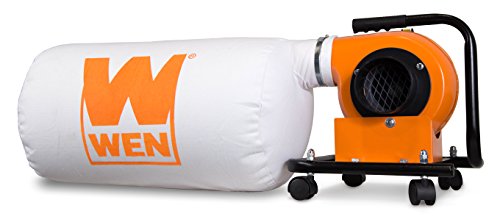
The WEN DC3401 offers a compact yet capable option with a 660 CFM performance in a 12-gallon bag design, aided by a mobile base for easy repositioning. This model is well-suited to smaller shops that still demand reliable dust control across multiple compact tools. The 6-inch impeller helps move air efficiently, while the onboard portability keeps clutter to a minimum. For hobbyist woodworkers or small shops, it presents a balanced solution between footprint, noise, and performance, especially when paired with a few essential dust-generating machines.
Highlights include:
- Compact footprint with mobile base for flexible placement.
- Moderate CFM suitable for small to medium spaces.
- Simple setup, compatible with standard 4-inch dust ports.
DeWALT DWXAF101 Air Filtration System
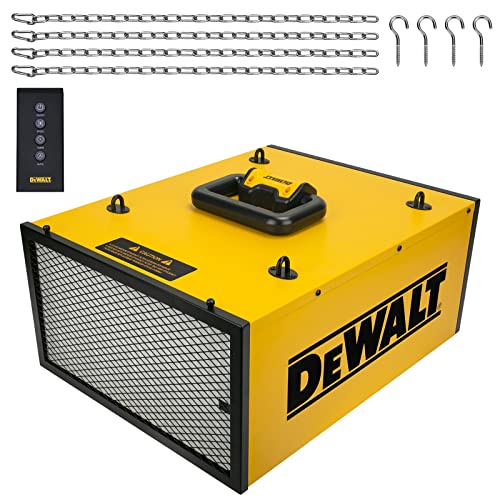
This DeWALT model emphasizes air quality through a 2-stage filtration approach, combining a pre-filter with an H11 HEPA filtration stage. It’s designed to hang from ceilings or mount easily in a shop, and it includes a remote for convenience. With customizable timer settings (1H, 2H, 4H, 8H) and multiple working modes (HI, MID, LO, AUTO), it supports continuous air cleaning in active shops and conserves energy when airflow is less critical. It’s particularly effective in workshops where dust fine particulates are a priority for indoor air quality beyond general dust collection.
Key notes:
- High-efficiency filtration captures a wide range of fine dust particles.
- Remote control and timer provide flexible, hands-free operation.
- Hangs or mounts to optimize shop air flow without occupying valuable floor space.
Dewalt Dust Separator DXVCS003

The Dewalt Dust Separator employs cyclone technology to maximize separation efficiency, capturing up to 99.5% of debris before it reaches the main collector. This reduces suction loss and filter wear, potentially extending the life of your shop vacuum or dust collector. It’s a versatile add-on compatible with many shop vacs and dust collection hoses, with multiple port options (1-7/8″ and 2-1/2″). Its rugged design makes it suitable for frequent use in woodworking environments where fine sawdust and larger chips are generated, providing an extra layer of protection and efficiency in the dust management system.
Practical considerations:
- Cyclone design minimizes clogging and maintains suction efficiency over time.
- Compatible with a wide range of vacuums and Dust Collection setups.
- Portable and easy to attach to existing systems for enhanced filtration.
Mullet High-Speed Cyclone Dust Collector
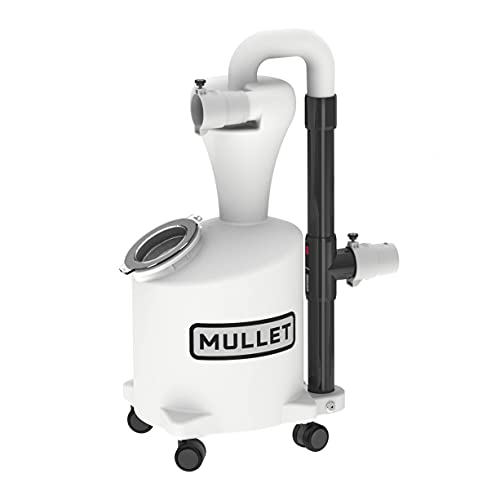
The Mullet cyclone offers a high-speed paraboloid design intended to maximize debris separation before air reaches the main vacuum or dust extractor. The result is reduced clogging and more sustained suction, which helps maintain performance across a broader range of debris types. With a rigid, cut-to-fit PVC connection, it simplifies on-site installation and creates a stable, airtight link to your shop vacuum system. It’s especially effective as a pre-separator for hobbyist and garage workshops that need to keep vacuums and extractors running efficiently without frequent maintenance.
Reasons to consider:
- Pre-separation minimizes filter loading and maintains suction.
- One-piece design reduces leak-prone joints and assembly time.
- Flexible connections improve compatibility with existing tools and hoses.
Abestorm Tabletop Dust Collector

The Abestorm tabletop unit targets smaller spaces or benchtop operation, offering portable filtration with timer functionality. It’s an entry-level option that can improve air quality in garages, small workshops, or craft rooms where space is at a premium. The timer function enables controlled operation to coincide with active woodworking tasks, and the safety features, including a circuit breaker, help protect both the unit and the user during extended use. It is best suited for light dust generation or supplementary filtration rather than primary collection of large volumes.
Key takeaways:
- Highly portable and compact for limited spaces.
- Timer and safety features support safe, scheduled use.
- Best as a supplementary filtration solution alongside a larger system.
Buying Guide: Key Purchase Considerations
When selecting a dust collection system for woodworking, consider space, tool layout, noise tolerance, and maintenance needs. Airflow (CFM) should align with the largest tools and the number of tools used simultaneously. Filtration quality matters for room air quality, particularly with fine dust. Cyclone separators extend the life of main collectors by reducing debris load. Mobility features—mobile bases, casters, or wall-mount options—determine how easily you can reconfigure your shop. Finally, availability of replacement bags and filters, along with warranty and service support, should influence your long-term cost of ownership.
To optimize performance, pair a high-CFM dust collector with appropriate ducting and correctly sized ports (typically 4-inch inlets for woodworking machines). For spaces with limited footprint, consider wall-mounted or ceiling-hung units in combination with a separate cyclone or filtration accessory for enhanced air quality. Assess your typical workflow: the number of active tools, average work duration, and dust generation level to choose a system that maintains suction without excessive power draw or noise.