Whether you are outfitting a painting booth, plasma cutter, or general workshop air system, a reliable industrial desiccant air dryer is essential for removing moisture and contaminants. This guide highlights five top options, explaining who they are best for, plus practical tradeoffs. Ideal buyers include professional shops needing high-purity air, painters and metalworkers requiring consistent dryness, and facilities seeking auto-drain, corrosion-resistant designs. The table below compares core details to help quick decisions.
| Product | Best For | Key Benefit | Limitations |
|---|---|---|---|
| Milton 1170-2 1/2″ Compact FRL Desiccant Dryer | Small-to-medium shops needing compact, easy setup | Simple, compact FRL with clear airflow control | 1/2″ NPT size may limit larger lines |
| NANPU 3/4″ NPT Air Compressor Filter Dryer Regulator | Industrial users requiring high moisture removal | Three-stage filtration with 0.01 micron coalescing filter | Looks heavier; potential maintenance for bead changes |
| EDGE INDUSTRIAL 3 STAGE COALESCING DESICCANT DRYER SYSTEM | Heavy-duty setups with auto drain | All-in-one three-stage filtration plus desiccant dryer | Industrial price point and size |
| NANPU Zinc Alloy Desiccant Dryer (3/8″ NPT) | Compact lines where space is tight | Zinc alloy body for durability; clear bead-change indicator | Smaller port size (3/8″ NPT) may limit flow |
| CAtArt 3/4″ NPT Industrial Air Dryer System | Industrial environments needing multi-stage purification | Three-stage filtration with visible indicators and easy maintenance | Labeling and setup complexity |
Milton 1170-2 1/2″ Compact FRL Desiccant Dryer
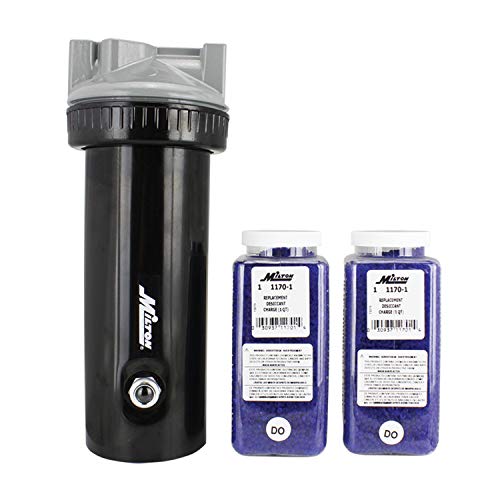
Best for small shops needing a compact, ready-to-use dryer. This Milton unit uses 1/2″ NPT connections and operates within typical shop pressures up to 250 psi. It’s well-suited for line upgrades where space is at a premium. A practical tip is to dry desiccant beads in an oven at 275°F for 3 hours to refresh the medium and maintain drying efficiency. This option is ideal for users prioritizing straightforward installation and compact form factor.
NANPU 3/4″ NPT Air Compressor Filter Dryer Regulator

Best for mid-size tools and paint applications needing robust moisture control. This NANPU unit combines a 5-micron water trap filter with a 0.01-micron coalescing filter, providing strong moisture and oil removal. The metal bowls and sight glasses enhance safety monitoring. Choose this if you operate around the 30–175 psi range and want clear, stage-by-stage filtration. Caution: replace filter elements when the red indicator pops up to avoid efficiency loss.
EDGE INDUSTRIAL 3 STAGE, HEAVY DUTY DESICCANT DRYER SYSTEM
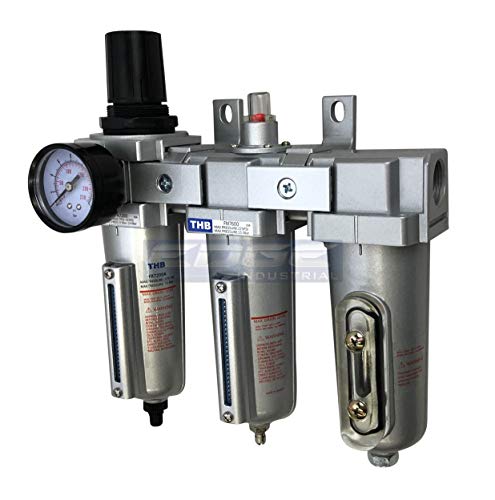
Best for heavy-duty installations that need a comprehensive filtration sequence. This unit integrates a water trap filter, pressure regulator, a 0.01-micron coalescing filter, and a desiccant dryer in a single system. The internal float drain supports auto-drain operation. It’s suitable for painters and plasma cutting setups. Note the system is sized for industrial use; ensure your space accommodates the unit’s footprint.
NANPU Zinc Alloy Desiccant Dryer (3/8″ NPT)

Best for tight spaces or compact line configurations where 3/8″ porting is sufficient. The zinc alloy body offers enhanced durability and compression resistance. It provides thorough drying before pneumatic tools, with bead color changes indicating when replacement is due. Choose this if you prioritize a compact footprint without sacrificing bead-drying capability. Caution: 3/8″ ports may limit very high flow applications.
CAtArt 3/4″ NPT Industrial Air Dryer System

Best for multi-stage purification in demanding industrial settings. This three-stage system includes a 5-micron pre-filter, a 0.01-micron ultrafine filter, and a desiccant dryer. It supports stable 240 psi operation and uses intuitive maintenance cues, such as a green indicator for the second-stage filter and color-changing desiccant beads. Choose this if you need a robust, all-in-one solution for heavy tools and continuous use. Caution: setup may require careful threading and sealant application to prevent leaks.
Buying Guide: Key Considerations for Industrial Desiccant Air Dryers
- Port size and compatibility: Match NPT sizes to your existing piping (common sizes include 1/2″, 3/4″, and 3/8″).
- Filtration stages: A multi-stage system improves drying efficiency by removing moisture, oil, and particulates in sequence.
- Moisture indicators and maintenance: Look for clear sight glasses, red/green indicators, and bead color changes to simplify upkeep.
- Auto drain vs manual drain: Auto-drain models reduce maintenance, but may require periodic testing to ensure reliability.
- Pressure range: Confirm the unit supports your operating pressure (often up to 175–240 psi for industrial setups).
- Durability and materials: Zinc or metal bowls reduce risk of corrosion and provide safer operation in busy shops.
- Footprint and mounting: Consider wall-mount vs freestanding and space constraints in your work area.
Frequently Asked Questions
- What is the purpose of a desiccant dryer in an air line? It removes moisture and oil to deliver dry, clean air for pneumatic tools and processes.
- Do all desiccant dryers require electricity? No, some units operate with inline filtration and an auto-drain mechanism; others may use an integral regulator that requires power only for sensors.
- What does the bead color indicate? Beads usually turn from blue to pink to signal the need for replacement, indicating saturated drying capacity.
- Can I use these with painting and plasma cutting? Yes, these are designed for high moisture environments common in painting booths and plasma work, but check localization and recommended pressure ranges.
- Is a three-stage system better than a single-stage unit? In most cases, yes, three stages provide better moisture and particle removal, improving overall air quality.
- How often should I replace filters? Follow the manufacturer’s indicator guidance; typical maintenance coincides with color-changing beads and red indicator alerts.