Choosing the right industrial fabric cutting machine can speed up production, improve precision, and reduce waste. The following five models are designed for multi-layer fabrics, leather, and textiles, balancing power, speed, and durability for commercial workloads. Each option includes a robust blade, automatic sharpening, and the ability to handle thick or layered materials. This guide highlights strengths, operating differences, and what to consider when choosing.
| Product | Brand | Key Feature |
|---|---|---|
| VEVOR Fabric Cutter, 750W | VEVOR | 750W motor, 9.8″ blade, automatic knife sharpening |
| CGOLDENWALL Electric Rotary Fabric Cutter, 2400RPM | CGOLDENWALL | 70mm blade, 25mm max cutting thickness, straight & curved cuts |
| BEAMNOVA Fabric Cutter Electric Cloth Cutter | BEAMNOVA | 250W motor, 4″ blade, automatic sharpening, multi-layer capable |
| CGOLDENWALL Large Electric Rotary Fabric Cutter | CGOLDENWALL | 100mm blade, 1.06″ thickness capacity, industrial-grade |
| VEVOR Fabric Cutter, 5-Speed Cordless Rotary | VEVOR | Battery-powered, 5 speeds, 3.9″ blade, cordless flexibility |
The following selections emphasize versatility (straight and curved cuts), reliability for multiple layers, and maintenance features like automatic sharpening. Use the Buying Guide to align a model with your production volume, material mix, and safety requirements.
VEVOR Fabric Cutter 750W: Heavy-Duty Multi-Layer Cutting

The VEVOR 750W fabric cutter is built around a sturdy motor designed for industrial workloads. With a cutting speed of 2950 rpm, it maintains strong cutting force across multiple fabric layers, reducing jams and extending batch processing capability. The 9.8″ (250 mm) alloy steel blade combines wear resistance with corrosion resistance for long service life. It supports both straight and curved cuts, making it suitable for garments, leather, and heavy textiles. A built-in automatic knife-sharpening system keeps the blade consistently sharp during operation, simplifying maintenance and minimizing downtime.
Operational considerations include the power draw from a 750W motor, the maximum material thickness it can cut (8.3″ / 210 mm equivalent for flexible fabrics), and the potential need for secure mounting in a workshop setup. Users who process large lots of fabrics or employ batch cutting will appreciate the uninterrupted cutting cadence provided by the automatic sharpening feature and the robust blade construction. Safety features and noise levels should be reviewed in the user manual for industrial environments.
CGOLDENWALL Rotary Fabric Cutter, 2400 RPM

This CGOLDENWALL model uses a 70 mm octagonal blade with a high 2400 RPM speed, enabling quick and clean cuts through multi-layer fabrics up to 25 mm thick. It’s designed for industrial use, supporting straight and curved cuts with guidance recommended through chalk lines for precision. The kit includes a built-in sharpening stone, and it emphasizes easy maintenance with an automatic sharpening feature. Note that it should not be used on cardboard or very light, fluffy fabrics that could jam the blade. This cutter suits factories that require fast throughput on composite textiles, synthetic fibers, and leather applications.
Key considerations include blade geometry, max cutting thickness, and the balance between speed and control. The device is best for operations that prioritize rapid straight cuts across multiple layers, with occasional curves. A sharp blade prior to initial use, as advised, ensures optimal results. Operator safety and proper guarding are essential for an industrial setting.
BEAMNOVA Fabric Cutter Electric Cloth Cutter

The BEAMNOVA cutter offers a compact yet industrious design featuring a 250W motor and a 4-inch blade for precise cutting across layered fabrics. Its internal sharpening mechanism helps maintain blade efficacy, reducing the need for frequent manual maintenance. With a maximum cutting height of 1.1 inches, it provides efficient multi-layer cutting without excessive effort. An additional replacement blade is included for convenience, allowing rapid blade swaps to minimize downtime during production runs.
Consider this model for smaller to medium batch work or facilities prioritizing ease of use and quick blade maintenance. The device is well-suited for textiles, leather composites, and textiles used in upholstery. As with other electric fabric cutters, it benefits from a clean workspace and consistent feeding to maintain straight lines and uniform cuts. Safety features, ease of blade replacement, and ergonomic handling are notable advantages for repetitive tasks.
CGOLDENWALL Large Electric Rotary Fabric Cutter

This CGOLDENWALL model is built for high-volume industrial use, featuring a 100 mm blade and a high-speed 2400 RPM motor. It can cut through multi-layer fabrics up to 40 mm thick, which makes it suitable for leather, heavy textiles, and carpet applications. The unit is designed to be compatible with professional settings that require reliable performance and steady throughput. It also emphasizes easy maintenance with a built-in sharpening stone and automatic sharpening capabilities. It’s recommended for shops processing thick or multiple layers of textiles and materials that demand aggressive cutting power.
Key considerations include the 1.06-inch maximum cutting thickness, blade replacement options, and the importance of keeping the blade sharp for consistent results. The device supports straight and curved cutting; however, operators should plan layouts and mark cutting lines to achieve precise curves on dense materials. Regular cleaning to prevent fabric debris buildup around the blade is advised to prevent jams during extended runs.
VEVOR 5-Speed Cordless Rotary Fabric Cutter

This cordless option from VEVOR brings flexibility to fabric cutting with a built-in 2500 mAh battery and five adjustable speeds (600/800/1000/1200/1400 RPM). The 3.9″ octagonal blade provides precise control for multi-layer fabrics, leather, and textiles, with a lower blade tip and spring-loading to prevent fabric snagging. The automatic sharpening and lubrication system help maintain blade performance without frequent manual maintenance. A replacement blade is included to minimize downtime in production environments where cutting efficiency is critical.
Use considerations for cordless cutting include ensuring a reliable battery supply for the length of your shift, charging cycles, and the need for surface protection to avoid accidental blade contact. The cordless format is ideal for small-batch runs, on-site work, or processes requiring mobility around a workshop. Consider combining with a guided ruler or chalk for straight lines and confirm compatibility with fabric types in your typical mix.
VLOXO Rotary Fabric Cutter with Safety Features
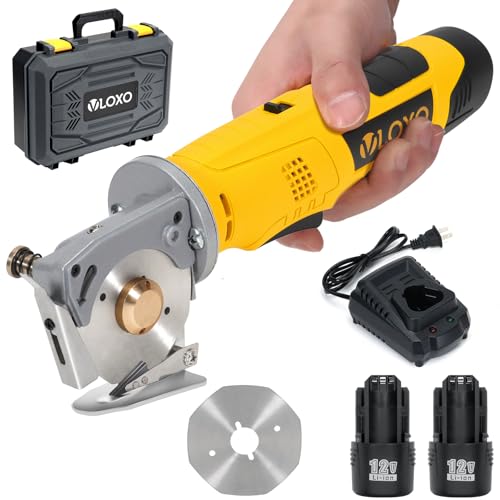
The VLOXO cordless rotary cutter emphasizes safety with a dedicated safety lock and a replaceable blade. It operates at high speed for quick multi-layer cutting with a focus on flexible handling and portable use. The blade is made from alloy steel for durability and resilience in demanding environments. Replacement blades are provided, supporting extended production runs without frequent interruptions for maintenance. The safety lock helps prevent accidental activation during blade changes or while transporting the tool between stations.
Consider this model when mobility and safety are priorities. It is suitable for leather, heavy textiles, carpet, and other multi-layer fabrics where manual shears would be impractical. Battery life, blade availability, and protective guarding should be evaluated for continuous use in a workshop setting. Ergonomic design supports long cutting sessions, but operators should follow safety protocols to prevent injuries.
BAOSHISHAN Electric Fabric Rotary Cutter

The BAOSHISHAN model is designed to finish 100+ fabrics in a short time, with a heavy-duty motor and multiple speed gears. It is capable of cutting 10-20 layers of heavy fabrics within minutes, making it suitable for mass-cut operations. The device uses a 100 mm blade and supports 1.06-inch max thickness, enabling both straight and curved lines. The design emphasizes reliability, ergonomics, and durability for repetitive production tasks. It is well-suited for long-term use in garment factories, upholstery workshops, or other industrial environments where speed and consistency are essential.
Key considerations include throughput goals, blade replacement frequency, and the need for guidance marking to maintain straight lines across dense materials. The cut line quality and edge smoothness are important for downstream sewing or finishing steps. Regular maintenance and debris removal contribute to consistent performance in high-volume settings.
Buying Guide: Key Purchase Considerations
Purpose and material variety: Match the machine to your typical fabric mix, including multi-layer textiles, leather, and carpets. Higher cutting thickness capacity generally means stronger motors and larger blades, with a trade-off in weight and cost.
Power source and mobility: Decide between corded models for continuous runs and cordless units for flexibility or on-site work. Consider battery life, charging cycles, and the availability of spare blades or replacement parts.
Blade design and maintenance: Look for alloy steel or wear-resistant blades with automatic sharpening or easy manual sharpening. Built-in lubrication or maintenance features help extend blade life and reduce downtime.
Cutting accuracy and guidance: Straight and curved cutting capabilities are essential. Plans for marking lines (chalk, rulers) and possible use of cutting guides improve precision, especially on thick or multi-layer materials.
Safety and ergonomics: Prioritize models with safety locks, guard features, and comfortable handles or grips for long sessions. Training and proper PPE usage should be part of the purchasing plan in industrial environments.
Price-to-performance balance: Evaluate the total cost of ownership, including replacement blades, maintenance needs, and service support. A higher upfront cost may be justified by reduced downtime and longer blade life in high-volume operations.