Find the right inline desiccant air dryer to keep your pneumatic tools and spray systems free from moisture. This guide highlights five reliable options, explains who each product is best for, and shows practical buying criteria. Ideal buyers include workshop users, auto body pros, and DIY enthusiasts who need consistent, dry air for paint booths, tools, or automated systems. The table below compares key details to help you decide quickly.
| Product | Key Benefit | Best For |
|---|---|---|
| DEWALT 3/8″ NPT Inline Desiccant Dryer | Clear windows to view desiccant life; strong moisture removal | Light to mid-duty workshops needing visibility and reliability |
| LE LEMATEC Compressed Air Dryer, 3/8″ | Color-changing beads for easy maintenance; good flow | Medium airflow setups with regular service intervals |
| NANPU QC2 1/2″ NPT Desiccant Air Dryer | Regulator and gauge for precise control | Spray painting and tool combos requiring stable pressure |
| Titan Inline Desiccant Filters | Versatile inline moisture and particulate removal | Spray applications and comprehensive line protection |
| EDGE INDUSTRIAL In Line Desiccant Air Dryer (3/4″ NPT) | Heavy-duty metal bowl with sight glass | Workshop high-flow systems and demanding environments |
DEWALT 3/8″ NPT Inline Desiccant Dryer

The DEWALT inline desiccant dryer features a 3/8″ NPT female inlet for straightforward integration with standard pneumatic lines. It is designed to withstand up to 175 psi, making it suitable for a range of shop compressors and auxiliary lines. The unit supports temperatures up to 60°C (140°F), helping protect sensitive tools and finishes from moisture-related corrosion or waterlogging. This dryer is best for users who value a compact, visible desiccant life status window and reliable moisture removal without complex maintenance routines.
Who it’s best for: Small to mid-size workshops, auto shop techs, and DIY hobbyists needing a dependable inline dryer with clear desiccant monitoring. Limitations: 3/8″ size may require adapters for larger lines; ensure your system matches the inlet/outlet configuration.
LE LEMATEC Compressed Air Dryer, Inline Desiccant Moisture Filter 3/8″
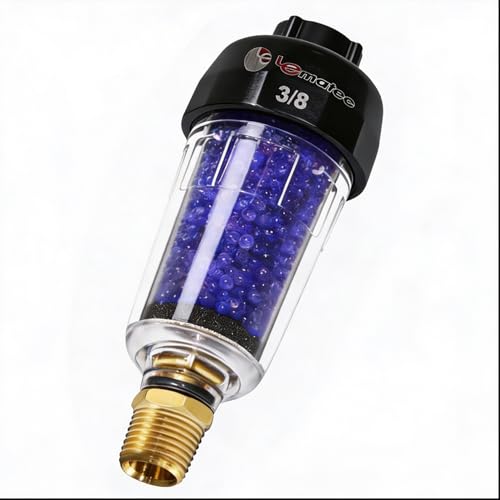
This LE LEMATEC inline desiccant moisture filter uses 3/8″ NPT threads to fit standard air lines, functioning as a high-capacity dryer that traps water vapor, oil aerosols, and dirt. It includes a color-changing bead indicator that shifts blue to pink when saturation occurs, enabling quick maintenance. With a working pressure range up to 150 psi and a flow rate around 22 CFM, it supports continuous workshop use and consistent airflow. Best for shops that value visible maintenance cues and straightforward service.
Who it’s best for: Artists, auto body painters, and fabricators who need a reliable, easy-to-maintain inline filter with clear maintenance signals. Limitations: Color change indicator helps with maintenance but does not replace regular inspections of beads or bowls.
NANPU Zinc Alloy Desiccant Dryer (3/8″ NPT)

NANPU’s zinc alloy desiccant dryer delivers a robust metal body with a 3/8″ NPT connection. It’s designed to thoroughly dry air before it reaches pneumatic tools, using desiccant beads that change color from blue to pink when replacement is needed. The unit is engineered for a max output pressure up to 145 psi, balancing durability with effective moisture removal. This option suits users who want a sturdy inline dryer with a clear bead color indicator and a compact footprint.
Who it’s best for: Workshop owners needing a solid metal-bodied dryer for moderate-pressure lines. Limitations: Bead replacement is required over time; ensure you have replacement beads on hand.
NANPU QC2 1/2″ NPT Desiccant Dryer with Regulator and Gauge

The NANPU QC2 model combines an inline desiccant dryer with a regulator and gauge, and uses a 1/2″ NPT connection. It’s designed for higher-flow applications and spray painting workflows where precise pressure control matters. The all-metal housing and integrated regulator help prevent moisture-related spray defects and tool corrosion by maintaining stable output. It’s a strong pick for users who need a compact unit with built-in pressure management.
Who it’s best for: Professionals in spray booths or automotive shops needing tighter pressure control and reliable dryness. Limitations: The larger 1/2″ size may require changing line fittings if your current setup is smaller.
Titan Inline Desiccant Filters

Titan’s inline desiccant filters are designed to remove dirt, dust, oil, water vapors, gases, and particulates from the air supply. They are commonly used for spray painting and other dry air applications, with a recommended maximum working pressure of 125 psi. The compact, all-in-one design targets humidity and contamination before it reaches tools, helping prevent corrosion and moisture-related defects in finishes.
Who it’s best for: Shops needing versatile inline moisture and contaminant removal across multiple tools. Limitations: May require additional filtration for extreme contaminant loads or very high-demand spray operations.
EDGE INDUSTRIAL Heavy Duty In Line Desiccant Air Dryer

The EDGE INDUSTRIAL model is a heavy-duty inline desiccant air dryer with a metal bowl and a visible sight glass. It’s designed for higher-flow, more demanding use and is built to work with larger line systems, as indicated by its 3/4″ NPT connection. The sight glass enables quick moisture monitoring, and the metal bowl adds durability for harsh workshop environments. This option is best for users operating high-volume pneumatic circuits that require robust dry air delivery.
Who it’s best for: Professional shops and factories with heavy usage and larger-diameter lines. Limitations: The 3/4″ connection may be overkill for small or hobby setups; ensure line compatibility.
Buying Guide: Key Considerations for Inline Desiccant Air Dryers
- Connection size and compatibility: Match the dryer’s NPT size (3/8″, 1/2″, 3/4″) to your existing lines to avoid adapters or leaks.
- Moisture removal capacity: Higher flow and better adsorption capacity suit spray painting and tool-heavy setups; consider CFM ratings and psi ranges.
- Maintenance indicators: Bead color indicators or clear sight windows help schedule replacement and avoid moisture carryover.
- Durability: Metal bowls and robust housings resist chemical exposure, oil, and high-pressure operation in busy shops.
- Integrated features: Regulators and gauges provide precise output control, reducing tool variability and paint defects.
- Space and installation: Consider inline length, mounting options, and accessibility for drains and maintenance.
- Best-use scenarios: For painting, prioritize moisture removal and stable pressure; for general tool use, reliability and ease of maintenance may dominate.
Frequently Asked Questions
- What is an inline desiccant air dryer used for?
It removes moisture from compressed air to protect tools, coatings, and equipment, preventing rust, corrosion, and paint defects. - Which size is most common for hobby shops?
The 3/8″ and 1/2″ NPT sizes are common for small-to-mid-size shops, offering good compatibility with standard air lines. - Do these dryers require frequent maintenance?
Bead color change indicators help, but regular bead replacement and drain maintenance are essential for consistent results. - Can I use a dryer with a regulator and gauge?
Yes. Units with built-in regulators and gauges allow precise pressure control, improving tool performance and finish quality. - Is a metal bowl necessary?
Metal bowls are more durable in demanding environments and resist damage from oil and debris, making them preferable in busy workshops. - Are inline desiccant dryers suitable for spray booths?
Yes, when the unit provides adequate CFM and stable pressure to support spray equipment without moisture-related defects.