Looking for reliable plastic hydraulic reservoir tanks to support your power unit system? This guide highlights five top options that are commonly used with dump trucks, trailers, RVs, boats, and other hydraulic-powered equipment. Each selection emphasizes compatibility, durability, and practical fit for specific use cases, helping buyers choose the right tank for their setup.
Summary table of selected products:
| Product | Capacity | Material | |
|---|---|---|---|
| 6 Quart Poly Power Unit Reservoir (LOSTAR) | 6 quarts | Polyethylene | General hydraulic systems on heavy vehicles and boats |
| LEAPTREND 4 Quart Poly Power Unit Reservoir | 4 quarts | Polyethylene | Compact hydraulic setups in tractors and trailers |
| LEAPTREND 14L Black Hydraulic Reservoir | 14 liters (~3.7 gal) | Reinforced plastic | Higher-demand lift applications on lifts and machines |
| Primary Mover 4 Quart Poly Hydraulic Reservoir | 4 quarts | Polyethylene | Flexible replacement with plug and breather caps |
| LOSTAR 8 Quart Poly Power Unit Reservoir | 8 quarts | Polyethylene | Extended runtime and higher oil volume for larger systems |
6 Quart Poly Power Unit Reservoir for Hydraulic Systems

The LOSTAR 6 quart reservoir is shaped for precise mounting with a 7″ L, 8″ W, and 13″ H footprint and a 4-11/16″ round opening plus a 4″ square bolt pattern. Best for medium-duty hydraulic systems in trucks, boats, and RVs where space is moderate but volume needs are steady. This tank helps store and filter hydraulic oil, supporting pump performance and minimizing contaminant ingress. A potential limitation is the smaller capacity for high-frequency lift operations without regular top-offs.
Who this is for: Fleet operators and DIY enthusiasts who need a compact, reliable tank for standard hydraulic power units.
LEAPTREND 4 Quart Poly Power Unit Fluid Reservoir

The LEAPTREND 4 Quart reservoir emphasizes a precise 4-11/16″ round opening and a 4″ square bolt pattern, ensuring a snug fit across many hydraulic systems in tractors, trailers, RVs, and boats. It stores hydraulic oil, balances system pressure, and aids purification to protect overall operation. Made from high-quality plastic for temperature and chemical stability, it’s a solid choice for limited-space configurations. A limitation is its smaller capacity, which may require more frequent replenishment in high-use environments.
Who this is for: Small- to mid-size hydraulic setups where space is at a premium and reliable performance is needed.
LEAPTREND Hydraulic Oil Reservoir Tank (14L Black)
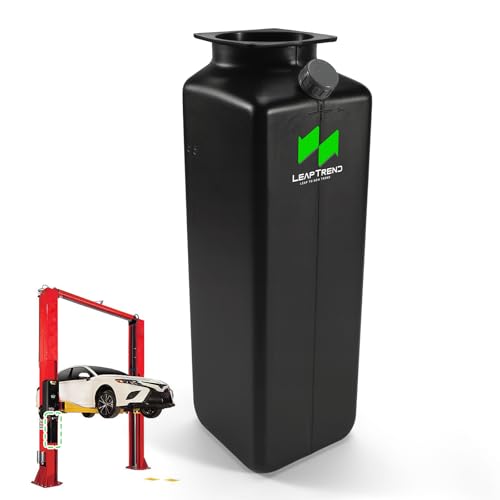
This 14-liter reservoir extends capacity compared to typical 10L options, reducing refill frequency for high usage lifts and hydraulic work. The reinforced black plastic design resists UV exposure and temperature shifts, aiming for longer service life. It’s well-suited for larger lift systems or frequent-duty cycles, though its larger size may not fit tighter installations without measurement checks.
Who this is for: Industrial garages and service yards that require longer operation times between refills for hydraulic power units.
4 Quart Poly Hydraulic Replacement Reservoir – Primary Mover

The Primary Mover 4-quart reservoir emphasizes precise dimensions: 4-11/16″ round opening and 4″ square bolt pattern, ensuring compatibility with various hydraulic systems. It includes plug and breather caps for easy setup and immediate operation. It’s a versatile replacement option, though as a smaller capacity tank, it’s best for moderate usage scenarios or compact machinery.
Who this is for: Mechanic bays and fleet-maintenance shops seeking a flexible, plug-ready replacement tank.
Power Unit Reservoir Oil Tank 10L (Rotary/Forward)

The 10L reservoir is designed as a replacement for Rotary Lift and similar systems, with a total length of 16 3/4″ and a neck opening of 4 7/8″ diameter. It’s compatible with multiple 2-post and pad lifts and is commonly used to replace older black-and-white tanks. The 10L capacity helps balance higher oil demands in medium-to-large lift setups. A limitation is compatibility with some older or non-standard configurations; verify fit before ordering.
Who this is for: Shops and garages maintaining Rotary, Forward, Direct, or Hanmecson lift systems needing a direct replacement.
Buying Guide
What capacity do you actually need?
Consider the lift or hydraulic power unit’s typical oil demand and refill intervals. Smaller tanks (4 qt) fit compact spaces or low-demand systems; larger tanks (8–14 L, roughly 2–4 gal) suit high-use environments or larger equipment where frequent top-offs would be burdensome.
What mounting and connection specs matter?
Check opening diameter, bolt pattern, and mounting clearance. The 4-11/16″ round opening and 4″ square bolt pattern are common, but some setups may require different dimensions. Ensure the location offers enough room for a full opening and any future maintenance access.
Material and chemical resistance
Polyethylene tanks provide good chemical compatibility and temperature tolerance for hydraulic oil. Look for reinforced plastics when UV exposure or high-temperature cycles are a concern. This helps extend service life in outdoor or workshop environments.
Maintenance features
Many tanks include plug and breather caps, aiding quick installation and venting. Consider tanks with built-in filtration compatibility if your system benefits from added oil purification between the reservoir and pump.
Best-for scenarios
- Best for medium-duty, space-conscious installs: 4 qt reservoirs from LEAPTREND or Primary Mover.
- Better for higher-demand lifts: 8–14 L (or about 3.0–4.7 gal) capacity reservoirs like LOSTAR 8 qt and LEAPTREND 14L.
- Choose this if you need a direct replacement for Rotary/Forward systems: 10 L or 14 L options from LEAPTREND or Jetuplusllc variants.
Care and installation tips
- Match neck size and opening to your existing hoses and fittings to avoid leaks.
- Keep vents unobstructed; ensure caps are installed to prevent contamination.
- Follow manufacturer guidelines for mounting orientation and support to minimize stress on the tank.
FAQ
- Q: Do plastic hydraulic reservoirs handle high temperatures? A: Yes, many are designed with high-temperature resistance, though check the specific material rating for your oil and ambient conditions.
- Q: Can these tanks replace older, different-colored tanks? A: Many are direct or near-direct replacements with compatible opening and bolt patterns; verify measurements before ordering.
- Q: Is larger capacity always better? A: Not necessarily. Choose capacity based on system oil demand and maintenance workflow to avoid overfilling or space constraints.
- Q: Do these include plugs and breather caps? A: Some models include them; verify inclusion in product features or listing.
- Q: Are these tanks compatible with all hydraulic fluids? A: They are designed for standard hydraulic oils, but always confirm compatibility with your specific fluid and additives.
- Q: How do I measure for fit in a tight space? A: Measure mounting clearance, opening diameter, and bolt pattern first, then compare with tank specs.