Find the best hydraulic cylinder pressure relief valve for your system by comparing flow, inlet/outlet sizes, and maximum pressure. This guide highlights five reliable options and explains who each is best for. Ideal buyers include shop floor technicians, machine operators, and hydraulic system designers seeking reliable overpressure protection and smooth operation. Below is a quick comparison table of the chosen products to help you decide at a glance.
| Product | Flow | Port Size | Max Pressure |
|---|---|---|---|
| Summit Hydraulics Adjustable Relief Valve (1/2″ NPT) | 16 GPM | 1/2″ NPT | 2500 PSI |
| Wovnet Adjustable Aluminum Pressure Relief Valve | 20 GPM | 3/4″ ORB | 3000 PSI |
| Threlaco Dual Crossover Relief Cushion Valve (1/2″ NPT) | 19 GPM | 1/2″ NPT | 5000 PSI |
| Buyers Products HRV07518 Inline Relief Valve | 20 GPM | 3/4″ NPT | 3000 PSI |
| Chaofei DCRV45-06N Dual Crossover (3/8″ NPT) | 12 GPM | 3/8″ NPT | 5000 PSI |
Summit Hydraulics Adjustable Relief Valve — 1/2″ NPT, 16 GPM, 2500 PSI

Best for compact hydraulic systems with medium flow requirements. Inline mounting with a ball spring relief provides straightforward installation. The hardened seat improves durability against repeated relief cycles. Choose this if you need reliable overpressure protection in smaller machines or tool handling setups. Best for standard linear actuators and small hydraulic circuits where 16 GPM is sufficient. Limitation: not ideal for high-flow demands or extreme duty cycles beyond 16 GPM.
Wovnet Aluminum Pressure Relief Valve — 20 GPM, 3000 PSI, 3/4″ SAE ORB

Best for lightweight, corrosion-resistant needs where aluminum construction helps reduce weight without sacrificing strength. The direct-acting relief valve limits pressure at port 1 and relieves to port 2, suitable for protecting pumps, cylinders, or motors. Opt for this if you want a compact, adjustable solution with higher max pressure and a longer service life in outdoor or rugged environments. Caution: verify compatibility with your port connections (ORB vs. NPT) before purchase.
Chaofei DCRV45-06N Dual Crossover Relief Cushion Valve — 3/8” NPT, 12 GPM

Best for bidirectional cross-flow needs in reversible hydraulic motors or double-acting cylinders. Its dual crossover design enables relief in both directions, with a 150–2600 PSI adjustable range and a 1300 PSI preset. This makes it suitable for systems requiring stable pressure control across changing loads. Limitation: ensure correct port sizing (3/8″ NPT) matches your current hardware to avoid fitting issues.
Buyers Products HRV07518 Inline Relief Valve — 3/4″ NPT, 20 GPM, 3000 PSI
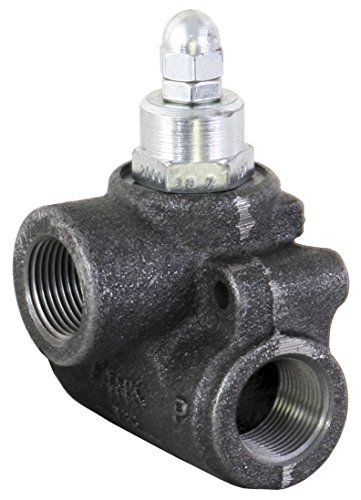
Best for truck and trailer hydraulic systems where a robust cast-iron body is preferred. It provides a high-flow inline relief with a rating up to 3000 PSI, making it well-suited for demanding hydraulic functions on vehicles. Choose this if durability and high flow are priorities for heavy-duty applications. Limitation: heavier than aluminum options; consider system mounting constraints in tight spaces.
Summit Hydraulics 20 GPM Relief Valve — 3/4″ NPT, 2500 PSI

Best for larger industrial cylinders and higher-flow scenarios where 20 GPM is required and space allows a 3/4″ NPT port. The inline ball spring relief and hardened seat ensure durability across repeated cycles. Best for mid- to large-size systems needing straightforward, repeatable relief settings. Caution: ensure the system can accommodate the 3/4″ port size to avoid installation issues.
Threlaco Dual Crossover Relief Cushion Valve — 3/8” NPT, 19 GPM

Best for flexible configurations where both valves and cushions are needed in one unit. With a 150–2600 PSI adjustable range and a 5000 PSI max pressure, it supports diverse operations in motors, cylinders, or control valves. Use this if you need reliable cushioning and pressure relief in one compact package. Limitation: performance depends on correct installation proximity to the motor or cylinder to minimize pressure drop.
Buying Guide: Key Considerations for Hydraulic Cylinder Pressure Relief Valves
- Flow rating (GPM): Match the valve’s flow to your hydraulic circuit’s demand. Oversized relief can cause unnecessary pressure drops; undersized relief may not protect the system.
- Port size and connections: Ensure NPT or ORB sizes align with your hoses, fittings, and seals to avoid leaks or mounting issues.
- Maximum relief pressure: Consider the highest operating pressure and shock loads. Choose a valve with a margin above typical system pressures.
- Actuation type: Direct-acting valves respond quickly to pressure spikes, while pilot-operated designs may be preferable for complex circuits with variable loads.
- Material and durability: Aluminum is lighter; cast iron offers robustness for heavy-duty truck or trailer applications. Consider the environment (corrosion, heat, vibration).
- Mounting and installation: Inline valves are convenient for line replacement; crossovers and cushions help absorb shocks in reversible systems or cylinder ends.
- Maintenance considerations: Hardened seats and quality seals extend service life. Check for compatibility with hydraulic oil type and temperature range.
FAQ: Quick Answers for Practical Decisions
- What is a hydraulic relief valve used for?
– It protects hydraulic components by venting excess pressure to prevent damage to pumps, motors, and cylinders. - How do I choose the right port size?
– Match the valve port size to the system’s hoses or fittings (NPT or ORB) to ensure proper seal and flow. - Can I use a relief valve as a cushion valve?
– Some dual crossover valves can function as cushions; verify the product description and intended use for your application. - Is higher PSI always better?
– Not necessarily. Choose a setting that protects against overpressure without causing performance loss or stalling in normal operation.
Additional Resources
The products listed above are commonly used for protecting hydraulic cylinders and related components. When in doubt, consult your system’s schematic and a hydraulic engineer to confirm the best valve type, port size, and relief setting for your specific application.