Choosing the right hard jaws for lathe chucks is essential for secure gripping, repeatable accuracy, and efficient turning. The following five products are among the most relevant options for 8″ and 10″ lathe chucks, including Kitagawa B-210 and similar self-centering chucks. Each entry highlights material quality, bite geometry, and compatibility to help you compare performance for demanding machining tasks. The table below summarizes key details to help you quickly scan features and fitment.
| Product | Chuck Size | Jaws Type | Material |
|---|---|---|---|
| Lathe Hard Jaws, 3Pcs Lathe Chuck Serrated (1.5mmx60) for 10” Kitagawa B-210 | 10″ | Serrated / Hard | 20CrMnTi steel |
| HHIP 3900-4736 3 Piece Steel External Hard Jaw Set | 6″ | External / Hard | Steel |
| 3Pcs 10″ Hard Jaws for Kitagawa B-210 | 10″ | Serrated / Hardened | 20CrMnTi |
| Lathe Hard Jaws for 8” Kitagawa B-208 | 8″ | Serrated / Hard | High-quality steel |
| INTBUYING 6″ Hard Chuck Jaw Sets | 6″ | External / Serrated | 20 Chromium Manganese steel |
Lathe Hard Jaws, 3Pcs for 10″ Kitagawa B-210

The 10″ hard jaw set from RudiUsoy is designed for precision work on Kitagawa B-210 and similar 10″ chucks. The three-piece kit uses a high-quality steel composition, enabling robust performance through roughing and finishing passes. Each jaw features a 1.5 mm x 60 serration, mirroring standard industry geometry that helps maintain repeatability across multiple setups. The claw size and slot dimensions are specified to fit typical 10″ self-centering chucks, making it a direct option for users upgrading or replacing worn components.
In practice, these jaws provide a solid bite and predictable clamping force, with emphasis on durability for repeated machine work. The listed materials and construction promote resistance to deformation under load, while the serrated profile supports secure part handling for small-to-medium workpieces. This makes the set a practical upgrade for hobbyists and professional shops focusing on repeatable results in a compact 10″ chuck footprint.
HHIP 3900-4736 3 Piece Steel External Hard Jaw Set

HHIP’s 3900-4736 external hard jaw set is a versatile option for 6″ 3-jaw chucks, widely compatible with many self-centering chucks. The package includes three external jaws, commonly referred to as hard or step jaws, which are ideal for gripping and stabilizing a workpiece during machining. The external jaw design provides improved runout control for certain operations, especially when workpieces require precise axial alignment. This set suits users seeking a straightforward upgrade path for improved rigidity and clamping performance on smaller chuck sizes.
With typical 3-jaw compatibility, these jaws offer solid bite at a reasonable price point. While they are not tailored for every chuck brand, their straightforward geometry makes them a practical fit for a wide range of standard chucks, enabling reliable holding for turning, facing, and light milling tasks. Material quality and finish aim to balance wear resistance with consistent performance over time.
3Pcs 10″ Hard Jaws for Kitagawa B-210 Type

This 3-piece set from LIKARVA provides hardened jaws tailored for the Kitagawa B-210 system. The serrated jaws are rated for 1.5 mm x 60 serration and are built to withstand repeated use in a 10″ chuck. Constructed from 20CrMnTi, the jaws are designed to resist wear while maintaining precise pitch and alignment across cycles. The included set presents a cost-effective upgrade for users who require a reliable serrated grip and consistent repeatable clamping surface for production or workshop environments.
Prospective buyers should consider jaw compatibility with their specific chuck model and confirm groove and hole spacing. The serrated profile enables strong grip on a variety of workpieces, from small cylindrical parts to larger stock, while maintaining manageable impact on part surfaces when clamped correctly.
Lathe Hard Jaws for 8” Kitagawa B-208

This 8″ hard jaw set is crafted for use with B-208 type lathes, emphasizing a compact yet robust design with a three-piece construction. The jaw geometry mirrors other serrated, hardened opciones with a slot width of 16 mm and hole spacing around 25 mm, aligning with common 8″ chuck standards. The set’s performance rests on precise machining and the durability of the chosen steel alloy, ensuring steady grip throughout demanding turning operations. Users will appreciate consistent bite force and reduced jaw wear during high-cycle production tasks.
As with any external jaw set, care should be taken to verify compatibility with your exact chuck model, including jaw height and alignment with the lathe’s turning center. Proper seating and periodic inspection help sustain clamping integrity and part accuracy across sessions.
INTBUYING 6″ Hard Chuck Jaw Sets

INTBUYING’s 6″ hard chuck jaw set includes three pieces designed for 6″ chucks with 1.5 mm serration and a 12 mm groove width. The jaws are manufactured from high-strength 20 chromium manganese steel, chosen for corrosion resistance in humid environments and long service life. The precise pitch and burr-free finish help ensure consistent engagement and repeatable gripping for a range of workpieces. This set is positioned as a versatile choice for hobbyists upgrading to hardened jaws without overextending to larger chuck systems.
Potential buyers should check compatibility with their specific 6″ chuck model and confirm the screw size and hole spacing to guarantee a proper fit. The combination of durability and predictable performance makes these jaws suitable for standard turning, facing, and light milling tasks where jaws must maintain bite across multiple cycles.
Lathe Chuck Serrated (1.5 mm x 60) Steel Soft Jaws Set (3 Pcs) for 10″ Kitagawa
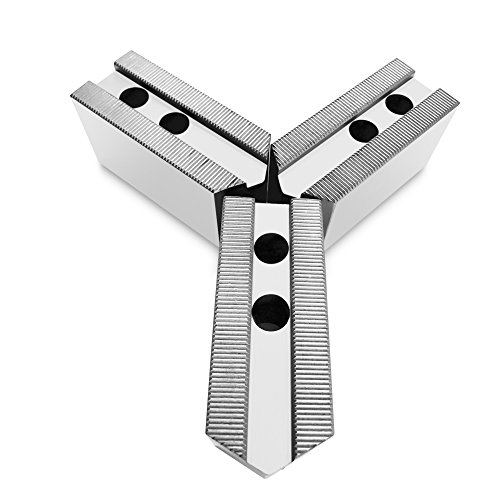
The Turner Workholding set offers soft jaws designed for 10″ Kitagawa B-210 and similar chucks, featuring serrated 1.5 mm x 60 geometry with a 3″ jaw height. While not as hard as their external counterparts, soft jaws provide excellent workpiece protection when delicate surfaces must remain unmarred by gripping actions. The included 3-piece configuration enables users to tailor clamping strategies for various stock geometries, balancing grip with surface integrity.
These jaws serve as a practical alternative where part finish is critical or where reducing wear on workpieces is a priority. They pair well with standard chuck setups and provide predictable contact surfaces for repeated production runs, as long as users monitor wear and replace jaws when bite accuracy declines.
Buying Guide: Key Purchase Considerations
- Chuck compatibility: Verify the jaw size (6″ vs 8″ vs 10″), jaw type (external, internal, or soft), and the specific chuck brand and model (for example Kitagawa B-210 or B-208). Mismatches can result in poor fit or unsafe operation.
- Jaw material and hardness: Hardened steel jaws resist wear and maintain bite over many cycles. Soft jaws offer surface protection for delicate parts but wear faster and may require more frequent replacement.
- Jaw geometry and serration: Serrated (1.5 mm x 60) profiles provide strong grip for cylindrical parts, while other geometries may suit square or irregular shapes. Consider whether you need a double-step or single-step design based on parts and operations.
- Surface finish and burrs: Burr-free finishes reduce the risk of marring parts. Check for consistent pitch across jaws to ensure uniform clamping forces.
- Corrosion resistance: In humid shop environments, stainless or corrosion-resistant alloys extend jaw life. Ensure the material matches your maintenance capabilities.
- Set composition: Three-piece jaw sets are common; confirm you are purchasing the correct quantity for your chuck to avoid incomplete replacements.
- Cost vs. value: While premium sets offer longer life and tighter tolerances, assess your typical workload and whether a mid-range option provides the best balance of cost and performance.
- Maintenance: Regular inspection for wear, alignment, and seating is essential. Improper seating can cause runout and degraded part quality.
- Fitment checks: Before use, ensure the jaws seat properly and secure with the chuck’s screws or clamps. Do not overtighten, which may damage the chuck or jaws.
- Usage guidance: Use the jaws appropriate for the operation—hard jaws for high-precision or production tasks, soft jaws for delicate finishes, and proper clamping force to avoid part distortion.
- Lifecycle planning: Track jaw wear and plan replacements to maintain consistent tolerances across batches, especially in a production setting.