Answering with clarity: handheld metal laser welding machines offer precise, fast welding and surface cleaning in a compact footprint. The top picks below suit different buyers—from hobbyists needing simple, reliable tools to professionals requiring higher power and automated features. Readers will find who each model is best for, plus practical caveats to consider before purchase.
Buying snapshot
| Product | Best For | Key Strength | Limitations |
|---|---|---|---|
| xTool MetalFab 1200W | Professional shop owners | 3-in-1: weld, cut, clean; automatic wire feeding | Higher cost; learning curve for setup |
| X1pro 700W | All-around versatile user | Six-in-one functions; underwater option | Underwater feature adds complexity |
| GWEIKE M 800W | Fast, straightforward welding | High-speed welding; integrated rust/cleaning | Limited explicit cutting thickness in data |
| NOUALASER Double Wobble 2000W | Large or complex joints | Dual-head, up to 6 mm; 2000W | Heavier setup; dual swing requires space |
| Saker Portable 110V | DIYers on a budget | Lightweight, portable; adjustable current | Lower power ceiling than high-end models |
xTool MetalFab 1200W 3-in-1 Laser Welding Machine

The xTool MetalFab combines welding, cutting, and cleaning in a single 3-in-1 system. It uses industrial-grade components to deliver a steady 1200W laser for deep penetrations, with a cutting mode handling up to 5 mm material and a high-efficiency cleaning function. An 8″ touchscreen and 108+ material presets simplify operation, including automatic wire feeding for stable welds. This model is best for professionals who need fast, repeatable results and room to automate. A caution: its advanced features can require a longer setup and higher upfront investment.
X1pro 700W Laser Welding Machine – 6-in-1
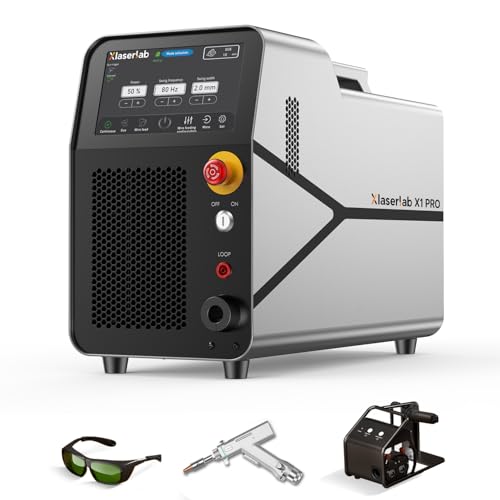
The X1 Pro packs six functions in one compact unit, including CNC retrofit, underwater welding, laser welding, cutting, rust removal, and seam cleaning. It uses Coherent laser chips for stable, clean welds with a minimal heat-affected zone, and an external wire feeder supports longer, steadier welds. It performs well in home shops and professional settings where versatility matters. Best for users who want welding versatility in a single device and occasional underwater capability. Limitation: underwater welding adds complexity and maintenance considerations.
GWEIKE M 800W 6-in-1 Handheld Fiber Laser
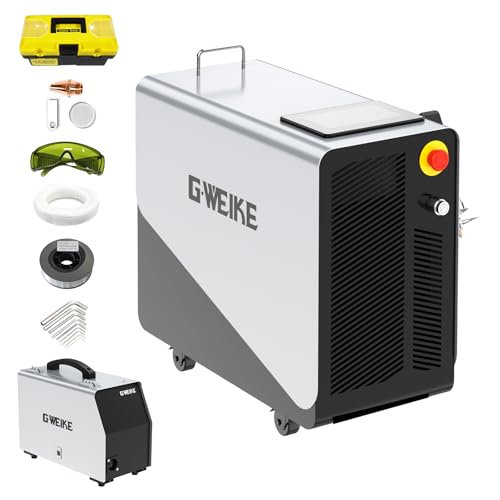
The GWEIKE M offers high-speed handheld laser welding with deep penetration and integrated rust removal. It also supports laser cleaning and cutting with a practical range for thickness and material variety. This model is well-suited for shops that prioritize speed and multi-function cleaning, rust removal, and cutting in a single pass. Choose this if you need a fast workflow and reliable surface prep. A potential limitation is that explicit maximum cutting thickness data is not always shown in all listings.
NOUALASER Double Wobble 2000W Laser Welding Machine

This 2000W dual-head laser welder emphasizes speed and versatility, claiming faster welding, rust removal, and cleaning across a broad range of metals. The dual swing heads (X/Y) improve weld seam control on curved or large components, offering better efficiency for larger projects. Best for industrial or enterprise-level tasks needing higher throughput. Caution: space and power requirements are higher due to the dual-head design and 2000W output.
Saker Portable Electric Welding Machine

The Saker handheld welder provides a lightweight 3.3 lb design with 20-120A adjustable output and a 5-speed dial. This budget-friendly option suits DIYers and hobbyists needing a compact, portable unit for basic projects. It supports common rods and provides arc stability with hot-start and anti-stick features. A limitation is the lower power ceiling compared to professional-grade models, which may impact thicker materials or high-volume welding.
Buying Guide
What to consider when choosing a handheld laser welding machine
- Power and speed: Higher wattage generally enables deeper welds and faster processing. Consider your typical material thickness and desired throughput.
- 3-in-1 or multi-function features: Models offering welding, cutting, and cleaning can reduce tool clutter but may add cost and complexity. Assess which functions you truly need.
- Material compatibility: Check listed materials and thickness ranges. Some machines excel on steel but have limits on aluminum or stainless steel.
- Automation and wire feeding: Auto wire feeders can improve consistency for larger runs but may require setup and maintenance.
- Environment and practicality: Underwater welding or high-temperature operation requires proper safety and facility considerations. For home shops, portability and ease of use often matter more.
- Safety and cooling: Look for thermal management and eye protection features. Real-time monitoring and safeties reduce risk in novice environments.
Frequently Asked Questions
- What is a handheld laser welder best used for?
Best for precise seams on metal parts, small-to-medium assemblies, and tasks requiring surface cleaning or rust removal in a compact tool.
- Do I need a dedicated power supply for high-wattage units?
Yes. Higher-wattage systems typically demand robust electrical infrastructure and proper ventilation.
- Is underwater welding necessary for my projects?
Only if you have specific underwater or submerged welding needs; otherwise it adds complexity and maintenance.
- What maintenance is required for laser welding machines?
Regular cleaning, calibration checks, and safe storage are essential. Inspect cables and protective components routinely.
- Can beginners use these machines safely?
Yes, with proper training, safety gear, and adherence to manufacturer guidelines. Start with basic materials before advancing.
- Which model is most cost-effective for hobbyists?
Budget-friendly options with essential welding capabilities are typically best for beginners seeking value and simplicity.