Glass fiber nylon filaments combine the strength of nylon with the rigidity of glass reinforcement, making them standout options for demanding parts. This guide helps buyers choose the right PA6-GF or glass-filled nylon filament based on printability, heat resistance, and application. The top picks below are suited for high-strength components, hobbyist builds, or engineering prototypes. The buyer profiles cover makers, professionals, and students seeking durable parts with dimensional stability.
| Product | Best For | Key Benefit |
|---|---|---|
| Polymaker Fiberon PA6-GF | Advanced hobbyists and engineers | High stiffness and heat resistance with good layer adhesion |
| CHCKX PA6-GF 10% | Engine components and housings | Good heat resistance and reusable spools |
| SUNLU PA6-GF 25% | Automotive parts and industrial molds | Strong chemical resistance and high-temperature tolerance |
| CHCKX PA6-GF 10% Black | Black-variable color projects | Same performance with color option and reliable drying guidance |
| YXPOLYER Nylon Glass Filled | Heavy-duty parts and performance-focused users | High strength, rigidity, and dimensional stability |
Polymaker Fiberon PA6-GF Glass Fiber Nylon Filament
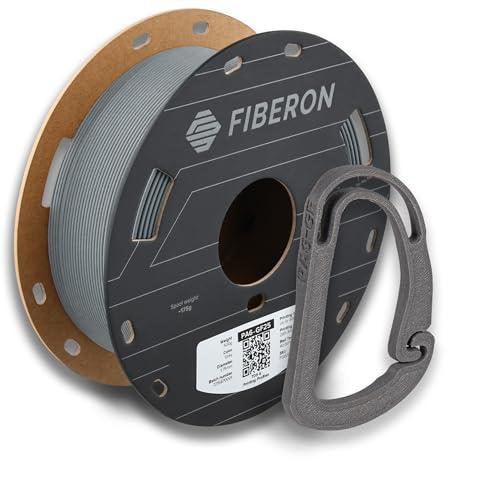
Polymaker’s Fiberon PA6-GF is a glass fiber–reinforced nylon designed for higher speed printing without sacrificing layer adhesion. It is stiff, strong, and heat resistant, making it suitable for torsional and impact-loaded parts. Best for: enthusiasts and professionals who need durable parts such as drone frames, brackets, or jigs that benefit from improved rigidity while remaining printable on mainstream printers.
Why chosen: It emphasizes a balance of printability and performance, with the advantage of compatibility with common printers and fast-cycle production. Caution: Fiber content can increase nozzle wear; ensure a hardened steel nozzle if printing frequently at high speeds.
CHCKX PA6-GF 10% Glass Fiber Nylon Filament

CHCKX PA6-GF 10% adds glass fiber to PA6 nylon, providing better heat resistance (up to 135°C) and stiffness than standard nylon. It ships on reusable spools for convenient pre-print drying. Best for: parts that endure high temperatures or mechanical loads, such as engine housings or industrial components. Caution: drying and drying temperature guidance should be followed to minimize warping and improve print quality.
SUNLU PA6-GF 3D Filament 25% Glass Fiber Nylon

SUNLU’s 25% glass fiber reinforced PA6-GF filament delivers 205°C heat resistance and robust chemical resilience. It comes on a reusable spool designed to simplify drying. Best for: high-temperature automotive parts, electrical housings, and heavy-duty industrial molds where heat and chemical exposure are concerns. Caution: ensure proper bed temperature and extrusion settings to minimize warping in larger parts.
CHCKX PA6-GF 10% Black Nylon Filament
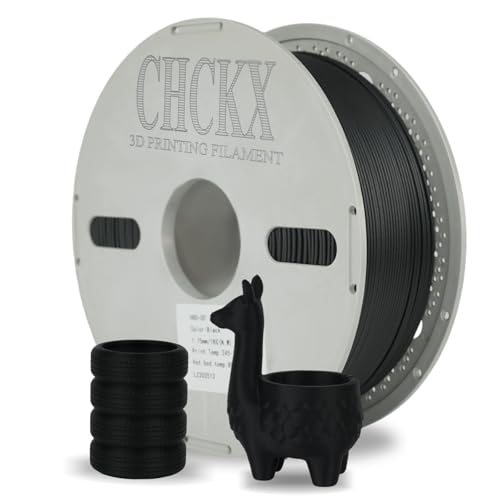
This CHCKX variant mirrors the 10% GF composition, but in black. It uses reusable spools for pre-print drying and supports temperatures up to 135°C. Best for: projects requiring darker coloration without sacrificing performance. Caution: color change can affect dye-to-fiber uniformity; verify color consistency across batches.
YXPOLYER Nylon Glass Filled Filament
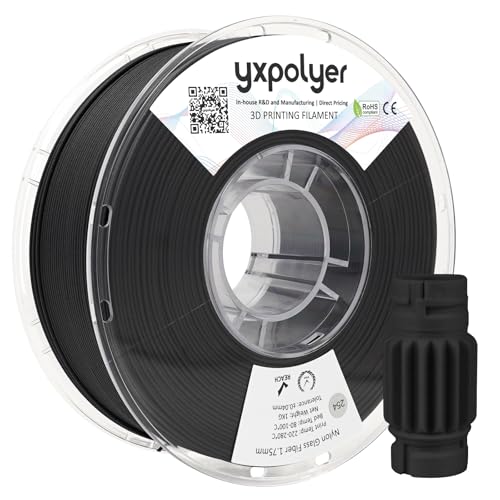
YXPOLYER’s PA66/PA6 with glass reinforcement improves tensile and flexural strength, offering dimensional stability and low warping. Best for: durable, load-bearing components and automotive or industrial applications where precise fit and high strength are required. Caution: verify printer compatibility with higher-strength materials and consider wear on nozzles with reinforced filaments.
Buying Guide
What to consider when choosing glass-filled nylon filaments:
- Heat resistance: If your parts face continuous high temperatures, prioritize filaments with high HDT values (e.g., above 200°C).
- Mechanical load: Look for higher tensile and impact strength, especially for mechanical components and mounts.
- Printability: Some GF nylons require pre-drying and can be more prone to warping. Check nozzle compatibility and bed temperature ranges.
- Moisture sensitivity: Filaments with lower moisture sensitivity reduce print defects and improve first-layer adhesion.
- Spool design: Reusable or resealable spools help with drying and storage, preserving filament quality for long projects.
- Color and aesthetics: If color matters for your project, note that some variants offer color options without compromising performance.
Practical Comparisons
- Best for high-temperature parts: SUNLU 25% GF and Inslogic PA6-GF25 (if listed) are strong candidates due to high heat resistance.
- Best for ease of use on consumer printers: Polymaker Fiberon PA6-GF is designed for broad compatibility and faster print times.
- Better for chemical exposure: Glass-filled nylons with high chemical resistance (like SUNLU) perform well in corrosive environments.
- Lower warping: YXPOLYER nylon glass filled keeps tighter tolerances due to dimensional stability.
- Color considerations: CHCKX 10% Black variant provides color without downgrading mechanical properties.
Frequently Asked Questions
- What is glass fiber nylon filament best used for?
– It’s ideal for strong, lightweight parts that require rigidity, good heat resistance, and durable mechanical properties. - Do GF nylons need special printers?
– They often require higher nozzle temperatures and heated beds; some models benefit from pre-drying. - Is the filament more brittle than standard nylon?
– Glass fiber reinforcement increases stiffness, but part ductility can vary with fiber loading and printing conditions. - Can I print GF nylon on a budget printer?
– Yes, with careful tuning and drying, but expect more tuning time and possible nozzle wear. - How should I store GF nylon filament?
– Store in a dry, sealed environment; consider desiccants to minimize moisture absorption. - What is a typical drying temperature?
– Drying temperatures often range up to 110-135°C, depending on the brand and filament specification.