Gas-powered 1-inch water pumps are ideal for irrigation, flood drainage, pool and pond maintenance, and rural water transfer. This guide highlights five reliable 1″ gas water pumps, focusing on common uses, fuel efficiency, and portability. The top picks suit farmers, gardeners, landscapers, homeowners, and DIY enthusiasts who need dependable, moveable pumping power.
Selected products overview (quick reference):
| Product | Best For | Key Benefit |
|---|---|---|
| Farmers and large-area irrigation | High flow up to 36 GPM, 1″ inlet/outlet, portable | |
| Heavy-duty irrigation and drainage | 135 L/min flow, 30 m head, durable carbon steel frame | |
| Rivers, ponds, and agricultural drainage | 38cc engine, up to 35.66 GPM, 26.25 ft suction | |
| Lightweight homeowners and small projects | 32 GPM, 121 ft head, 13 lb portable design | |
| High-lift, heavy-duty drainage | 43cc, 1.25 KW, 98 ft head, efficient fuel use |
Below you’ll find five detailed product sections. Each section explains who to choose the model for, its notable strengths, and any limitations to consider before purchase.
XtremepowerUS Gas Water Pump 1 Inch

The XtremepowerUS model targets general-purpose water transfer with a 1″ inlet and outlet and a 4-stroke engine. It delivers up to 36 GPM flow, suitable for garden irrigation, pool water exchange, and light well drawing. Its 28-pound weight plus a handle supports easy relocation between sites. Best for small to mid-size farms, residential irrigation, and DIY projects needing steady, hands-off pumping. A potential limitation is the size of the intake and the need for stable priming on long-distance runs.
Gosangom 1-Inch High-Pressure Gas Water Pump
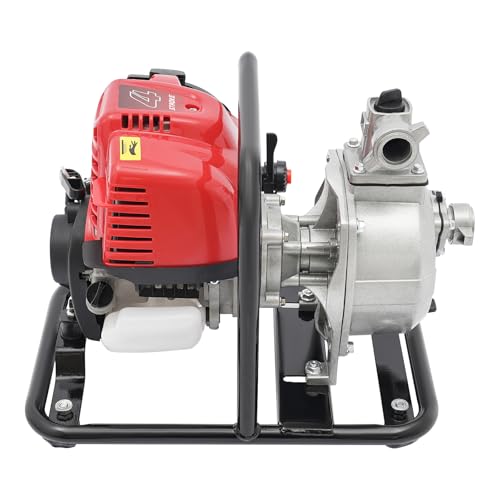
This 1″ trash pump is built for higher pressure and demanding transfer tasks. It offers up to 135 L/min (35.66 GPM) and a 30 m head with a self-priming feature, making it strong for irrigation and challenging drainage. Durable carbon steel and aluminum alloy construction support frequent use. Best for larger-property irrigation or drainage jobs. It’s best to avoid if you need ultra-lightweight equipment for occasional use, as it is heavier than entry-level models.
JLYNOWPT 1″ Trash Pump, Gas Powered
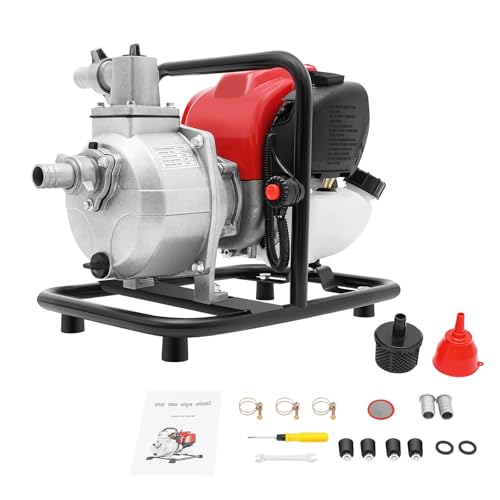
The JLYNOWPT model emphasizes efficiency with a 38cc engine and up to 35.66 GPM. It features a 26.25 ft suction head and a total head of 98.43 ft, supporting irrigation, drainage, and pumping from shallow sources. The design includes a filter and funnel for debris handling. Best for mid-sized irrigation projects or drainage tasks where higher suction and decent flow are needed. Note that fuel consumption and maintenance depend on runs and load, as with most four-stroke units.
Wtobybt 38CC 4 Stroke Water Pump

The Wtobybt model uses carbon steel and aluminum alloy for durability and includes a 1.2KW engine. It achieves up to 35.66 GPM with a 26.25 ft suction head and 98.43 ft total head. This makes it capable for irrigation and drainage on compact to medium plots. Best for users seeking a robust, long-lasting unit with straightforward operation. A limitation is that some users may prefer lighter weight options for frequent transport between sites.
Honda WX10 52 PSI Gas-Powered Water Pump

This Honda model is designed for homeowners and light-scale projects. It provides 32 GPM and a total lift of 121 feet with the GX-series commercial engine. It’s lightweight at about 13 pounds and includes a transport handle, making it highly portable for pool draining, garden watering, and boat maintenance. Best for quick tasks requiring mobility. Its main limitation is maximum lift for very deep water sources compared with heavier-duty units.
Honda WX10TN 1-Inch Gas Water Pump
The WX10TN model mirrors Honda’s emphasis on reliability and portability. It delivers 32 GPM with a total head of 121 feet. This pump is well-suited for pool draining, garden irrigation, and small boats. Its 13-pound weight makes it one of the lightest options in this list. Best for homeowners needing a simple, dependable unit for occasional use. A potential limitation is that it lacks some high-head capabilities needed for deeper pumping tasks.
IOENC 2 Stroke Gas Water Pump 1-Inch

The IOENC 2-stroke pump claims high flow with 35.66 GPM and 98 ft lift, using a 43cc engine. A key advantage is the strong suction head that supports lifting water from deeper sources. It’s suited for irrigation and drainage on medium-to-large plots. Choose this if you need a model with robust head pressure and quick priming. The trade-off is higher fuel consumption typical of two-stroke designs compared with four-stroke models.
Buying Guide: Key Considerations For 1-Inch Gas Water Pumps
- Flow rate vs. head: Higher GPM helps move water quickly; higher head is better for lifting water from deeper sources. Match to your site conditions.
- Engine type: Four-stroke engines are generally more fuel-efficient and easier to maintain; two-stroke engines offer higher power-to-weight but may require more fuel and oil mixing.
- Portability: If you move between locations, consider weight, handle design, and carrying ease. Lighter models simplify transport.
- Durability: Look for metal housings and corrosion-resistant materials for long-term use in outdoor environments.
- Debris handling: Pumps with filters or trash-capable design handle sediment better for pond or ditch pumping.
- Priming and start-up: Self-priming features save time; recoil or electric start affects ease of use in remote locations.
Frequently Asked Questions
- What size water pump do I need for irrigation? A 1-inch pump with 30–36 GPM is a common choice for medium to large home gardens, with higher head needed for distant fields.
- Are gas pumps safe for outdoor use? Yes, but follow all manufacturer safety instructions, keep away from open flames, and ensure good ventilation when operating.
- What is “head” in a pump? Head indicates the maximum height water can be lifted; total head combines suction and discharge requirements.
- Is a two-stroke pump better than a four-stroke? Two-stroke pumps can be lighter and more powerful per weight but consume more fuel and require oil mixing.
- How do I choose between models? Consider flow rate, maximum head, weight, and whether you need debris handling or easier priming.
- Do these pumps require maintenance? Yes, regular maintenance like checking oil, cleaning filters, and inspecting hoses helps prolong life.