Gas engine hydraulic pumps are ideal for remote jobsites, heavy lifting, and any operation needing reliable hydraulic power without electric power. This guide highlights five strong options, explains who each is best for, and clarifies trade-offs. Use this as a quick reference to compare flow, pressure, engine type, and portability so you can choose the right pump for dump trailers, log splitters, or hydraulic tools.
The following table summarizes key details to help you compare quickly. Values reflect the listed specifications in the product descriptions.
| Product | Engine Type | Flow (GPM) | Max PSI | Notes |
|---|---|---|---|---|
| Hypro Diaphragm Pump D30GRGI with GX160QH | GX160QH Gas Engine | 9.6 | 580 | Includes regulator and gearbox |
| Primary Mover Gas-Powered Hydraulic Power Unit | Honda GX200 | 2.5 | 3200 | Pull or electric start option |
| Log Splitter Build Kit (DIY Pump) | Gas Engine Compatible | 13.0 | 4000 | 2-stage high flow |
| Hypro D30GRGI Diaphragm Pump | — | 9.5 | 580 | Includes regulator and gearbox |
| MOBILE GAS POWERED HYDRAULIC TRAILER POWER UNIT | Honda GX390 | 5-6 | 3000 | Trailer-mounted power unit |
Hypro Diaphragm Pump D30GRGI with GX160QH Gas Engine

This diaphragm pump is best for heavy-duty, gas-powered operation where consistent, moderate-to-high flow is needed. It pairs a GX160QH gas engine with a robust hydrualic diaphragm system to deliver up to 9.6 GPM at 580 PSI. The included 9910-GS40GI regulator and AR1636 gearbox allow easy mounting to compatible engines, simplifying integration on mobile or field setups.
Best for: Contractors or equipment operators needing reliable hydraulic flow with a gas engine on job sites without electricity. Use when you require high pressure and solid flow in a relatively compact setup.
Caution: Ensure correct shaft compatibility and mounting to avoid misalignment between the pump and engine.
Primary Mover Gas-Powered Hydraulic Power Unit
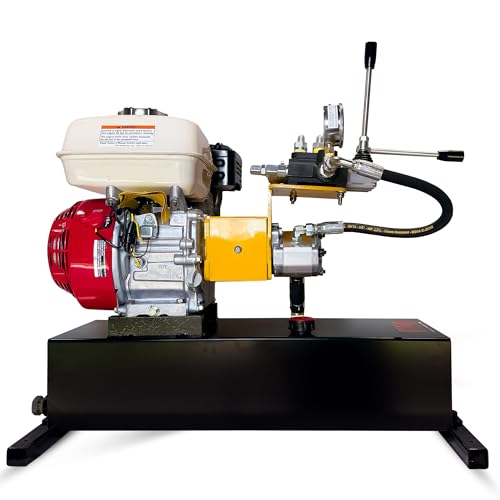
This unit suits professionals needing a robust gas-powered hydraulic source with clear control and reliability. It uses a Honda GX200 engine for strong power (6.5 HP) and delivers higher hydraulic flow than smaller engines, supporting heavier-duty tasks. A single-stage gear pump provides 2.5 GPM with a 3200 PSI relief valve and an integrated gauge for precise control. It offers pull-start or electric-start configurations for field versatility.
Best for: Professional operators who need a balance of reliable horsepower, precise pressure control, and optional electric start for frequent startups.
Caution: The unit’s flow is lower than some multi-stage configurations; plan for adequate cycle times on large hydraulic jobs.
Log Splitter Build Kit: 13 GPM Hydraulic Wood Splitter Pump

Designed for DIY splitters or upgrading small commercial units, this 13 GPM, 4000 PSI hydraulic pump delivers high flow for faster splitting. It features a two-stage design and is compatible with most gas engines in the 4–7 HP range. Key dimensions include a 1.5″ shaft extension and a 1/2″ inlet/outlet, making it a flexible fit for many log splitter configurations.
Best for: DIY builders or contractors seeking a powerful, high-flow pump to accelerate wood splitting projects.
Caution: Verify engine compatibility and mounting bolt patterns before installation to ensure a proper fit.
Hypro D30GRGI Diaphragm Pump

This is a compact, high-performance diaphragm pump that comes with a 9910-GS40GI regulator and a gearbox, enabling straightforward coupling to compatible engines. It provides up to 9.5–9.6 GPM and up to 580 PSI at 3600 RPM, with tolerance up to 140°F fluid temperature. The 1″ inlet and 1/2″ outlet fittings enhance versatility for different hydraulic lines.
Best for: Applications requiring solid flow with reliable regulator-assisted pressure control in a compact package.
Caution: Incompatibilities with certain shaft sizes or mounting surfaces may require adapters or additional hardware.
MOBILE GAS POWERED HYDRAULIC TRAILER POWER UNIT

This trailer-mounted unit features a 13 HP Honda GX390 engine and a Prince gear pump delivering 5–6 GPM at up to 3000 PSI. It is ideal for mobile hydraulic needs where an all-in-one power unit on a trailer provides enhanced portability and ready-to-work capability for field operations, hoists, or dump applications.
Best for: Operators needing a mobile, high-availability hydraulic source with strong PSI for demanding field tasks.
Caution: Trailers add weight and require secure mounting and transport considerations to ensure safe operation on uneven terrain.
Buying Guide: Gas Engine Hydraulic Pumps
Key considerations when choosing a gas engine hydraulic pump include power source, maximum PSI, flow rate (GPM), engine reliability, and mounting compatibility. The right choice depends on your primary task, the required speed, and whether you need portable or trailer-mounted power.
- What flow rate do I need? Higher GPM speeds up cycle times for tasks like wood splitting or hydraulic lifting, but may require more engine power and careful heat management.
- What PSI is required? Applications such as lifting heavy loads or operating high-pressure tools benefit from higher PSI, but ensure the pump’s relief valve matches your system expectations.
- Is portability important? For roadside or remote work, a compact diaphragm pump or a portable unit with a gas engine is ideal. For on-site versatility, a trailer-mounted unit adds mobility.
- What engine matches my site conditions? Honda GX series engines are common for reliability and easy service. Larger engines (GX390) offer more power for higher-flow needs.
- What about accessories? Regulators and gearboxes can simplify installation and alignment with your engine, improving efficiency and safety.
Frequently Asked Questions
- Q: Do gas engine hydraulic pumps require electric power? A: No, most gas-powered units run independently of electrical grids, though some may offer electric-start options.
- Q: Can these pumps be used with log splitters? A: Yes, especially high-flow models designed for high-pressure wood splitting applications.
- Q: What maintenance is typical for diaphragm pumps? A: Regular inspection of seals, regulators, and gearbox alignment helps ensure consistent performance.
- Q: Are there safety concerns when operating trailer-mounted units? A: Ensure secure mounting, proper hitching, and stability on uneven surfaces to prevent accidents.
- Q: How do I choose between diaphragm and triplex plunger pumps? A: Diaphragm pumps are compact and simple; triplex plunger pumps provide higher reliability for continuous heavy use, depending on your application.
- Q: Do these pumps require special fuels or lubricants? A: Use recommended engine fuels and hydraulic fluids specified by the manufacturer to avoid performance issues.