MIG welding relies on the right shielding gas to produce clean, stable arcs with minimal spatter. This guide highlights five top gas cylinders designed for MIG welding workflows, balancing blend accuracy, cylinder size, certification, and ease of delivery. Each option is suitable for common welding metals like mild steel and nonferrous alloys, offering reliable performance whether you’re in a shop or at a jobsite. Read on to compare blends, capacities, and practical considerations.
| Product | Blend | Size (CF) | Key Benefit |
|---|---|---|---|
| PrimeWeld 75% Argon 25% CO2 Bottle 80CF | 75/25 Argon/CO2 | 80 | All-purpose MIG with strong arc stability |
| PrimeWeld 75% Argon 25% CO2 Bottle 125CF | 75/25 Argon/CO2 | 125 | Bulk capacity for longer runs |
| PrimeWeld 100% Argon Gas Welding Tank Full 40CF | 100% Argon | 40 | Ideal for TIG or precise MIG with inert environment |
| PrimeWeld 100% Argon Gas Welding Tank Full 80CF | 100% Argon | 80 | Higher output for extended TIG sessions |
| PrimeWeld 75% Argon 25% CO2 Bottle 40CF | 75/25 Argon/CO2 | 40 | Compact option for smaller projects |
PrimeWeld 75% Argon 25% CO2 Bottle 80CF

The 80 cubic foot cylinder delivers a balanced Argon-CO2 blend optimal for MIG welding of mild steel and many nonferrous metals. The 75/25 mix provides a stable arc, good puddle control, and reduced spatter compared with straight CO2. The tank arrives full, certified DOT 3AA, with a 10-year stamped date for reliable refills and long service life. This option suits shops or mobile setups that value predictable gas performance without frequent refills.
PrimeWeld 75% Argon 25% CO2 Bottle 125CF

With a larger 125 CF capacity, this cylinder is designed for higher-volume MIG operations or multi-hour continuous runs. The 75/25 Argon-CO2 blend remains ideal for general-purpose welding across a range of metals, balancing arc stability with cost efficiency. Like the smaller version, it ships full and certified DOT 3AA, and it’s date-stamped for traceability. This size helps reduce downtime from frequent exchanges on busy shop floors.
PrimeWeld 100% Argon Gas Welding Tank Full 40CF
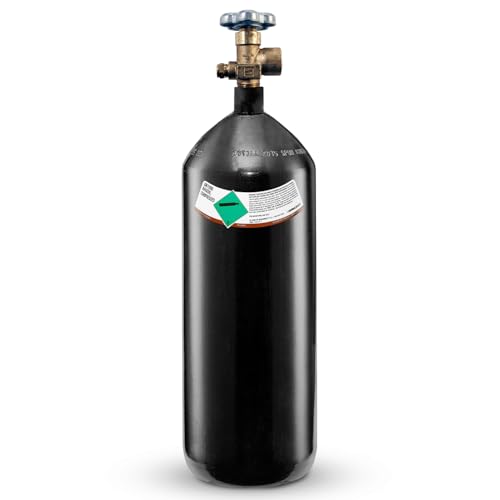
When TIG welding or requiring a completely inert shielding environment, 100% Argon is the preferred choice. This 40 CF tank provides a compact option for precise, high-quality welds, ensuring an uninterrupted inert atmosphere. The cylinder is fully certified DOT 3AA and date-stamped for 10 years, making it suitable for studios and professional shops that prioritize consistent gas purity and traceability.
PrimeWeld 100% Argon Gas Welding Tank Full 80CF

This larger 80 CF Argon tank is tailored for extended TIG sessions or long TIG/MIG tasks needing generous coverage of inert gas. The 100% Argon blend ensures maximum weld cleanliness and arc stability, with a robust DOT 3AA certification and a 10-year date stamp for dependable service life. It suits professional fabricators, body shops, and production environments seeking uptime and consistency.
PrimeWeld 75% Argon 25% CO2 Bottle 40CF
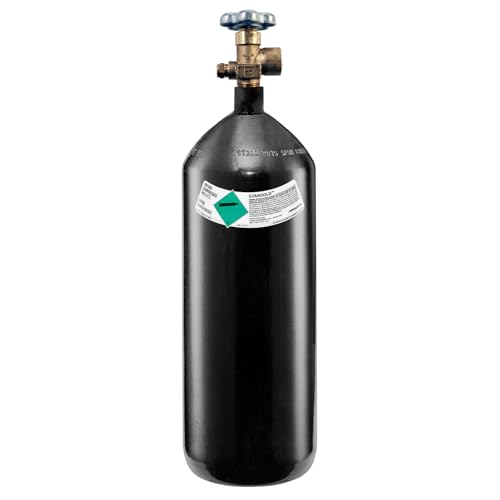
For smaller projects or portable setups, the 40 CF cylinder with a 75/25 blend offers a compact, economical solution for MIG welding. The blend maintains good arc performance on mild steel and compatible alloys while keeping weight and handling manageable for shop technicians or on-site work. It ships full, certified, and ready to weld, with a decade-based assurance on the stamping date.
Additional Gas Cylinder Options For MIG Welding
Other brands and cylinder sizes can complement a MIG welding workflow, especially when tests or specialty metals are involved. When evaluating options, consider the following factors to ensure you choose the best gas cylinder for your MIG welder: quality of the blend, cylinder size and weight, certification and hydrostatic testing schedule, ease of exchange or delivery, and compatibility with existing regulators and hoses. The right mix depends on material thickness, joint geometry, and the welding process used (MIG or TIG) as well as the requirement for arc stability, spatter control, and weld bead appearance.
Buying Guide: Key Purchase Considerations And Comparisons
- Gas blend composition: 75% Argon / 25% CO2 is a versatile all-purpose MIG blend offering arc stability and reduced spatter on a wide range of steels and aluminum with appropriate equipment. 100% Argon is best for TIG and for shielding inert environments in precision welding.
- Cylinder size and capacity: Larger cylinders reduce downtime from refills in busy shops, but weigh more and require more storage space. Choose sizes that balance run time with handling convenience.
- Certification and date stamping: DOT 3AA certification and a valid hydrostatic date stamp indicate compliance and safe transport. A long date window helps minimize compliance checks and refilling uncertainty.
- Delivery and accessibility: If you frequently work on remote sites, a tank with door-to-door delivery and ready-to-use fill minimizes trips to welding supply stores.
- Regulators and fittings compatibility: Ensure your regulator is compatible with CGA-580 tanks and with your MIG/TIG rig’s hose fittings. Some regulators provide precise flow control for both MIG and TIG uses.
- Cost per arc and spatter control: While not the only factor, gas blend choice affects arc stability, puddle control, and spatter. Having multiple blends on hand can optimize welding across different materials and thicknesses.
- Usage scenario: For routine mild steel MIG work, a 75/25 blend in larger quantities is economical and effective. For aluminum or critical TIG work, 100% Argon supplies the inert environment needed for clean welds.
- Storage and safety: Store cylinders upright in a ventilated area away from heat sources. Use proper cage or rack solutions to prevent tipping and ensure accessibility during runs.