Choosing the right freezer boxes for shipping is essential to maintain quality and safety for perishable items. This guide highlights top-rated, durable options designed to keep foods and temperature-sensitive products cold during transit. We evaluate insulation, materials, reuse potential, and overall practicality for small businesses and individuals alike. Read on to compare features and find the best match for frozen foods, meats, dairy, and more.
Summary of Selected Products
| Product | Brand | Key Feature | Approx. Use |
|---|---|---|---|
| IDL Packaging 14″ x 14″ x 14″ Insulated Shipping Box | IDL Packaging | EcoMax Thermal-Paper Liners; up to 72 hours cold | Frozen foods, meat, fish |
| Dry Ice Packs for Shipping – 12 Pack | LUNA ICE | Long-lasting reusable packs; TSA-compliant | Frozen goods, perishables |
| ZAVOOS 12 Pack Insulated Boxes | ZAVOOS | Aluminum foil liner; strong insulation | Temperature-sensitive items |
| Insulated Cold Box with Foam Cooler (Medium) | EPE | PP construction; reusable and recyclable | Pharmaceuticals, frozen foods |
| EmmChill SF12A EcoFriendly Cooler (Pack of 2) | EmmChill | Superior polyurethane insulation; U.S.-made | Breast milk, biotech, frozen foods |
These selections cover a range of sizes, materials, and reuse options, helping you balance cost, effectiveness, and environmental considerations when shipping frozen items.
IDL Packaging 14″ Insulated Shipping Box (USA-Made)
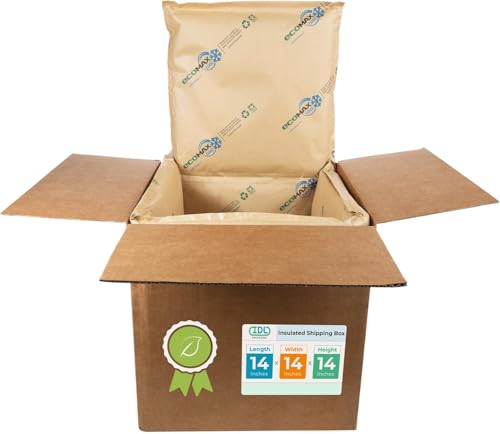
The IDL Packaging box measures 14 x 14 x 14 inches and holds up to 5.8 gallons. It features EcoMax Thermal-Paper Insulation Liners with a 1.5-inch thickness to help keep contents cold for up to 72 hours when used with ice packs. The liner uses a Kraft paper shell with multilayer cellulose wadding, providing moisture absorption and microbial protection. This option is ideal for frozen foods, meat, and fish, offering strong protection while avoiding plastic insulators.
Key considerations include compatibility with your shipping workflow, the availability of liners, and how long shipments typically take to reach customers. The paper-based insulation can be advantageous for moisture control and spoilage prevention, though it may require careful packing to maximize performance in longer transit times.
Dry Ice Packs for Shipping – Long Lasting (LUNA ICE, 12 Pack)

These 12-pack dry ice packs are designed for long-lasting cooling, with a focus on durability and convenience for shipping perishable items. They can be used for meat, seafood, baked goods, and frozen treats, and are suitable for travel or emergency use. They ship flat and are TSA-compliant for certain transport scenarios when used appropriately. They are marketed as both disposable and reusable, offering flexibility in cost management and waste reduction.
Consider how often you ship and whether you prefer reusable packs to reduce ongoing costs. Also assess compatibility with your packaging method to ensure maximum contact with cold contents without leaking or damage.
ZAVOOS 12 Pack Insulated Boxes

This set includes 12 insulated shipping boxes, each sized to 10.8 x 7.3 x 6.5 inches, with an aluminium foil liner for enhanced thermal protection. The thick cardboard construction provides durability and potential reuse, supported by the foil liner that helps maintain cold or hot conditions during transport. The design aims to balance protection with portability, making it suitable for a range of temperature-sensitive items.
Practical considerations include whether the boxes are readily refillable with liners or inserts and how easy they are to stack or store in your facility or warehouse. The aluminum liner is a notable feature for improving insulation, but it may require careful handling to avoid punctures or wear over time.
Insulated Cold Shipping Box With Foam Cooler (Medium)

From EPE, this insulated box uses a robust PP construction and is designed for multi-day shipments, supporting 24 to 72-hour timelines. It is reusable and recyclable, aligning with sustainability goals while offering reliable insulation. The box is suitable for shipping pharmaceuticals, frozen foods, breast milk, biotechnology products, and other perishable items, with compatibility for dry ice to extend cooling capabilities.
When selecting this option, consider the regulatory requirements for your product category, the need for extended cooling, and the ease of cleaning and reuse. Recyclability is a notable advantage for businesses aiming to reduce packaging waste.
EmmChill SF12A EcoFriendly Insulated Cooler (Pack of 2)

EmmChill offers an eco-friendly insulated shipping cooler made in the USA, using polyurethane insulation that provides robust thermal performance. The pack includes two boxes with an interior dimension setup designed for precise packing, commonly used for shipping perishable items like frozen foods and specialty foods. The product emphasizes recyclable construction and durability for repeated use.
Key questions include the available interior space for your typical products, whether the dimensions fit your standard pallets or shipping cartons, and how the packs hold up under different weather conditions during transit.
Tinlade Insulated Shipping Box Set (6)

This set contains six insulated shipping boxes with an internal insulation layer and reflective metallized film lining. The dimensions place them in a compact category, suitable for portable and convenient use in transporting food. The outer carton measures slightly larger to accommodate the inner insulation, providing temperature stability during transit and a buffering effect against external temperature changes.
Consider how each box’s liner and reflective layer interact with your packing plan, including ice packs or dry ice usage, to optimize cooling duration and prevent condensation damage.
Polar Tech XM15C Thermo Chill Expand-em Series

Polar Tech XM15C provides an insulated carton with a foam insert designed to maintain stable temperatures for food, beverage, and pharmaceutical shipments. The foam container sits inside the insulated box, helping to preserve cold or hot content during transit. This kit approach supports consistent temperature control across multiple items in a single shipment, reducing temperature excursions.
When evaluating this option, consider whether a preassembled kit better fits your dispatch workflow or if modular components offer greater flexibility for varying payloads and order sizes.
Robin II EPS Foam Cooler 3-Pack

Robin II offers a 3-pack of EPS foam shipping coolers inside sturdy cardboard boxes. Each cooler measures 9 x 8 x 7.5 inches with inner dimensions of 6 x 5 x 4.75 inches, designed for frozen and refrigerated goods. These compact coolers are suitable for small parcels or multi-item shipments, providing a lightweight option with dependable insulation.
Consider how the 3-pack will fit with your typical shipment mix and whether you need standardized packaging to streamline fulfillment operations or additional padding to prevent damage.
Buying Guide: Key Purchase Considerations
To choose the best freezer boxes for shipping, weigh insulation quality, material durability, and reuse potential. Capacity and dimensions should align with your product sizes and fulfillment workflow. Consider the following factors:
- Insulation Type and Thickness: Thicker liners or multiple insulation layers generally extend cooling duration but add bulk and weight. Paper-based liners may absorb moisture effectively, while foil or foam layers offer strong thermal barriers.
- Cooling Method Compatibility: Some boxes pair with dry ice, others with gel packs or ice packs. Ensure your chosen method complies with shipping regulations and carrier policies.
- Durability and Reusability: Reusable boxes reduce waste and long-term costs. Assess whether materials withstand repeated use, stacking, and handling during transit.
- Storage and Availability: Consider storage footprint, ease of procurement, and shelf life of liners or inserts. Consistent availability helps maintain shipping schedules.
- Regulatory Compliance: Pharmaceuticals and certain foods may have specific packaging standards. Confirm that the selected box meets relevant guidelines for your product category.
- Environmental Impact: Recyclability and the potential for reuse can influence sustainability goals. Compare the overall lifecycle of each packaging option.
- Cost vs. Benefit: Balance upfront costs with predicted savings from reduced spoilage, returns, and damaged items. Include labor and handling considerations in total cost.
- Size and Weight: Larger boxes offer more space but increase shipping weight. Optimize to minimize dimensional weight charges while protecting contents.
In practice, businesses often use a mix of boxes and liners to tailor to order types, shipping destinations, and transit durations. Testing packaging with your typical products helps calibrate insulation needs and ensure reliable cold-chain performance.