The best forklift battery water filling system depends on reliability, ease of use, and compatibility with your battery setup. This article highlights five strong options ideal for forklift fleets and maintenance teams. Each pick is evaluated for who it’s best for, why it stands out, and a practical caveat to consider before purchasing.
| Product | Best For | Why It Stands Out |
|---|---|---|
| Battery Watering Technologies Direct Fill Link | Fleet managers needing direct-fill accuracy | Direct Fill Link with built-in pressure regulator; durable design |
| Water My Battery Gravity Tank (2.5 gal) | Facilities with central watering stations | Steady flow and compatibility with multiple systems via adapters |
| LHNY 48V Battery Watering System Kit | 48V forklift batteries | Simple single-connection flow, fast setup |
| LHNY 36V Battery Watering System Kit | 36V forklift batteries and light carts | Same single-connection design, compact for smaller fleets |
| Battery Watering Technologies Direct Fill Link – Flow Rite | Direct-fill systems with Flow Rite compatibility | Direct Fill Link compatibility; durable flow indicator |
Battery Watering Technologies Direct Fill Link
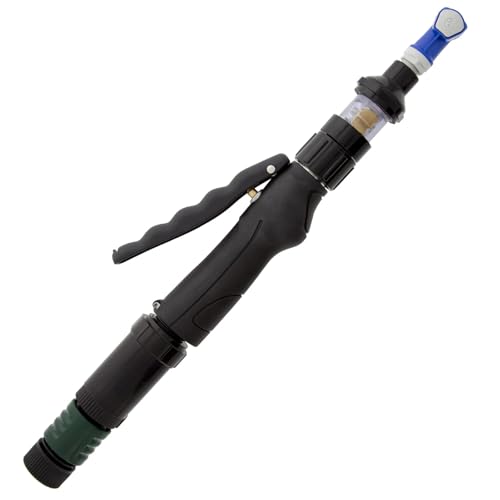
The Battery Watering Technologies Direct Fill Link is designed for direct, regulated filling with a pressure-sensitive handle. The flow indicator sits inside a PVC-encased section for durability. This option is best for fleets that prioritize a straightforward fill process and direct compatibility with BWT systems.
Best for: maintenance teams seeking precise, hands-on control for each battery cell. Why selected: the Direct Fill Link minimizes overfilling risk through its regulator and durable construction.
Caution: ensure you have the correct fitment for your battery bank and confirm connector compatibility before purchase.
Water My Battery Gravity Tank (2.5 gal)
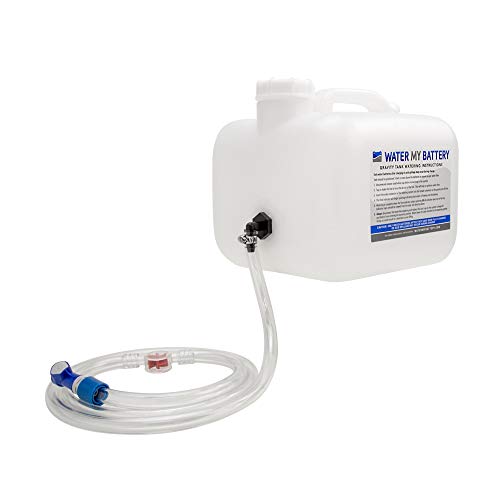
The Gravity Tank from Water My Battery provides a steady flow designed for use with compatible battery watering systems. It’s suitable for facilities that operate multiple stations or carts, with adapters that allow compatibility with Water My Battery and Battery Watering Technologies ecosystems.
Best for: shops that want a portable, gravity-based solution for regular watering cycles. Why selected: designed with golf-cart users in mind and supports cross-compatibility with common systems.
Caution: requires proper black connector when used with different manufacturers’ systems to avoid misfit or leaks.
LHNY 48V Battery Watering System Kit

This kit is aimed at 48-volt forklift batteries, featuring a direct, single connection that fills each battery set accurately. The design emphasizes fast installation and includes safety-conscious features to reduce spill risk.
Best for: operators with 48V fleets needing a quick-to-install, reliable filling method. Why selected: easy-to-use, consistent water delivery across cells, which helps minimize over- or under-filling.
Caution: verify the valve size (diameter about 35 mm) before ordering to ensure it fits your battery bays and connectors.
LHNY 36V Battery Watering System Kit

Designed for 36-volt systems, this kit uses a single connection to fill multiple cells efficiently. It includes self-regulating valves and clear tubing for visibility during the process. Pairing quick connects ensures fluid flows smoothly through tubing to each valve.
Best for: smaller forklifts or golf carts within a 36V segment seeking a compact, fast-install solution. Why selected: consistent filling with a simple setup process, reducing maintenance downtime.
Caution: confirm the overall system diameter (35 mm) and compatibility with existing battery enclosures to prevent installation issues.
Buying Guide
Key considerations for selecting a forklift battery water filling system:
- Voltage compatibility: match the kit with your battery bank (e.g., 36V, 48V) to ensure proper filling and safe operation.
- Connection type: single-connection systems simplify installation and reduce leak points, while multi-port options may suit larger arrays.
- Flow control: look for built-in regulators or flow indicators to prevent overfilling and electrolyte loss.
- Durability and materials: PVC-encased flow indicators and corrosion-resistant tanks extend service life in industrial environments.
- System compatibility: some products are designed for direct Fill Link or Flow Rite compatibility; verify connectors and adapters for your existing setup.
- Portability vs. fixed setups: gravity tanks and portable carts suit mobile maintenance in shops, while fixed kits are better for stationary bays.
- Maintenance needs: consider ease of cleaning, accessibility of fill points, and availability of replacement parts.
Frequently Asked Questions
- What is a direct fill link and why is it important? It provides controlled, direct filling to each cell, reducing overfill risk and ensuring consistency.
- Do I need adapters for compatibility with my current system? Yes, some products require adapters to work with different manufacturers’ connectors.
- Can these systems work with both forklifts and golf carts? Many models support multiple vehicle types, but verify voltage, connector size, and tubing compatibility for your use case.
- Is gravity-based filling less reliable than pressurized systems? Gravity systems offer simplicity and mobility but may require careful flow management to prevent underfilling in some configurations.