If you’re sourcing forged stainless steel flanges, you want options that balance strength, corrosion resistance, and compatible pressure ratings. This guide highlights five top choices for common pipe sizes and applications, helping buyers pick the best flange for low to medium pressure systems, industrial setups, and high-precision welding projects. Each option is explained with who it’s best for, key specs, and a practical caveat to avoid surprises in the field.
| Product | Size / Type | Material | Best For |
|---|---|---|---|
| ADMTGXM 304 Stainless Flange | 3 Inch Slip On | 304 Stainless Steel | General industry, low to medium pressure piping |
| PRM 1-1/4 Inch Flange | 1-1/4 Inch NPT Raised Face | 304 Stainless Steel | Small-diameter systems, medium pressure connections |
| ADMTGXM 304 Stainless Flange | 1 Inch Slip On | 304 Stainless Steel | Compact piping runs, maintenance-friendly setups |
| Guardian 2″ 150# Flange | 2″ Raised Face Threaded | 304 Stainless Steel | Threaded connections, medium-pressure lines |
| ADMTGXM 304 Stainless Flange | 1-1/2 Inch Slip On | 304 Stainless Steel | Medium-length runs, welded-on bonding |
304 Stainless Steel Flange 3 Inch, Slip On, Forged
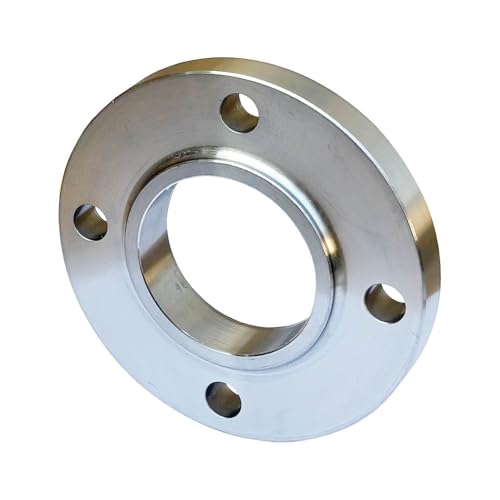
Product overview: This forged 304 stainless flange complies with ASME B16.5-2020 Class 150 and uses a Slip-On style with a short neck for easy pipe insertion. It’s well suited to low and medium pressure systems in general industrial and engineering projects. Best for buyers who need a standard, versatile flange for routine piping with straightforward welding on both sides.
Who it’s best for and why: Best for mid-size piping runs in manufacturing, chemical handling, and water treatment where a robust, corrosion-resistant flange is required without heavy-duty threading. The raised-face design helps improve sealing and reduce leaks under typical Class 150 service.
Cautions or limitations: Confirm dimensions against the pipe or mating flange before purchase to ensure compatible bolt pattern and bore size. Some users may require alternatives for higher pressure or non-standard diameters.
Stainless Steel Flange 1-1/4 Inch NPT, 304, Class 150

Product overview: This 1-1/4 inch NPT raised-face flange is forged from 304 stainless steel, offering Class 150 rating for medium-pressure applications. The raised-face design enhances sealing efficiency, supporting reliable connections in varied piping systems.
Who it’s best for and why: Best for compact, high-integrity piping lines where a robust threaded flange is needed, such as air, water, or light chemical service. The 304 material provides good corrosion resistance in typical industrial environments.
Cautions or limitations: Designed for NPT threaded connections; not suited for slip-on installations. Verify thread engagement length and gasket compatibility when assembling with other flange types.
304 Stainless Flange 1 Inch, Slip On, Forged

Product overview: This is a forged 304 stainless flange with a Slip-On design and raised-face, Class 150 rating. It’s optimized for straightforward welding on both sides and is widely used in low to medium pressure systems in industrial settings.
Who it’s best for and why: Choose this for short, easy-to-assemble piping segments where fast installation and reliable welds are priorities, such as light processing lines and utility runs.
Cautions or limitations: Check detailed dimensions against the mating pipe to ensure proper slip-on fit and avoid misalignment during welding.
2″ Inch 304 Stainless Steel 150# Raised Face Threaded Flange

Product overview: This 2″ raised-face flange is rated 150# and designed for threaded connections. Built from 304 stainless steel, it offers moderate strength and corrosion resistance for standard industrial piping needs.
Who it’s best for and why: Best for medium-pressure threaded connections in larger line sets where reliability is essential and the flange must resist corrosion in typical processing environments.
Cautions or limitations: Threaded flanges require precise compatibility with mating bolts and gasket types. Do not rely on gasket alone to seal if misalignment exists.
304 Stainless Flange 1-1/2 Inch Slip On

Product overview: A forged 304 stainless steel slip-on flange with a raised face and Class 150 rating. This flange supports a strong welded seal on one side and a slip-in connection on the other for low to medium pressure systems.
Who it’s best for and why: Choose this for extended piping runs where quick alignment and robust welds are needed, such as water treatment lines or light petrochemical services.
Cautions or limitations: Ensure the pipe diameter and bolt pattern match the flange dimensions; verify allowable operating pressure for your specific application.
Buying Guide
What material matters for forged flanges?
304 stainless steel provides solid corrosion resistance and general-purpose strength. If exposed to highly corrosive or high-temperature environments, consider alternative alloys or coatings. Forged construction typically offers better mechanical properties than cast equivalents.
Which flange type should you choose?
Slip-on flanges are convenient for quick welding on one or both sides, ideal for low to medium pressure systems. Threaded flanges excel where threaded connections reduce welding needs, but require precise threading and gasket compatibility. Raised-face designs improve sealing efficiency, especially in Class 150 services.
How to verify compatibility?
Always compare flange bore, bolt circle diameter, and thickness to the mating part. Confirm the class rating corresponds to system pressure. Check standards like ASME B16.5 to ensure alignment with your project requirements.
Common cautions to avoid
- Dimension mismatches can cause leaks or misalignment during assembly.
- Incompatible gasket materials can compromise seals in raised-face flanges.
- Threaded flanges require proper torque and bolt sizing to avoid joint failure.
Practical selection checklist
- Operating pressure and temperature range
- Connection type (slip-on, threaded, raised face)
- Pipe size and bolt pattern compatibility
- Corrosion environment and material suitability
- Ease of installation and future maintenance
Short FAQ
What is a forged stainless steel flange?
A flange formed from forged stainless steel to join piping components, offering strength and corrosion resistance.
What does Class 150 mean?
A pressure rating indicating the maximum allowable working pressure for the flange under specified temperature conditions.
When to use slip-on vs. threaded flanges?
Slip-on is versatile and welds on both sides; threaded is convenient when welding isn’t desirable, but requires precise threads.
What should I confirm before buying?
Size, bore, bolt pattern, connection type, and compatibility with mating parts and gasket materials.
Are 304 stainless flanges suitable for all fluids?
They are suitable for many common fluids, but aggressive chemicals or high temperatures may require special alloys or coatings.
How can I ensure leak-free joints?
Use compatible gaskets, proper surface preparation, correct torque, and verify the seal during testing before service.