Answering how to choose a reliable flanged swing check valve, this guide highlights five solid options suited for common piping systems. These valves prevent backflow and protect pumps in both residential and industrial applications. The best choices vary by material, pressure rating, and installation needs, so consider fluid type, temperature, and flange standards when selecting. The buyers below are grouped for different priorities: durability in harsh fluids, corrosion resistance, budget-conscious builds, higher pressure requirements, and standard industrial use.
Summary of selected products
- Cast Carbon Steel A216 Swing Check Valve, Flanged End, ANSI Class 150, Metal Seat (2″) — Anix
- CF8M Stainless Steel 316 Flanged Swing Check Valve, ANSI Class 150, Flanged End (2″) — Anix
- NIBCO Fig No F-918-B, 3 in. Cast Iron Check Valve, Swing, Flanged — NIBCO
- 3″ WEFLO F1322-350 Flanged Swing Check Valve UL/FM 350 PSI — Generic
- P440F 2 2 in. PVC Flanged Swing Check Valve – Schedule 80 — Generic
Cast Carbon Steel A216 Swing Check Valve

Best for high-strength, carbon-steel piping systems. This valve uses Cast Carbon Steel A216 with a raised face flange end and bolted cap, aligning with ASME B16.5 standards for dependable, robust service. It suits environments where metal seating and flanged connections are required by industry codes. The material choice supports elevated temperatures and aggressive fluids better than standard cast iron options.
Who it’s best for: facilities needing a durable, metal-seated swing check valve for ANSI Class 150 systems in oil, gas, or heavy industrial water service. Why selected: it offers a strong metal seat and a compatible carbon steel body for long-term reliability in demanding applications.
Limitation: data notes a bolted-cap design with flanged end; ensure it matches your flange drill pattern and bolt torque specs for your installation.
CF8M Stainless Steel 316 Swing Check Valve

Best for corrosion resistance and cleanroom or pharma-adjacent environments. Made from Investment Casting Stainless Steel 316 with a raised-face flange end and bolted cap, this valve complies with ASME B16.5 standards for reliable, chemical-resistant service. Ideal for fluids that require corrosion resistance and good hygiene in conveyance lines.
Who it’s best for: facilities needing strong corrosion resistance in moderate to aggressive fluids. Why selected: stainless steel 316 construction offers superior corrosion resistance over carbon steel in many process fluids.
Limitation: stainless valves can be more expensive and may require careful handling to avoid galling on stainless flanges during installation.
NIBCO F-918-B Cast Iron Swing Check Valve
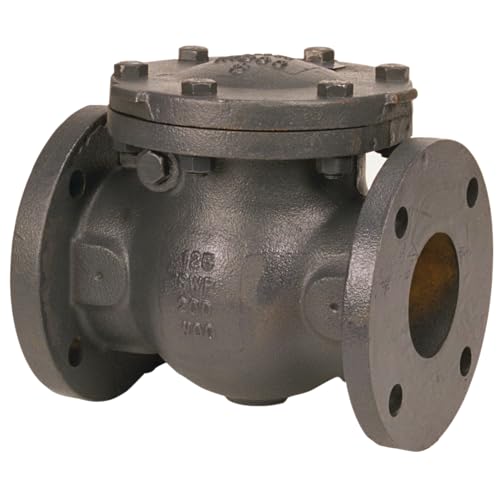
Best for budget-conscious projects where standard cast iron suffices. This 3-inch, flanged, horizontal swing check valve uses a bolted bonnet with a metal seat, offering solid, economical performance for general plumbing and light industrial lines. It’s a straightforward choice when cost is a primary constraint.
Who it’s best for: facilities needing an affordable, reliable swing check valve for non-corrosive water or light industrial applications. Why selected: value-oriented option with a traditional metal-seated design.
Limitation: cast iron is more prone to corrosion than stainless steel in aggressive fluids; suit it to non-corrosive services and ensure compatible media.
3″ WEFLO Flanged Swing Check Valve UL/FM 350 PSI

Best for high-pressure fire protection and critical backflow prevention tasks. This valve supports UL/FM 350 PSI working pressure and is certified for fire sprinkler risers, standpipes, and pumps. It also features a resilient EPDM seated disc for bubble-tight shutoff against a bronze seat ring. It’s a robust choice where safety certifications add value.
Who it’s best for: fire protection systems or high-pressure backflow prevention in commercial or industrial facilities. Why selected: high-pressure rating and fire-system certifications boost reliability for critical applications.
Limitation: higher pressure rating may be unnecessary for small domestic systems; ensure your system actually requires UL/FM certification.
P440F 2 2 in. PVC Flanged Swing Check Valve

Best for lightweight, corrosion-free applications in water or non-abrasive fluids. This PVC Swing Check Valve is Schedule 80, with low flow resistance and suitability for horizontal or vertical installation. Its PVC material helps resist chemical attack in non-metallic piping systems, making installation easier in some environments.
Who it’s best for: plumbing projects in offices, schools, or light industrial settings where non-metallic piping is used. Why selected: cost-effective and corrosion-resistant option for non-steel systems.
Limitation: PVC is not suitable for high-temperature or high-pressure situations; verify your fluid temperature and pressure requirements before use.
Buying Guide: Flanged Swing Check Valves
- Material compatibility: choose carbon steel for strength, stainless steel for corrosion resistance, cast iron for budget builds, or PVC for non-metallic piping. Consider the chemical nature and temperature of the fluid.
- Flange standards: ensure flange dimensions match the piping system (ASME B16.5 is common for many industrial applications).
- Seat type: metal seats offer durability and tight shutoff; EPDM or other elastomer seats provide good seating and weathering properties for certain fluids.
- Pressure rating: select a valve that meets or exceeds system pressure. Higher ratings offer safety margins for surge and backflow conditions.
- Installation orientation: most swing check valves can be installed horizontally or vertically, but verify the manufacturer’s guidelines for your model.
- Certifications and applications: UL/FM listings or fire-safety certifications apply when used in fire protection systems; verify your needs before purchasing.
FAQ
- What is a flanged swing check valve used for? Answer: It prevents backflow in pipelines while allowing forward flow, protecting pumps and equipment from reverse flow damage.
- Which material is best for acidic fluids? Answer: Stainless steel (316) offers strong corrosion resistance; consider PVC for non-metallic piping with acidic fluids that won’t affect PVC.
- Can these valves be installed in any direction? Answer: Many swing check valves support horizontal or vertical installation, but refer to specific model guidance for orientation limits.
- What does ANSI Class 150 indicate? Answer: It describes the pressure-temperature rating and flange compatibility for the connection, guiding compatibility with piping standards.
- Are UL/FM certifications required for home projects? Answer: Generally not; UL/FM ratings are critical for commercial fire protection and some industrial uses, but not typical residential plumbing.
- Do metal-seat valves work with hot water? Answer: Metal seats can tolerate higher temperatures, but always verify temperature limits for the specific model and fluid.