Find the right fishing rod wrapping machine to streamline underwraps, wraps for guides, and epoxy drying. This guide highlights five reliable options and clarifies who each product is best for. Ideal buyers include DIY rod builders, hobbyists repairing damaged rods, and professionals seeking stable platforms and precise tensioning. Below is a quick summary table of the featured machines to help you compare at a glance.
| Product | Best For | Key Benefit |
|---|---|---|
| CRB Advanced Hand Wrapper System | Advanced hobbyists and pros | Two-spool capacity with smooth tension |
| Aventik Rod Dryer | Efficient epoxy curing and winding | Heavy-duty stand, auto operation mode |
| CRB Core Hand Wrapper | Compact builds and versatile setups | Integrated tensioner and single-spool carriage |
| Epoxy Winding Machine (Generic) | Budget-conscious setups | Electric-drive, adjustable speed |
| Threlaco Rod Repair Kit | All-in-one repair kits | Portable, includes threading and tools |
CRB Advanced Hand Wrapper System – 2 Spool Tensioner
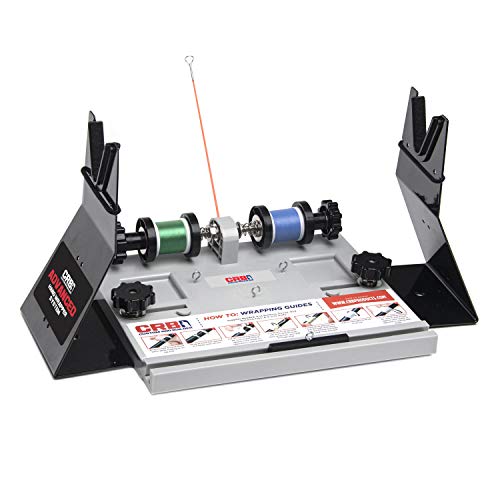
The CRB Advanced Hand Wrapper System focuses on smooth thread tension and precise adjustments. It uses a ball-bearing, spring-loaded tension system to keep wraps tight and uniform, reducing slippage during both underwraps and overwraps. The two-spool capacity helps you switch colors quickly, which is useful for rod builders who layer wraps for aesthetics or protection. A large tension knob and fine-thread adjustments improve control when positioning the rod stand or changing thread types.
Who is this best for? Professional builders and serious hobbyists who frequently swap thread colors and demand consistent tension. The dual-spool setup is ideal for projects that alternate colors mid-wrap, such as underwraps followed by decorative or protective overwraps. A potential limitation is its size; it fits well on a sturdy workbench but may be heavier to move around a small shop.
What to know before buying: the system prioritizes tension accuracy and color versatility. It’s a robust choice for ongoing rod-building projects where wrap quality matters as much as speed. If you only need a single color at a time, a lighter single-spool option may suffice.
Aventik Rod Dryer for Rod Building & Epoxy Drying
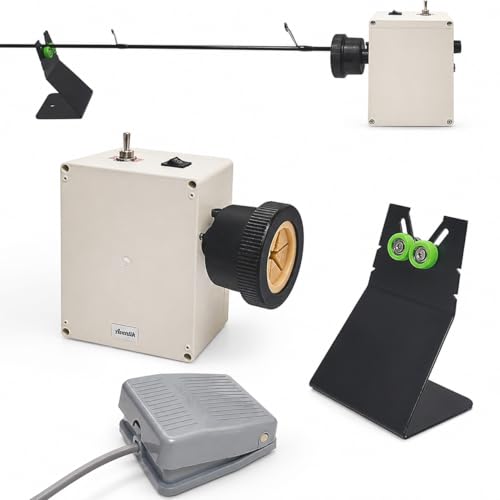
The Aventik Rod Dryer is designed to support epoxy drying while winding and wrapping. It features an upgraded rubber chuck for a firmer grip on various rod diameters, plus a heavy-duty iron support stand to prevent tipping. The motor can operate in auto mode, allowing continuous winding assistance after startup. This makes it well-suited for users who frequently wrap guides and need stable, hands-free drying during epoxy curing.
Who should consider this? Rod builders who want a reliable, steady platform that doubles as a drying solution. It’s better for those who value stability and hands-free operation during long epoxy cycles. A caution: be sure the stand height aligns with your typical rod diameter and motor height to avoid misalignment during use.
Why select this over others? The auto operation mode and upgraded chuck address common issues with slip and inconsistency. If you often work with thick or irregular rod profiles, this machine helps maintain consistent tension while the epoxy sets.
CRB Core Hand Wrapper

The CRB Core Hand Wrapper emphasizes a compact, stable platform with a single-spool thread carriage and integrated tensioner. The adjustable rod stands support precise guide wrapping, hook keepers, trim bands, and tip tops. This setup simplifies operation for builders who want reliable wraps without the bulk of larger systems. The integrated tensioner helps dial in the correct thread tension to ensure clean, secure wraps.
Best for? Builders who need a smaller footprint without sacrificing wrap quality. The single-spool carriage is ideal for standard underwraps and controlled wraps on mid-sized rods. Limitation: it may require manual threading for frequent color changes, compared with two-spool systems.
Why it stands out: the combination of adjustable stands and a built-in tensioner streamlines many basic builds. Choose this if you want a balance between space savings and wrap quality for most common rod-building tasks.
Epoxy Fishing Rod Winding Machine

This Epoxy Winding Machine focuses on rotating gluing and winding for epoxy-impregnated wraps. Built with aluminum alloy body and ABS chuck, it supports a broad voltage range and a 0-300 RPM speed range. The chuck clamping range of 0-50mm accommodates a variety of rod sizes. The design targets consistent resin distribution during curing and can be used with many epoxy formulations.
Best for? Builders who want an affordable, motor-driven option to assist with even epoxy application. It’s a good fit for beginners and hobbyists expanding into more complex wraps. Limitation: detailed tension control and color management may be less refined than premium multi-spool systems.
Threlaco Rod Repair Kit

The Threlaco fishing rod repair kit offers an all-in-one solution with a rod wrapping and winding machine, an adjustable-height rack, pedal switch, wraps, tape, brushes, scissor, and sandpaper. It is designed to be portable and complete for on-the-go repairs. The adjustable rack height helps accommodate different rod lengths, and the included tools cover common maintenance tasks, from wrapping to finishing.
Who is this best for? Weekend anglers and travelers who need a compact, ready-to-go kit for sudden rod damage and field repairs. Caution: while portable, the setup may not provide the same level of precision as standalone wrapping stations for high-end builds.
Buying Guide: Choosing the Right Fishing Rod Wrapping Machine
What is the main purpose of your rod-building work?
Define whether your primary need is wrap precision, color versatility, or epoxy curing assistance. If you frequently switch thread colors, a two-spool or multi-spool model offers better efficiency. For steady, detailed underwraps, a compact wrapper with an integrated tensioner can reduce setup time.
How important is tension control?
Precise tension improves wrap alignment and reduces thread breakage. Machines with adjustable tension knobs or integrated tensioners help maintain consistent wraps across long builds. If you work with delicate threads, a friction-free tension system is valuable.
Do you need portability or a fixed workshop setup?
Portable kits work well for field repairs and small spaces. Fixed stations provide stability for long sessions and higher-tidelity builds. Consider the weight, base stability, and whether you require a stand or bench mounting.
What about epoxy drying and curing?
Some models include or pair well with epoxy-drying capabilities. If you frequently apply epoxy, a machine with a reliable drying function or compatible stand can speed up workflows and improve cure consistency.
Are there compatibility considerations?
Check rod diameters, spool capacity, and chuck compatibility. Ensure the machine supports the range of rod sizes you typically work on. A larger clamping range is beneficial for thicker rods or custom builds.
Maintenance and durability considerations
Look for robust materials (aluminum or iron stands) and smooth operation components (ball bearings, tuned knobs). A durable unit reduces downtime and improves wrap consistency over time. Consider whether replacement parts or accessories are readily available from the manufacturer.
Summary: quick buyer takeaways
- Best for color work and high-precision wraps: CRB Advanced Hand Wrapper System.
- Best for epoxy drying and stable operation: Aventik Rod Dryer.
- Best compact option with integrated tensioner: CRB Core Hand Wrapper.
- Best budget-friendly drive option: Epoxy Winding Machine (Generic).
- Best all-in-one repair kit for field use: Threlaco Rod Repair Kit.
Frequently Asked Questions
- What is a fishing rod wrapping machine used for?
A wrapping machine assists with applying underwraps, decorative wraps, and securing thread tension during rod building and repairs.
- Do I need a two-spool system?
Two-spool systems are advantageous when you frequently switch thread colors or perform underwraps and overwraps in one project.
- Is auto operation important for epoxy winding?
Auto operation helps maintain steady winding speed and reduces manual effort during continuous wrapping and epoxy work.
- Can these machines handle large diameter rods?
Most units have a clamping or chuck range that accommodates common rod sizes; always check the chuck clamping range and stand height for your specific rods.
- Are portable kits suitable for professional shops?
Portable kits are ideal for field repairs or small spaces. For a busy shop with frequent high-volume builds, a fixed, stable station often yields more consistent results.