Answering the common buyer question, these fabric roll slitting machines are selected to balance precision cuts, high-speed processing, and versatility for various materials. They suit printing plants, packaging workshops, industrial lines, and converting facilities. The following picks emphasize stability, accuracy, and scalable output, making them useful for both small shops and larger operations.
| Product | Best For | Notes |
|---|---|---|
| Roll to Roll Slitting Machine 1600mm Automatic Cutter Rewinder | Medium to large-scale paper/film operations | Solid all-round performance with broad material compatibility |
| Heavy-Duty Automatic Roll to Roll Slitting Machine | High-speed, high-output environments | Emphasizes zero-waste cuts and speed |
| Automatic Slitting and Rewinding Machine High-Speed | Demanding film, fabric, and paper slitting | High-speed operation tailored for efficiency |
| Professional Automatic Touch Screen Slitting and Rewinding Machine | Digital control and easy operation | Intuitive control system for precision tasks |
| Jumbo Roll Slitting Machine Automatic 1600mm | Large-volume industrial converting | Designed for jumbo rolls with reliable performance |
Roll to Roll Slitting Machine 1600mm Automatic Cutter Rewinder

Best for mid-to-large scale paper, film, and label operations. This model emphasizes stable feeding, precise cutting, and smooth rewinding to boost efficiency in converting rolls. It supports thermal paper, self-adhesive labels, BOPP, PET, PVC films, nonwoven fabrics, and other flexible materials, making it suitable for packaging and labeling workflows.
Why selected: It provides a balanced mix of accuracy and versatility for plants handling varied materials. The integrated rewinder helps maintain clean edges and consistent roll diameters, which is crucial for downstream finishing processes.
Limitation: The listing notes multiple materials and a need to confirm exact model configurations for your line, which may affect setup time.
Heavy-Duty Automatic Roll to Roll Slitting Machine

Best for high-speed production environments such as large packaging facilities or label converters. It highlights ultimate precision and clean cuts to minimize waste even on kraft paper, toilet paper, or bath tissue rolls. The machine is designed to process jumbo rolls into finished forms rapidly, supporting demanding deadlines.
Why selected: Its focus on zero-waste edges and fast throughput aligns with operations where material cost and cycle time directly impact profitability.
Caution: The model supports customization; confirm your exact configuration and service terms before purchase to ensure it matches your material lineup and capacity requirements.
Automatic Slitting and Rewinding Machine High-Speed
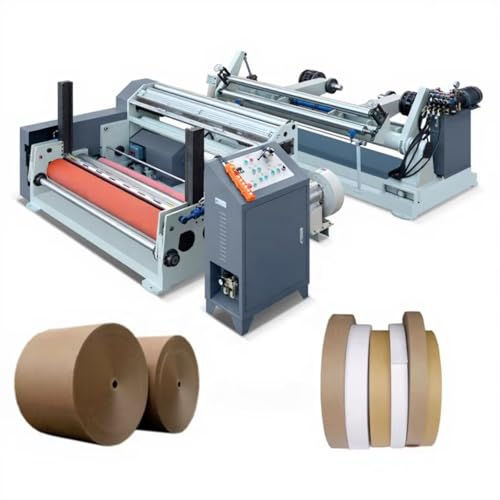
Best for demanding film, fabric, and paper slitting tasks. This model emphasizes high-speed operation and efficient conversion, enabling jumbo rolls to be processed into ready-to-use sheets or logs quickly, supporting tight project deadlines.
Why selected: It offers strong speed-oriented design, which helps convert operations scale output without sacrificing edge quality or consistency.
Limitation: As with several listings, multiple models exist; verify the exact model’s capabilities and integration needs before committing.
Professional Automatic Touch Screen Slitting and Rewinding Machine

Best for facilities that value digital control and intuitive operation. The touch screen interface supports precise cuts and consistent rewinds, helping operators manage complex jobs with ease and reducing setup times for different materials.
Why selected: Digital control is advantageous for converting lines that require quick changeovers and repeatable results across varied runs.
Limitation: The listing notes multiple models; confirm the exact control features and compatibility with existing automation systems during purchasing.
Jumbo Roll Slitting Machine Automatic 1600mm

Best for large-volume converting operations that require consistent, high-capacity processing. The jumbo roll slitter supports stable feeding, precise cutting, and smooth rewinding, making it suitable for extensive packaging and industrial lines with wide material formats.
Why selected: It combines the capacity of 1600 mm rolls with a design that prioritizes reliable performance across long production runs.
Limitation: The product notes the need for direct contact for specifications and videos, so verify technical details and compatibility with your line before purchase.
Buying Guide: Key Considerations For Choosing A Fabric Roll Slitting Machine
- Material range and compatibility: Confirm supported materials (paper, film, nonwoven, labels, adhesives) to ensure the machine covers your typical runs.
- Slitting accuracy and edge quality: Look for systems that deliver razor-sharp cuts and uniform rewinds to minimize waste and rework.
- Throughput and speed: Match machine speed to your production schedule. High-speed models can significantly raise output but may require robust handling systems.
- Automation and control: Digital touch screens or PLC-based controls simplify changeovers, recipe storage, and process consistency across shifts.
- Flexibility vs. specialization: Some machines are highly specialized; others are adaptable for a range of materials. Choose based on your product mix and future growth plans.
- Upgrade path and after-sales support: Consider available service, training, spare parts, and potential customization to fit evolving needs.
- Line integration: Check compatibility with existing unwinders, web guide systems, tension controls, and downstream packaging equipment.
Frequently Asked Questions
- What is a roll slitting machine used for? It cuts wide rolls of material into narrower widths, then rewinds them into finished rolls suitable for further processing or packaging.
- How do you choose between high-speed and precise slitting? If your priority is volume and speed, choose high-speed models. If edge quality and waste reduction are critical, prioritize precision-focused machines.
- Can these machines handle multiple materials at once? Many models support a range of materials, but confirm the exact compatibility for your typical lineup to avoid setup issues.
- Is digital control worth it for a small shop? Yes, for repeatable results and easier changeovers, a touch-screen or programmable controller reduces downtime and errors.
- What maintenance should be expected? Routine belt and knife maintenance, tension calibration, and periodic alignment checks help preserve accuracy and extend service life.
- Do these machines require special preparation for installation? Most installations benefit from professional setup to ensure proper tension control, guides, and safety interlocks.