Edge-of-dock levelers help bridge height differences between trucks and the loading dock, enabling safer, faster, and more efficient material handling. This guide highlights five reputable options from Vestil and BLUFF that balance strength, ease of use, and installation flexibility. Ideal buyers include warehouse managers seeking durable, low-recess installations, small business fleets needing reliable one-person operation, and facilities aiming to reduce dock-related injuries. The following table summarizes key choices to compare at a glance.
| Product | Brand | Capacity | Ramp Width | Best For |
|---|---|---|---|---|
| Vestil FM-2072 Mechanical Edge-O-Dock Leveler | Vestil | 20,000 lb | 72 in | High-traffic docks needing solid mechanical operation |
| Vestil FM-2066 Steel Mechanical Edge O Dock Leveler | Vestil | 20,000 lb | 66 in | Balanced width with strong grip for varied fleets |
| BLUFF Edge-of-Dock Levelers – 78″W Plate | BLUFF | Unknown (industrial) | 78 in | One-man operation with minimal back strain |
| Vestil FM-2566 Steel Mechanical Edge O Dock Leveler | Vestil | 25,000 lb | 66 in | Extra capacity for busy loading docks |
| Vestil FM-3066 Steel Mechanical Edge O Dock Leveler | Vestil | 30,000 lb | 66 in | Heavy-duty operations with high truck variance |
Vestil FM-2072 Mechanical Edge-O-Dock Leveler

Best for high-traffic loading docks needing a robust mechanical edge leveler. The FM-2072 uses steel construction for strength and durability. It includes 18″ high bumpers at each end to protect the dock and truck during alignment. Choose this if you prioritize a long-lasting, no-power requirement installation in busy facilities. Caution: Mechanical operation relies on proper maintenance of moving parts to prevent sticking.
Vestil FM-2066 Steel Mechanical Edge O Dock Leveler
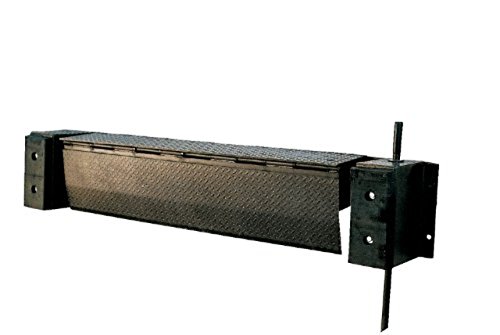
Best for facilities needing quick installation without a concrete recess. The FM-2066 features a tread plate surface for positive non-slip traction and is designed so it does not require a concrete recess, simplifying retrofits. It is well-suited for warehouses with frequent dock-to-truck transitions where a secure grip is essential. Limitation: Dimensions may be less suitable for wider fleets if your docks regularly handle oversized trailers.
BLUFF Edge-of-Dock Levelers – 78″W Plate

The BLUFF EZ-Pull model emphasizes one-man operation with a spring lift system. It is fast and easy to operate, with a latch assembly that activates the lip forward as the handle is lifted. Best for single-person teams who need to minimize back strain during dock operations. Caution: The one-man setup may require consistent maintenance to ensure smooth operation in variable weather or debris conditions.
Vestil FM-2566 Steel Mechanical Edge O Dock Leveler

Best for higher-capacity needs without sacrificing installation simplicity. The FM-2566 provides 25,000 lb capacity with a 66″ ramp width, maintaining a tread plate surface for secure footing. It is a solid choice when carts, pallets, and tall loads are common. Limitation: Slightly narrower ramp width compared to other 78″ options may limit compatibility with exceptionally wide trailer docks.
Vestil FM-3066 Steel Mechanical Edge O Dock Leveler
Best for heavy-duty operations needing high capacity and robust mechanical performance. The FM-3066 supports up to 30,000 lb with a 66″ ramp width and a tread plate for non-slip grip. Choose this when trailer variance and pallet size demands are high. Caution: Heavier units may require more substantial floor anchoring and alignment checks during installation.
Buying Guide
- Capacity needs: Match the dock leveler’s rated capacity to the typical loads your dock handles. Heavier operations benefit from higher-capacity models such as 25,000–30,000 lb units.
- Ramp width: Wider ramps improve compatibility with wider trailers and shipping pallets. If your dock routinely handles oversized loads, consider models with a wider ramp width (e.g., 72–78 inches).
- Installation style: Some units do not require a concrete recess, simplifying retrofits. If retrofitting existing docks with minimal disruption is important, look for “no recess” designs.
- Grip and surface: Tread plate finishes provide better traction, especially in damp or icy conditions. This reduces slip risk during loading/unloading.
- Operational method: Mechanical edge-levelers are common and low-power, but some variants emphasize one-man operation. Consider whether single-operator use aligns with your crew structure.
- Durability and protection: Look for bumpers and steel construction to resist damage from forklift contacts and truck ramp impacts.
Frequently Asked Questions
- What is an edge-of-dock leveler? It is a platform that bridges the gap between a loading dock and a trailer bed, allowing pallets and goods to be moved smoothly.
- Do I need a concrete recess for these levelers? Some models do not require a concrete recess, which can simplify installation and retrofit projects.
- Which capacity should I choose? Select a model with capacity matching or exceeding your typical loading weight to ensure safe operation and longevity.
- What maintenance is typical for mechanical edge levelers? Regular lubrication of moving parts, inspection of bumpers and lip mechanism, and removal of debris from the lip area are recommended.
- Are wider ramps always better? Wider ramps improve trailer compatibility, but space constraints and dock layout may limit ramp width choices.
- Is a tread plate surface necessary? Tread plate surfaces provide better traction and reduce slipping on wet or oily floors.