Direct burial gas lines require reliable materials, precise sizing, and clear installation guidance. This guide highlights five CSST and stainless steel options that balance durability, flexibility, and ease of installation for outdoor grills, fire pits, generators, and whole‑home gas runs. Each product is best for different setups—choose based on BTU needs, length, and whether you install indoors, outdoors, or underground. The table below summarizes key specs to help you compare quickly.
| Product | Length | Diameter | Best For |
|---|---|---|---|
| CSST Gas Line 102Ft 3/4” (Underground Flexible) | 102 ft | 3/4″ ID (0.875″) | Whole-home outdoor systems |
| 1/2″ CSST Gas Line For Natural Gas & Propane (33ft) | 33 ft | 1/2″ ID (0.625″) | Grills, heaters, stoves in small setups |
| CSST Gas Line 70Ft 3/4” (Underground Flexible) | 70 ft | 3/4″ ID (0.875″) | Medium outdoor runs |
| 1/2″ CSST Gas Line 100ft Flexible (SFHXL) | 100 ft | 1/2″ ID (0.625″) | Outdoor and indoor-to-outdoor transitions |
| GasFlex 1″ Flexible Gas Pipe (165ft) | 165 ft | 1″ | Underground long runs, remote areas |
CSST Gas Line 102Ft 3/4” Underground Flexible
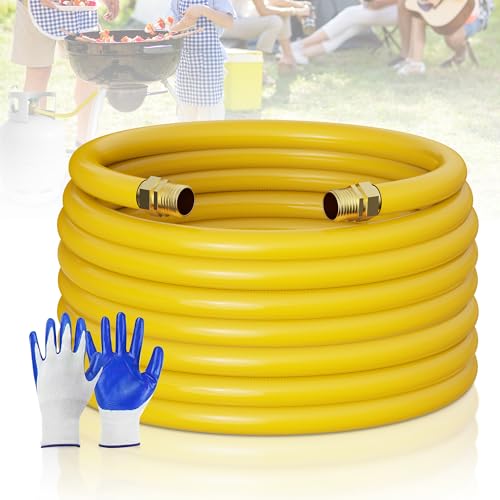
This true-to-size CSST gas line is designed for precise compatibility with existing fittings. The 3/4″ (0.875″ ID) model delivers up to 150K BTU, making it suitable for whole-home outdoor systems. It can be cut to fit exact routing needs and comes with two brass NPT connectors for quick setup. Best for underground outdoor installations where higher BTU capacity is required and compatibility with brass fittings is essential.
Who this is for: homeowners planning a full outdoor gas run or a large grill setup where reliability and leak resistance matter. Why selected: robust 3/4″ capacity supports substantial loads and the included brass fittings support durable, leak-resistant connections. Limitation: as with any underground line, ensure proper burial depth and local code compliance; DIY video guidance helps with safe installation.
1/2″ CSST Gas Line for Natural Gas & Propane (33ft)

Built from seamless 304 stainless steel and covered with a protective PVC jacket, this 1/2″ CSST line minimizes weak points and resists scratches and wear. It includes two brass fittings and all necessary hardware for assembly, promoting a tighter seal than plastic alternatives. Best for compact outdoor projects or indoor-to-outdoor transitions where space is limited and corrosion resistance is important.
Who this is for: owners with smaller outdoor setups or indoor appliances that require a shorter run. Why selected: durable stainless steel with a protective jacket provides long-term reliability. Limitation: the 33ft length may require additional runs or splicing for larger installations; ensure compatibility with existing fittings and local codes.
CSST Gas Line 70Ft 3/4” Professional Underground Flexible
This 3/4″ CSST line mirrors the 102ft model with the same BTU capacity options and DIY-friendly cut-to-fit design. It includes two brass NPT connectors and a step-by-step video guide for easy cutting and end reattachment. Best for users who need a robust underground run at a medium length with straightforward installation.
Who this is for: homeowners planning a medium-length underground gas run with confidence in brass fittings. Why selected: identical sizing and components to the longer version provide consistent performance. Limitation: verify burial requirements and ensure the line remains protected from physical damage in outdoor environments.
1/2″ CSST Gas Line 100ft Flexible (SFHXL)

This 100ft 1/2″ CSST gas line emphasizes flexibility and ease of modification, with inner diameter 0.48″ and outer diameter 0.63″ and a flow rate up to 100,000 BTU/hour. It includes two male fittings and has a UV-protected jacket suitable for outdoor exposures. Best for longer residential runs to outdoor appliances or gas-powered generators.
Who this is for: long outdoor installations or multi-appliance configurations requiring a longer length. Why selected: longer reach without sacrificing reliability; caution: longer runs may increase the need for careful routing to avoid kinks or interference with vents or joists.
GasFlex 1″ Flexible Gas Pipe Tubing (165ft)

GasFlex offers a 1″ flexible indoor/outdoor underground option with a long 165ft length. It uses aluminum tubing with a polyethylene jacket and is listed for NFPA54 use. Best for long-distance underground installations to remote areas such as outdoor kitchens or heaters where a single continuous run is preferred.
Who this is for: projects requiring a single, long, subterranean run with robust corrosion resistance. Why selected: 1″ size provides higher flow for large appliances; limitation: ensure proper burial and professional guidance for underground installation to avoid code violations.
100FT CSST Flexible 3/4″ Propane Gas Line Hose

Standard 3/4″ CSST gas lines designed for longer runs; inner diameter 0.66″ and outer diameter 0.8″ with 3/4″ male brass fittings on both ends. Suitable for underground or above-ground installations where a stable, durable line is needed for multiple appliances like stoves, heaters, or generators. Best for long outdoor runs that require flexible routing.
Who this is for: users needing a long, flexible line with reliable brass fittings. Why selected: consistent dimensions and fittings for straightforward installations. Limitation: check local bury depth rules and ensure the line remains protected from mechanical damage.
Buying Guide: Direct Burial Gas Line Essentials
- Material choice: Stainless steel CSST lines offer corrosion resistance and flexibility for outdoor or underground runs. Brass fittings provide reliable seals. Consider a PVC jacket for extra protection where abrasion is likely.
- BTU capacity and diameter: Larger diameter (0.875″ ID) supports higher BTU loads; smaller lines suit grills, heaters, or stoves. Match BTU requirements to the appliance load to avoid undersizing.
- Length and routing: Longer runs reduce pressure at the point of use. Ensure you can cut to fit without creating weak points. A DIY video guide can help with safe cutting and reattachment.
- Underground installation considerations: Burial depth, protective conduit, and local code compliance are essential. Consider professional inspection for underground routes.
- Fittings and connectors: Brass fittings tend to offer tighter, more durable seals than plastic. Ensure included fittings match your appliance threads (NPT, male/female) for proper installation.
- Safety and maintenance: Regular inspection for leaks, corrosion, and physical damage is important. Use leak-detection methods recommended by codes and manufacturers.
FAQ
- What diameter should I choose for a home gas line? Choose 3/4″ ID for high-BTU, whole-home outdoor runs and 1/2″ ID for smaller, shorter appliance connections. Match diameter to expected BTU load.
- Can these lines be buried directly underground? Yes, many options are designed for underground or outdoor use, but follow local codes, burial depths, and protective measures to prevent damage.
- Are brass fittings necessary? Brass fittings provide durable, leak-resistant connections and are generally recommended over plastic equivalents for long-term use.
- Is professional installation required? For underground gas lines or high-BTU systems, professional installation is strongly advised to ensure safety and code compliance.
- What maintenance is recommended? Periodic inspection for corrosion, leaks, and physical damage is advised. Replace damaged sections and verify fittings after weather events or seismic activity.
- Do these lines come with DIY installation guides? Many listings include step-by-step videos or guides to help with cutting and reattaching ends safely.