The best desiccant compressed air dryers remove moisture and contaminants from your air lines, protecting pneumatic tools and extending their life. This guide highlights five top options, tailored for different setups and needs. Whether you’re a weekend hobbyist or a professional shop user, you’ll find a model that fits your airflow, pressure, and maintenance preferences. The top picks focus on inline moisture removal, visual bead indicators, and easy maintenance to keep your system running smoothly.
| Product | Brand | Type | Best For |
|---|---|---|---|
| NANPU | Inline desiccant dryer with 3/8″ NPT | Home and light professional use; compact inline setup | |
| Dry & Dry Blue Silica Gel Beads | Dry & Dry | Silica gel desiccant beads | Refilling or reactivating desiccant for dryers and filament printers |
| DEWALT 3/8″ NPT Inline Desiccant Dryer | DEWALT | Inline desiccant dryer with clear viewing windows | Rugged, visible bead status for robust tools |
| Milton 1170-2 1/2″ Compact FRL | Milton | Desiccant dryer in FRL assembly (1/2″ NPT) | Industrial or workshop setups needing higher pressure |
| LE LEMATEC Inline Desiccant Moisture Filter | LE LEMATEC | Inline desiccant moisture filter | Medium to large air lines with color-change indicator |
NANPU Zinc Alloy Desiccant Dryer

Best for compact inline drying in small workshops. This model uses a zinc alloy body for higher hardness and compression resistance, helping it withstand regular use. It provides 0-10 Bar (0-145 psi) maximum output pressure, suitable for common pneumatic tools. The beads change color from blue to pink when replacement is needed, offering a straightforward maintenance cue. The design is ideal for users who want a durable, space-efficient dryer in a 3/8″ NPT inline format. Caution: the zinc alloy construction may be heavier than plastic alternatives, which could affect mounting in ultra-tight spaces.
Dry & Dry Blue Silica Gel Beads

Best for bulk bead replacement and long-term bead life. These silica gel beads (3-5 mm) are color-indicating: blue to pink as they absorb moisture. They can be reactivated in an oven or microwave, and are suitable for air dryers, 3D printer filaments, and compressors. They are designed for anyone maintaining multiple desiccant stages or planners who prefer reusable beads. Limitation: color changes signal saturation but do not indicate exact remaining capacity; reactivation requires careful timing to avoid overheating or damage.
DEWALT 3/8″ NPT Inline Desiccant Dryer

Better for rugged shop environments needing visible bead status. The device supports up to 175 psi and uses a 3/8″ NPT inlet for straightforward integration into standard lines. The 60°C (140°F) operating limit makes it suitable for typical shop temperatures while maintaining efficient moisture removal. Choose this if you value a viewing window to monitor desiccant life and plan maintenance around clear indicators. Caution: not all low-temperature environments are ideal for the largest bead capacity; verify ambient conditions before installation.
Milton 1170-2 1/2″ Compact FRL Desiccant Dryer
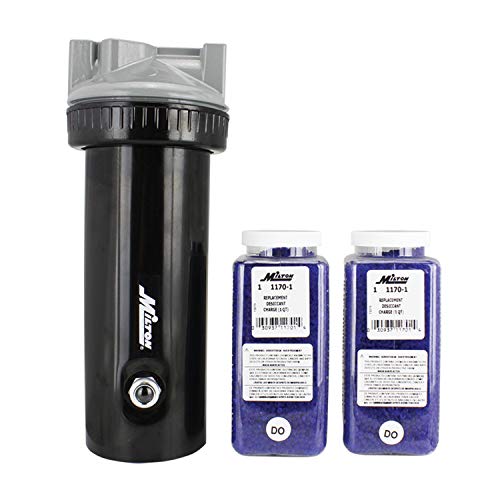
Best for higher-pressure or larger-volume air systems. With a 1/2″ NPT pipe thread and a maximum pressure rating up to 250 psi, this Milton unit is designed for demanding workshop setups. Maintenance tip: dry desiccant beads in an oven at 275°F for 3 hours to refresh performance. Best for users who need a robust, compact FRL package that handles heavier workloads. Limitation: higher pressure-capacity units may require more powerful mounting and space planning.
LE LEMATEC Inline Desiccant Moisture Filter
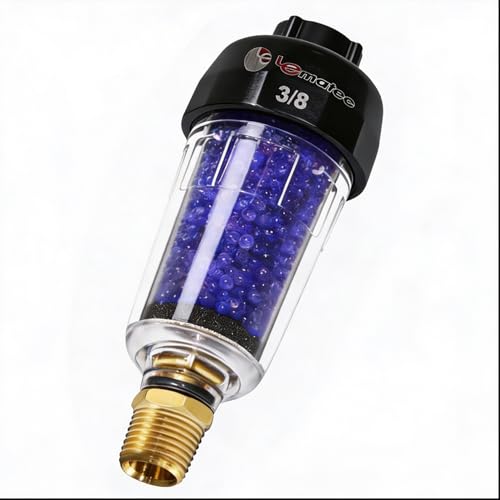
Best for medium to large air lines requiring a color-change indicator and reliable moisture separation. This 3/8″ inline unit traps water vapor, oils, and dirt, offering high-flow performance with a working range of 1–150 PSI and up to 22 CFM. It provides a clear visual cue when service is needed, helping maintenance schedules stay on track. Choose this if you want a dependable inline dryer with visible bead status and strong flow characteristics. Limitation: must be sized to your line diameter and flow to prevent pressure drop in very large systems.
Buying Guide: Key Purchase Considerations
Inline vs. general purpose: Inline desiccant dryers are ideal for point-of-use moisture removal directly in pneumatic lines, while larger FRL assemblies suit whole-shop air treatment. Consider your system’s diameter, pressure, and desired maintenance frequency.
What size and connection do I need?
Choose models with matching NPT threads (commonly 1/4″ to 1/2″ in home shops). For larger tools or higher flow, larger ports (1/2″ or more) reduce pressure drop and improve performance.
How do I know when to replace or reactivate the beads?
Look for color indicators (blue to pink) or bead-level indicators. Some beads are reusable with reactivation in an oven or microwave, while others are designed for replacement after saturation.
What operating conditions matter?
Check maximum pressure ratings (psi) and temperature range. Ensure the unit tolerates your ambient shop temperature and the pressure of your compressor to avoid insufficient moisture removal or component failure.
Maintenance and ease of use
Consider ease of draining moisture, access to replacement beads, and whether the unit offers a visible sight glass or viewing window. Easy-maintenance designs reduce downtime in busy workshops.
Reliability and compatibility
Durable housings (such as metal bodies) and proven fittings reduce leaks and ensure a long service life. Confirm compatibility with your existing lines and tools to prevent mismatches during installation.
FAQ
- What is a desiccant dryer used for? It removes moisture from compressed air to protect pneumatic tools and improve performance.
- What does a color-changing indicator mean? It shows when the desiccant is saturated and needs replacement or regeneration.
- Can desiccant beads be reused? Some beads can be reactivated in an oven or microwave; others are single-use and must be replaced.
- What is the difference between inline and FRL desiccant dryers? Inline units are for point-of-use moisture control; FRL assemblies provide broader system-wide moisture removal and filtration.
- What should I check before buying? Check port size (NPT), maximum pressure, operating temperature, bead type (silica vs. desiccant beads), maintenance needs, and whether visual indicators are included.
- Is a higher psi rating always better? Not necessarily. Match the dryer to your compressor’s typical operating pressure to avoid unnecessary headroom that won’t translate into better drying.