Answering the need for clean, consistent corner radii in milling, these end mills are designed to produce precise fillets on metal and plastic parts. Best for machinists and shop professionals who want repeatable corner rounding, these tools cover different radii, diameters, and materials. This guide highlights five top picks and explains who each is best for, plus practical cautions. A quick buyer’s table follows to help compare key specs at a glance.
Summary of chosen products (quick reference):
- Accusize Hss Corner Roudning End Mill, 1/4″ Radius, 1/2″ Shank
- Accusize H.S.S. Corner Rounding End Mill Set, 1/16″–3/8″ radii
- Accusize 1/2″ Radius Corner Rounding End Mill, 3/4″ Shank
- LUOCUT Radius Corner Rounding End Mill, 12mm Carbide, R1–R? (5pc set)
- Zorqon 1/4″ Carbide Corner Radius End Mills, ZRN Coated
Accusize Hss Corner Roudning End Mill, 1/4″ Radius

Radial radius: 1/4″. Shank diameter: 1/2″. Largest diameter: 1″. Overall length: 3-1/8″. Material: High Speed Steel. Intended for milling rounded corners with consistent fillets. Best for machinists needing a single, standard corner radius for small to medium workpieces and where HSS is sufficient for the material and speeds involved.
Best for: hobbyists and small shops that need a straightforward, proven radius with a common shank size.
Limitations: Not carbide; may wear faster on harder materials or higher-speed operations.
Accusize H.S.S. Corner Rounding End Mill Set 1/16″–3/8″

Set includes multiple radii for rounded corners. Form-relieved type; can be sharpened repeatedly without changing form. Right-hand cut. Ideal for projects requiring different fillet radii across parts, enabling quick changes without swapping tools. Made for general purpose corner rounding tasks.
Best for: production or prototyping where varying radii are required on a single material or project.
Limitations: Set is HSS; includes multiple radii but not carbide; subject to wear on harder materials.
Accusize Industrial Tools 1/2″, H.S.S. Corner Rounding End Mills

Radius: 1/2″. Shank diameter: 3/4″. Largest diameter: 1-1/2″. Overall length: 3-7/8″. Intended for milling rounded corners with HSS material. Suitable for heavier corner radii and larger parts where a robust tool is needed.
Best for: shops needing a larger radius with a deeper reach to finish larger fillets.
Limitations: Higher load and wear compared to smaller radii; ensure machine can maintain proper feed rates for HSS tools.
LUOCUT Radius Corner Rounding Cutter End Mill 12mm Carbide

Pack of 5 pieces with R1 radii, carbide end mill design, TiCN coating. The carbide composition supports higher hardness work and faster speeds than HSS. 12mm sizing aligns with metric machining setups and accommodates multiple mini radii within a compact set.
Best for: environments using metric tooling and requiring longer tool life and precision in higher-temperature applications.
Limitations: Carbide tools require compatible machines and feeds; higher cost than HSS equivalents.
Zorqon 1/4″ Carbide Corner Radius End Mills

Cutting diameter: 1/4″. Shank diameter: 1/4″. Cutting length: 3/4″. Overall length: 2-1/2″. 3-flute carbide end mill with a 0.15″ corner radius and 37° helix. Coated with ZRN to improve wear resistance. Carbide permits higher speeds and longer tool life in suitable materials.
Best for: users needing a compact carbide option with a shallow radius and higher speed operation, particularly in aluminum or plastics.
Limitations: Shank matches cutting diameter; may need precise clamping for small parts to avoid deflection.
CoCud HSS-AL Corner Rounding End Mill Cutter
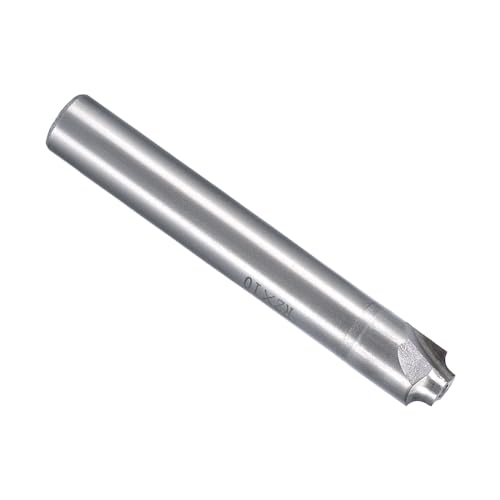
Radius: R2. Shank diameter: 10mm (0.4″). Overall length: 68mm (2.68″). 2-flute design for plastics, aluminum and other materials. Suitable for perimeter, fillet milling, and finishing. The tool can be sharpened repeatedly without changing its form.
Best for: applications requiring a rounded edge on softer materials like plastics and aluminum, with a smaller shank for tighter spaces.
Limitations: HSS-AL design may not perform as well on very hard steels; consider carbide alternatives for high-temp or heavy-duty tasks.
Buying Guide
Key considerations help align tool choice with material, machine capability, and part geometry.
- Material and coating: Carbide offers higher hardness, faster feeds, and longer tool life but requires appropriate speeds and feeds. HSS is forgiving and economical for softer materials.
- Radius and size: Choose radius based on required fillet size. Larger radii require more machine rigidity and proper clamping to avoid deflection.
- Shank diameter: Match shank to collet or tool holder; larger radii often come with larger shanks for added stability.
- Flutes and helix: More flutes increase cut quality in plastics and aluminum; higher helix can improve surface finish but may impact rigidity in steel.
- Coatings: TiCN, AlTiN, and ZRN coatings improve wear resistance and heat tolerance; ensure compatibility with your material and spindle speeds.
- Application materials: For metals, ensure tool material and coating suit the alloy; for plastics, consider sharper edges and lower cutting forces.
- Tool life vs cost: Carbide tools cost more upfront but often deliver longer life in demanding jobs; weigh against production volumes and downtime.
Frequently Asked Questions
- What is a corner radius end mill used for?
It creates a precise rounded corner on a workpiece, improving fit, reducing stress concentration, and enhancing aesthetic finish on edges.
- When should I choose carbide over high-speed steel?
Choose carbide for higher hardness work and longer tool life at higher speeds; choose HSS for lower costs or softer materials.
- How do I select the right radius size?
Pick a radius that matches the functional requirement in your design, enabling proper mating with mating parts and avoiding excessive material removal.
- Are coatings essential?
Coatings can improve wear resistance and heat tolerance; select based on material and cutting temperature expectations.
- Can I sharpen all corner rounding end mills?
Many form-relieved HSS tools can be sharpened; carbide tools may require specialized sharpening and replacements.