Looking for a reliable conveyor belt system with rollers? This guide covers top options that fit warehouses, workshops, and light industrial tasks. Each product is selected for durability, adjustability, and ease of use. Ideal buyers include warehouse staff needing portable setups, small shop owners seeking DIY-friendly solutions, and production line operators needing adjustable speed or gravity-powered options. Below, compare five strong picks, plus a concise buying guide and FAQs to help you decide.
| Product | Best For | Key Benefit |
|---|---|---|
| APMOE Adjustable Conveyor Roller Table | Medium to heavy loads, adjustable height | 360° adjustability and retractable length |
| Moonshan Belt Conveyor 20″ Desktop | Flexible direction control on a compact desk setup | Reverse switch and stepless speed control |
| Ultimation Light-Duty Gravity Conveyor | Workstation or light manufacturing lines | High load capacity and durable galvanized steel rollers |
| VEVOR Belt Conveyor, 59″ x 7.8″ | Industrial-grade, adjustable speed | Stainless steel frame and anti-static PVC belt |
| LXSEHN Collocatable Conveyor Roller | Portable loading/unloading in vehicles or tight spaces | Foldable, gravity-driven with compact storage |
APMOE 23.6” Wide Flexible Unpowered Conveyor Belt Roller Table

The APMOE adjustable conveyor roller table offers a sturdy metal frame with ABS rubber wheels for smooth, quiet operation. It features a retractable length from 11.8 inches to 66.9 inches and a height range of 31.5 inches to 47.2 inches. This design supports easy movement of heavy objects and adapts to varying workspaces. Best for shops needing a versatile, freestanding roller table that can be extended or retracted on demand.
- Best for: workshops and warehouses needing a configurable, independent conveyor section.
- Why chosen: strong load-bearing frame and 360° length adjustability help tailor the setup to different tasks.
- Caution: as an unpowered table, it relies on pushing the load along its surface; very heavy items may require assistance to start movement.
Moonshan Belt Conveyor 20″ Desktop Version

The Moonshan desktop conveyor provides a compact solution with a reverse switch and stepless speed adjustment for flexible direction and speed control on small production lines or packaging setups. It is designed to adapt to changing assembly line needs and offers smooth belt operation in a compact footprint. Best for: small-scale packaging, assembly tasks, or home workspace setups where direction control is essential.
- Best for: desks or small benches needing controllable transport direction.
- Why chosen: reversible flow plus stepless speed control support varied process steps without changing equipment.
- Caution: desktop designs may have limited load capacity compared to larger industrial conveyors.
Ultimation Light-Duty Gravity Conveyor
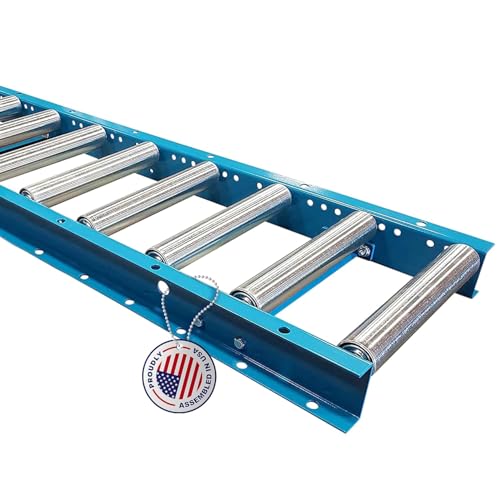
The Ultimation gravity conveyor uses galvanized steel rollers arranged on a powder-coated frame. It is 12 inches wide, 5 feet long, and features a six-inch roller spacing, enabling stable, gravity-fed movement of lighter loads across warehouses, workshops, and assembly lines. This model suits facilities prioritizing a robust, gravity-driven transport solution with straightforward installation. Best for: light to medium-duty material handling where powered movement is unnecessary.
- Best for: stations needing a simple, gravity-fed path to move items without motors.
- Why chosen: strong structural durability and good load distribution across rollers.
- Caution: gravity conveyors require an inclined setup or manual pushing to start movement; they are not self-propelled.
VEVOR Belt Conveyor, 59 x 7.8 Inch
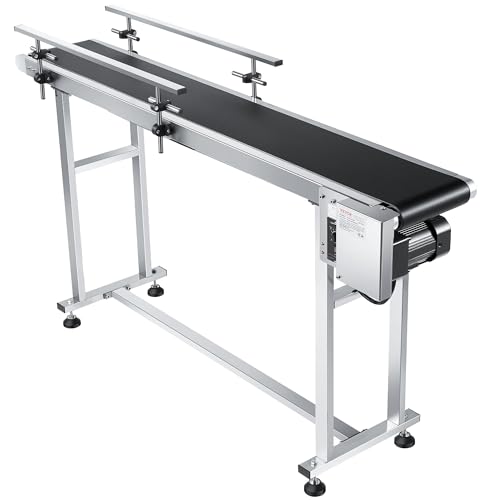
The VEVOR belt conveyor features a stainless steel frame and a PVC belt with anti-static properties. It offers adjustable speed control (30–120 RPM) and dual-direction operation, along with height-adjustable feet for stability on uneven floors. This model is ideal for producers needing precise belt tension and versatile movement in an industrial setting. Best for: facilities requiring reliable speed control and anti-static performance for varied products.
- Best for: environments where belt speed needs to be tuned for different processes.
- Why chosen: stainless steel build provides durability, while anti-static belt reduces electrical interference with sensitive items.
- Caution: battery-free, powered options may be preferred for continuous, long-duration operations.
LXSEHN Collocatable Conveyor Roller

The LXSEHN foldable gravity conveyor is designed for easy transport and unloading in vehicles or tight spaces. It measures 39.37 by 15.75 inches when folded and weighs about 29 pounds, making it portable enough for on-the-go loading or unloading tasks. It operates without power, using gravity to move items along the track. Best for: temporary loading/unloading in automotive or field settings where space is limited.
- Best for: users who need a portable, foldable solution for moving goods without electrical power.
- Why chosen: compact storage and light frame facilitate frequent relocation and setup in small spaces.
- Caution: gravity-based operation means movement depends on incline or manual effort; may not suit heavy or uphill transfers.
Buying Guide: How to Choose the Right Conveyor Belt With Rollers
What will you move and how heavy is it?
Load capacity and roller diameter determine how well a conveyor handles items. For heavy loads, choose larger rollers and a sturdier frame. For lighter items, a compact, gravity-driven model may be sufficient.
Power vs Gravity: Do you need a motor?
Powered belts allow precise speed control and continuous transport. Gravity conveyors are simple, reliable, and cost-effective but require manual input or an incline to move items.
Space and Flexibility: How portable should it be?
Foldable or adjustable-height models improve versatility in tight spaces or changing layouts. Consider how often you’ll relocate the setup and whether height adjustability is required for ergonomic use.
Material and Durability: What will the frame and belt endure?
Stainless steel or galvanized steel frames resist corrosion and wear in demanding environments. PVC or anti-static belts are better for varied product sizes and sensitive items.
Direction and Control: Do you need bidirectional or fixed flow?
Reverse switches and stepless or precise speed controls help tailor the conveyor to different tasks and production lines. If direction flexibility is essential, prioritize models offering bidirectional operation.
Installation and Maintenance: How easy is it to set up and service?
Gravit y or automated systems vary in maintenance needs. Look for replaceable rollers, accessible belt tensioning, and straightforward mounting options to reduce downtime.
FAQ
- What is the main difference between powered and gravity conveyors?
- Can these conveyors handle uneven floor surfaces?
- Are these conveyors suitable for outdoor use?
- What maintenance is required for roller conveyors?
- Which features should I prioritize for a small workshop?
- How do I determine the right belt width for my items?
Answer: Powered conveyors provide active belt movement with adjustable speeds, while gravity conveyors rely on incline or manual push to move items. For uneven floors, look for adjustable feet and a stable frame. Availability for outdoor use depends on frame material and belt weather resistance; stainless or galvanized frames perform better in damp environments. Regular maintenance includes checking belt tension, cleaning rollers, and inspecting supports for wear. For a small workshop, prioritize space-saving, adjustable height, and ease of assembly. Choose belt width slightly larger than your widest item to avoid jams.