If you’re sourcing a conveyor belt scale or a compatible control system, you’re looking for reliable accuracy, durable construction, and easy integration into a packaging or production line. This guide highlights five practical options that align with common conveyor scale needs, from belt weigh indicators to compact desktop conveyors. It’s ideal for operations managers, line engineers, and small manufacturers who want dependable, entry-to-mid level solutions.
Overview table of chosen products. This quick reference helps buyers compare core capabilities at a glance.
| Product | Best For | Key Benefit |
|---|---|---|
| Load Cell, Conveyor Belt Scale Weighing Display Control Systems | Quantitative packaging lines | Accurate measurements with multiple switch channels |
| DC 12V Electric Desktop Conveyor Belt (19.7” x 3.9”) | Small desktop workspaces | Adjustable speed for tight workflows |
| VEVOR Belt Conveyor, 59 x 7.8 inch | Industrial tasks | Stainless steel, adjustable tension and speed |
| Moonshan Belt Conveyor Desktop Version | Flexible production line setups | Reverse switch and stepless speed control |
| UCEXPLAB 20 inch Electric Desktop Conveyor Belt | Light-duty testing and assembly | Forward/reverse, stepless speed control |
Load Cell Belt Weighing Display System

This belt weigher indicator is designed for accurate and efficient packaging workflows. It delivers precise readings on a high-definition display, supporting quantitative packaging instruments. Best for facilities that require reliable belt-weight data integrated into existing control schemes. The aluminum alloy construction contributes to durability in challenging conveyor environments. A multi-channel input/output setup (7 switch inputs, 10 transistor outputs) supports flexible connections to other equipment.
- Best for: packaging lines needing accurate weight data and straightforward integration
- Why selected: strong durability and clear display help reduce errors in weight-based packaging
- Caution: data sheet notes no specific warranty; ensure compatible interfacing with your control system
DC 12V Desktop Conveyor Belt with Speed Controller

This compact electric conveyor belt is designed for small desktop workspaces and light production tasks. It runs at up to 116 RPM and features a dedicated speed controller for easy adjustments. Its compact dimensions (19.7” x 3.9”) make it a strong fit for labs, packaging corners, or small assembly lines where space is at a premium. Best for: small teams that need reliable, adjustable throughput in a limited area.
- Best for: small-scale material handling and quick throughput tasks
- Why selected: adjustable speed helps tune flows without reconfiguring the line
- Caution: designed for light to moderate use; larger loads may require a heavier-duty model
VEVOR Belt Conveyor, Stainless Steel Table
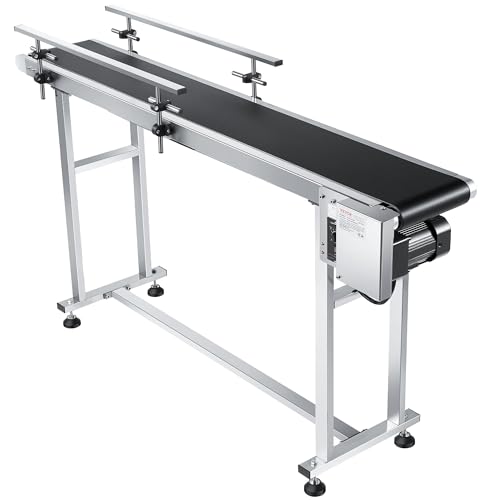
VEVOR’s belt conveyor combines industrial-grade stainless steel with a PVC belt designed for rugged use. The system includes adjustable belt tension via a rotating screw and infinitely adjustable support feet for stable operation. It can run at 30–120 RPM and supports bidirectional movement. Best for: production lines needing a durable, adjustable belt with reliable tension control. A potential limitation is that heavy loads may impact the belt’s tension stability if not properly balanced.
- Better for: high-usage environments requiring rust resistance and long-term stability
- Why selected: comprehensive adjustment features support diverse tasks
- Caution: ensure load distribution matches belt capacity to maintain tension
Moonshan Desktop Belt Conveyor with Reverse Switch

This Moonshan desktop conveyor provides flexible direction control with a reverse switch and stepless speed regulation. Its compact design makes it suitable for packaging, small production lines, or home workshops. Best for: teams that frequently need to reverse flow or fine-tune speed for delicate handling. The step-less control helps maintain smooth operation but may require careful setup to avoid accidental direction changes during critical tasks.
- Best for: processes requiring frequent changes in transport direction
- Why selected: simple, continuous speed adjustment supports precise workflow
- Caution: desktop models are typically light-duty; heavier items may require a sturdier platform
Walthers Cornerstone Conveyor Belt (HO Scale)
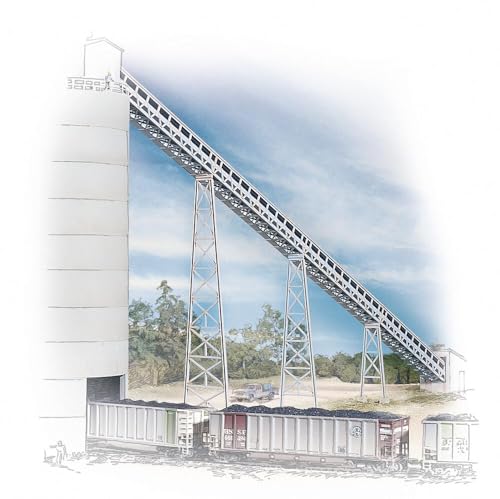
This Walthers Cornerstone kit offers a detailed, easy-to-build model conveyor system for HO scale layouts. It’s best for hobbyists and model railroad enthusiasts who want a realistic, ready-to-assemble representation of conveyors in a miniature setting. A limitation is that it’s a scale model, not an actual functioning industrial belt.
- Best for: model railroad enthusiasts seeking authentic conveyor details
- Why selected: includes 21 inches of conveyors and supports for authentic layout builds
- Caution: not a functional industrial conveyor; for display or diorama use
Walthers Cornerstone Grain Conveyor (HO Scale)

This HO scale grain conveyor kit from Walthers Cornerstone adds realistic detail to railroad dioramas. It includes molded-in color and a compact packaging footprint for model displays. Best for: model railroad builders who want to expand their industrial scenery with an authentic grain handling element. The trade-off is that it is not a real belt system for production use.
- Best for: enhancing HO scale scenes with authentic conveyor elements
- Why selected: realistic color and compact footprint fit small layouts
- Caution: not designed for real-world material handling
Buying Guide: Key Considerations For Conveyor Belt Scale And Systems
When choosing conveyor belt scale components or related conveyors, consider the following questions and criteria:
- What is the required accuracy and data interface? Assess how the belt scale displays readings and how it integrates with your control system.
- What conveyor size and load will you handle? Match belt width, length, and motor power to your throughput needs and space constraints.
- Is bidirectional movement important? If you need reverse flow, prioritize models with reliable reverse switches or bidirectional operation.
- What environment will the equipment operate in? Stainless steel or aluminum frames improve durability in harsher settings.
- How important is adjustability? Models with stepless speed control or adjustable belt tension support diverse tasks and line configurations.
- What are maintenance and ease of use considerations? Look for straightforward installation, clear displays, and accessible components for routine service.
Practical Comparisons by Use Case
- Packaging lines needing precise weight data: Load Cell Belt Weighing Display System is a strong fit due to its accuracy and multi-channel connectivity.
- Desk or lab setups with limited space: DC 12V Desktop Conveyor Belt and UCEXPLAB desktop models offer compact form factors and adjustable speed.
- Durable, industrial tasks: VEVOR Belt Conveyor provides a robust stainless steel build with adjustable tension and speeds.
- Educational or hobbyist modeling: Walthers Cornerstone HO scale conveyors offer authentic, display-quality details without real-world material handling.
FAQ
- What is a belt scale indicator used for? It collects weight data from items on a conveyor for precise packaging and process control.
- Can these conveyors operate in both directions? Some models offer reverse switches or bidirectional modes; check product specs for compatibility.
- Are desktop conveyors suitable for production lines? They work well in small spaces, educational setups, or testing environments but may be limited for high-volume production.
- What materials are most common for belt conveyors? Aluminum and stainless steel are prevalent for durability and rust resistance in industrial settings.
- How important is speed control? Stepless or fine-grained speed control helps optimize throughput and handling for delicate items.
- Do these items require special maintenance? Regular inspection of belts, tension, and motor connections helps ensure reliable operation.