Answering the need for reliable, durable fasteners for conveyor belts, this guide highlights top products from reputable suppliers. The selected options cover a range of belt thicknesses, materials, and installation styles, helping buyers choose the right fasteners for food processing, mining, manufacturing, and general material handling. The buyers best served include OEMs seeking standard parts, maintenance teams needing quick replacements, and facilities requiring corrosion-resistant options for harsh environments. The quick-reference table below summarizes the five recommended products and their key strengths.
| Product | Brand | Best For | Why Pick |
|---|---|---|---|
| 190E Conveyor Belt Fasteners, Steel (25 ct) | Flexco | General industrial belts (5/16″ to 9/16″) | Reliable brand, comprehensive kit, includes nuts, bolts, and piloted bolts |
| 48” Stainless Steel Conveyor Belt Fasteners Clips with 27.5” Hinge Pin | Victeut | Thick belts in long runs (5-6 mm) | Stainless steel corrosion resistance, long hinge pin for easy assembly |
| Threlaco 12” Conveyor Belt Fastener 12 Pcs | Threlaco | Light industrial duties, small rollers | 316 stainless steel for hygiene and harsh environments, automatic positioning |
| Zonon 100 Sets Bolt Solid Steel Plate Fasteners | Zonon | Industrial conveyors (5/16″ to 9/16″) | Pre-assembled bolts with installation nails, compact design |
| Conveyor belt 4″ staple fastener installation tool | Trallyer | Staple lacing setups, versatile sizing | Full metal build, adjustable mold parts for multiple sizes |
Flexco 190E Steel Belt Fasteners (25 Ct)
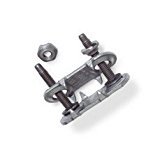
The Flexco 190E fasteners are designed for belts with thickness between 5/16″ and 9/16″. This kit includes a 25-count box with clips, nuts, and piloted bolts, enabling reliable joints across standard industrial applications. Best for facilities that use standard-width belts and require a complete fastening solution in one package. A potential limitation is that these fasteners are sized for a specific belt thickness range; ensure compatibility with your belt before purchase.
Victeut 48″ Stainless Steel Belt Fasteners Kit
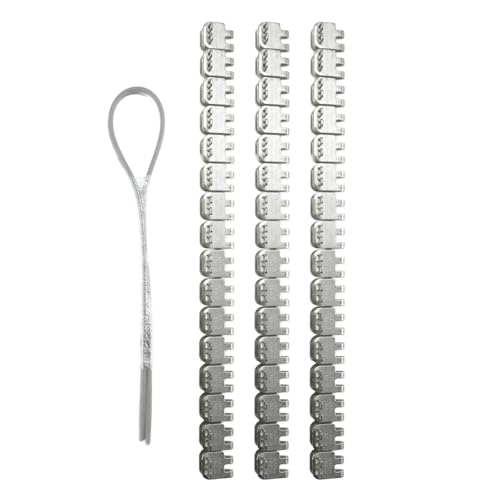
These 48″ fasteners are built for belts with a thickness of 5-6 mm, divided into three 16″ sections with a 27.5″ hinge pin for straightforward assembly. Stainless steel construction offers corrosion resistance for damp or outdoor environments. Choose this option if you need long-running sections and easier on-site installation; avoid if your belt thickness falls outside 5-6 mm or if you require shorter hinge-pin assemblies for compact spaces.
Threlaco 12″ Stainless Steel Belt Fasteners

The Threlaco option uses 316 stainless steel for excellent corrosion and chemical resistance, making it suitable for food processing, pharmaceutical, and chemical applications. Each package includes 12 fasteners and a 70″ hinge pin, with a design that promotes uniform joint depth and reduced wear on small rollers. Best for hygiene-focused environments; use with compatible belt widths and ensure hinge pins fit your system. A limitation is that it is tailored to light-industrial duty, which may not suit heavy-duty conveyors.
Zonon 100 Sets Bolt Solid Steel Plate Fasteners

These solid steel plate fasteners are pre-assembled with installation nails, designed to connect belts in demanding handling environments. They fit belts from 5/16″ to 9/16″ and work with pulleys from 14″ to 18″ under typical working tension. The compact 2.7 x 0.8 x 1.7 inch form factor makes them suitable for tight spaces. Best for general-purpose industrial use; consider pulley diameter and tension requirements before buying. A potential drawback is the weight in some configurations, which may affect handling in tight installation sites.
Trallyer 4″ Staple Fastener Installation Tool

This tool is meant for staple-lacing setups, with a full metal build for durability. It supports multiple staple lacing sizes and works with models such as RS62, RS125, RS187, MR1S, MR2S, MR3S. It weighs about 4.5 pounds and measures 4 x 3 x 4 inches, making it portable for field work. Best for shops or sites that regularly assemble or repair belts with staple lacing; avoid if you require a non-metal housing or a compact, lighter fixture.
Buying Guide
Key considerations help buyers choose the right conveyor belt fasteners for their operation.
- Belt thickness compatibility: Confirm the belt thickness your system uses (for example, 5/16″ to 9/16″ or 5-6 mm) and select fasteners that match that range.
- Material and environment: Stainless steel offers corrosion resistance for wet or chemical environments; carbon steel may be adequate for dry, general-use conveyors. Consider hygiene requirements for food or pharmaceutical applications.
- Installation method: Some kits include hinge pins, nails, or bolts; others require a dedicated installation tool. Evaluate whether you need a simple clamp-style kit or a bolt-and-buckle design for long-term durability.
- Belt width and pulley diameter: Ensure the chosen fasteners fit the belt width and pulley sizes used in your system and verify tension range compatibility.
- Maintenance and replacement: Consider easy disassembly and replacement in case of wear, as well as whether the joints offer automatic positioning or require manual alignment.
- Application area: Food processing, pharmaceuticals, mining, and agricultural settings may demand specific materials or corrosion resistance; align your choice with industry requirements.
FAQ
- What are conveyor belt fasteners used for?
They provide a durable joint between belt sections, enabling quick repair or assembly in industrial conveyors.
- Which material is best for harsh environments?
316 stainless steel offers superior corrosion and chemical resistance, suitable for food processing and chemical industries.
- Do fasteners work with all belt thicknesses?
No; always verify the recommended belt thickness range before purchase to ensure a proper fit.
- What installation tools are needed?
Some fasteners include hinge pins and bolts; others may require dedicated installation tools or standard wrenches for assembly.
- Can fasteners be used for long belt runs?
Yes, especially products designed for longer sections and with reinforced pins or multiple segments.
- Are these suitable for food-grade applications?
Look for stainless steel options (especially 316) and check any hygiene certifications or industry-specific guidelines.