If you’re evaluating commercial hot water pressure washers, you’re likely after machines that deliver high PSI, strong GPM, and reliable heating to melt grease and grime fast. This guide highlights five top options well-suited for contractors, fleet maintenance crews, and industrial sites. Each product section explains who it’s best for, why it was selected, and a practical limitation to consider. A quick summary table is included for fast comparison.
| Product | Best For | Key Benefit | Limitations |
|---|---|---|---|
| Green-Power America 3500 PSI | Easily portable sites | Hot water up to 212°F with a commercial-grade engine | Gas-powered; noisy in quiet zones |
| MechMaxx HPW40KBT | Skid-mounted jobsites | 4000 PSI, 4 GPM, 200°F water | Requires skilled setup for diesel heater integration |
| ATTACHXPRO Hot Water Washer | Heavy-duty industrial cleaning | High heat, 4000 PSI with AR pump | Large, less portable than compact units |
| MACHPRO Hot Water Washer | Concrete, machinery, fleets | Diesel-fired heater with 212°F water | Complex installation; heavier frame |
| DigMaster Hot Water Washer | Farm and construction | 3,960–4,000 PSI with 4.0 GPM and 212°F | Dual-fuel system adds setup steps |
Buyer note: This list emphasizes hot water capability, durability, and ease-of-use for commercial environments. If you operate in CA or require electric-only options, adjust choices accordingly.
Green-Power America 3500 PSI Hot Water Washer

Features include a maximum 3500 PSI and 3.0 GPM with hot water up to 212°F. It uses a 223cc 4-stroke OHV gas engine with electric start and a durable AR brass triplex pump for consistent output. The frame is designed for portability with two 14″ and two 8″ wheels, making it suitable for outdoor job sites and mid-sized facilities.
Best for: Small to mid-size commercial jobs where mobility and hot water are essential, such as restaurant grease removal or fleet maintenance bays. Choose this if you need a robust, gas-powered unit with easy ignition and reliable pump performance.
Caution: Gas-powered units require proper ventilation and fuel management; ensure proper storage and handling on-site.
MechMaxx 4000 PSI Hot Water Pressure Washer

Powered by a KOHLER CH440 Command Pro engine with electric start, this unit provides hot water at 200°F with 4 GPM and 4,000 PSI. It’s skid-mounted with a diesel or gasoline setup designed for reliable daily performance, making it a strong option for heavy-duty cleaning on large equipment and industrial surfaces.
Best for: Contractors and fleet operators needing high-pressure hot water with strong reliability for big removal tasks. Better for sites where steady power and easy starting are critical.
Limitation: The dual-fuel or independent heat/engine arrangement may require extra maintenance and operator familiarity to maximize uptime.
ATTACHXPRO Hot Water Pressure Washer
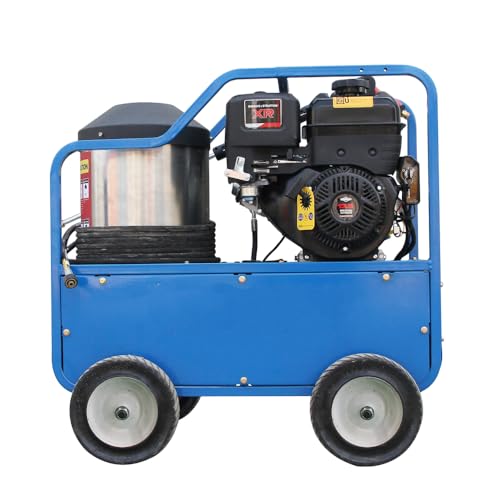
This machine delivers 4000 PSI at 4.0 GPM with a premium AR pump. It features a robust 420cc 13.5HP gas engine and is built for heavy-duty industrial cleaning. The high temperature heating system helps dissolve stubborn grease and grime on trucks, machinery, and concrete surfaces.
Best for: Users needing maximum cleaning power and durability for industrial sites, construction equipment, or large-scale liquid removal tasks. Choose this if you require a professional-grade AR pump with strong heat output.
Limitation: It is less portable than compact units due to its size and weight, so plan for wheeled transport and on-site accessibility.
MACHPRO Hot Water Washer
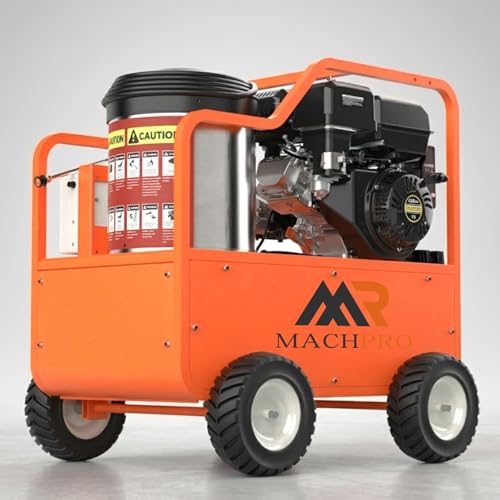
MACHPRO uses a 304 stainless steel insulated coil and a diesel-fired heater to deliver water up to 212°F. The unit runs on a 420cc Rato engine and employs a rugged AR Triplex Pump for high-pressure cleaning. It is protected by a steel roll-cage frame for safety in harsh environments.
Best for: Industrial sites and heavy equipment cleaning where durable construction and consistent hot water performance are essential. Ideal for concrete and machinery with tough grime.
Limitation: Heavier construction may affect placement flexibility on smaller sites; ensure proper clearance for the frame and heater components.
DigMaster Hot Water Pressure Washer

This model delivers up to 4,060 PSI at 4.0 GPM, with heated water up to 212°F. It operates with a dual-fuel system, combining a 15 HP gasoline engine and a separate diesel burner for heat, allowing operation in locations without reliable electricity. It’s designed for industrial users who need robust performance on farms, construction sites, or large equipment cleaning tasks.
Best for: Professionals who require independent heating and powerful cleaning in remote or electrically challenging environments. The dual-fuel design supports continuous operation in diverse job sites.
Limitation: The dual-fuel system adds complexity; proper maintenance and monitoring are necessary to maintain consistent heat and pressure.
Buying Guide: Key Considerations for Commercial Hot Water Washers
What pressure and flow do you need?
Higher PSI and GPM accelerate grease removal on stubborn surfaces but require stronger engines and pumps. For industrial tasks, aim for units in the 3500–4000 PSI range with 3–4 GPM as a baseline.
What heat level is required?
Most commercial hot water washers reach 200–212°F. Select models with efficient heating systems that maintain consistent temperatures under load to melt oils quickly.
What fuel source fits your work environment?
Gas engines are common for mobility and rugged sites, while electric or dual-fuel systems are suited to controlled spaces or outdoor locations with electrical access.
How important are portability and deployment time?
Compact frames and caster wheels simplify transport on varied terrains. Consider models with integrated starts and straightforward ignition to minimize setup time.
Which pumps and components drive durability?
Triplex plunger pumps generally offer longer life under heavy use than axial pumps. AR pumps are widely used in commercial-grade units for their reliability and service network.
What safety features matter?
Look for thermal relief, oil shutdown, protective frames, and operator guards. A clear user manual and straightforward controls help prevent downtime and injuries on job sites.
What about maintenance and parts availability?
Choose brands with readily available parts, accessible service centers, and clear maintenance schedules. This reduces downtime and extends the useful life of the equipment.
How to compare total ownership costs?
Factor in fuel consumption, routine maintenance, pump life, and potential downtime. A machine with higher upfront cost but longer service life can be more economical over time.
Usage scenario checklist
- Frequent on-site cleaning of equipment and concrete?
- Need for hot water to dissolve heavy grease?
- Transportability across multiple job sites?
- Electrical access and noise considerations?
Safety and compliance notes
Always follow local regulations for fuel storage, ventilation, and operation. Ensure operators receive proper training for starting procedures and hot-water handling.
FAQ
- What is the difference between hot water and cold water washers? Hot water washers heat water to temperatures around 200–212°F, enabling faster grease dissolution and better cleaning of oil-based grime than cold water units.
- Are gas-powered washers suitable for indoor use? Gas units require ventilation; use outdoors or in well-ventilated areas to avoid carbon monoxide exposure.
- Do these machines need electricity? Some models are electric-start gas engines, while others are fully gas-powered or diesel-heated. The chosen model should align with site electrical access and noise restrictions.
- What maintenance is typical for hot water washers? Regularly check pumps, seals, heating coils, and filters. Replace worn components and schedule engine maintenance per manufacturer guidance.
- How do I choose between a skid-mounted and portable unit? Skid-mounted units are better for stable job sites and continuous use; portable units suit mobile crews and tighter spaces.
- What should I consider for long-term reliability? Favor units with durable frames, reputable pumps (like AR Triplex), and service networks for parts and support.