Answering the question: which commercial foggers deliver reliable pest control for restaurants, warehouses, and other facilities? This guide highlights five top options, explaining who each product is best for, why it works in commercial spaces, and practical limitations to consider before buying. The selections emphasize fast knockdown, deep reach into cracks, and suitability for large-area treatments. Ideal buyers include facility managers, janitorial services, and food-handling operations seeking efficient space treatments with minimal downtime. Below is a quick, side-by-side summary to help compare key features and coverage.
| Product | Best For | Coverage (approx.) | Notes |
|---|---|---|---|
| BASF PT Pro-Control Plus Total Release Formula | General commercial spaces | Multiple rooms | Fast knockdown; ideal for diverse environments |
| Hot Shot No-Mess Fogger With Odor Neutralizer | Deep reach, hidden bugs | Cracks and crevices | Dry fog, odor neutralizer |
| BASF Pyrethrum TR Total Release Fogger (6 Count) | Large facilities | Up to 6000 cu ft per can | Botanical insecticide; broad spectrum |
| FMC Residual Fogger | Public spaces (homes, restaurants, schools) | Room-wide | Residual activity claims; versatile |
| ProControl Plus Total Release Fogger Bomb (Case) | Facilities with food handling | Various rooms | USDA approved; broad-spectrum |
BASF PT Pro-Control Plus Total Release Formula 2 Insect Fogger
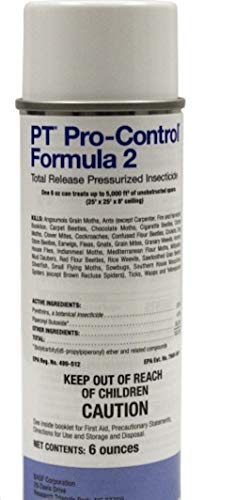
The BASF PT Pro-Control Plus is designed for quick knockdown of a broad pest set, including cockroaches, flies, stored product pests, spiders, ticks, and wasps. It supports versatile application in commercial food handling areas, restaurants, and animal housing. Best for facilities needing rapid space treatment with a single can for multiple rooms. The aerosol format simplifies application as a space treatment. Caution: avoid excessive use in occupied areas and follow label directions for food areas.
Hot Shot No-Mess Fogger With Odor Neutralizer (3 Count)

Hot Shot No-Mess Fogger is designed for deep reach and fast action, with odor neutralizer to minimize lingering scents. It kills on contact and can provide continued control for up to six weeks in treated spaces. It is suitable for enclosed commercial spaces where pests hide in cracks and crevices. Best for facilities seeking a simpler, no-wipe treatment without turning off pilot lights. Limitation: intended for on-contact kill, with residual protection varying by environment.
BASF Pyrethrum TR Total Release Fogger (6 Count)

This 6-count pack delivers a Total Release System using botanical pyrethrins and piperonyl butoxide. It covers up to 6000 cubic feet per can, making it well-suited for large greenhouses, storage facilities, and enclosed spaces. Best for facilities preferring natural-origin actives and broad-spectrum control. Caution: pyrethrum-based formulations can affect certain sensitive plants or animals; ensure proper ventilation and target area suitability.
FMC Residual Fogger

FMC Residual Fogger is a versatile option for homes, restaurants, and schools. While data on specific active ingredients is not listed here, the product is positioned for space treatments with practical dimensions and usage notes. Best for facilities needing a straightforward fogging solution with broad applicability. Limitation: generic product data means verify label details for your exact application and space type.
ProControl Plus Total Release Fogger Bomb (1 Case)

The ProControl Plus fogger bombs provide a USDA-approved option for space treatments in facilities where food handling is not a concern. It lists a broad range of pests including ants, beetles, fleas, roaches, spiders, and wasps. Best for large facilities needing multiple cans in a single shipment. Caution: ensure compatibility with food-use policies and local regulations when selecting this product for edible-space environments.
Buying Guide: Key Considerations For Selecting Commercial Foggers
- Coverage and Space Type: How large is the treated area, and is it enclosed or open? Look for per-can coverage and whether multiple units are needed for warehouses, kitchens, or greenhouse spaces.
- Pest Spectrum: Identify target pests (ants, roaches, flies, spiders, stored-product pests) and choose a fogger with proven efficacy against those species in similar environments.
- Active Ingredients: Botanic vs synthetic actives, and considerations for sensitivity in food areas, plants, or animals. Botanical formulations may appeal to green facilities; synthetic options may offer broader knockdown.
- Application Type: Total release aerosols provide quick, space-wide exposure. Consider whether continuous residual control is required after application, and if any follow-up treatments are needed.
- Safety and Compliance: Check USDA, FDA, or local regulatory approvals where applicable. Verify label directions for occupied vs. unoccupied space use and ventilation needs.
- Ease of Use: Single-can treatments vs. multi-pack cases, and whether pilot lights can stay on during application. Some products advertise no-need-to-turn-off pilot lights for convenience.
- Environmental Considerations: Odor control, residue avoidance, and impact on non-target organisms should influence selection, especially in food handling or public settings.
Frequently Asked Questions
- What is a total release fogger? A total release fogger disperses the product into the entire treated space, aiming for rapid, room-wide exposure to pests.
- Are botanical foggers effective for commercial spaces? Botanical actives can offer broad-spectrum control, but verify coverage and label instructions for your specific facility and pests.
- Can foggers be used in occupied spaces? Many products require the area to be unoccupied during treatment. Some formats claim no need to turn off pilot lights, but always follow the label.
- How do I choose between a 6-count vs a 12-count fogger? Larger facilities or ongoing pest issues may justify 12-count cases for scheduled treatments, while small or single-use spaces may be fine with smaller packs.
- Is residual activity important? Some foggers claim residual kill or longer-lasting effects; assess whether ongoing maintenance is feasible and safe for the environment.
- What safety steps should I take after fogging? Ventilate the area as directed, remove food items from treated zones, and wait for treated spaces to be safe before reentry or occupancy.