Choosing the right cold rolled steel channel depends on precision, finish, and load requirements. This guide focuses on channels that suit fabrication, framing, and structural needs where tight tolerances and smooth surfaces matter. The top picks below are suited for DIYers and professionals who want reliable dimensions, straightforward cutting and welding, and predictable performance. The buyer profile for each product is noted to help match the right channel to the job.
| Product | Material | Size / Length | Best For |
|---|---|---|---|
| Alberts 432843 U-Profile | Cold rolled steel | 1000 x 20 x 20 mm | High-precision framing and enclosures where tight tolerances matter |
| Rocaris C Channel | Steel Channel (U-Shape) | 1.85″ Depth x 1.2″ Flange x 12″ Length | Compact structural supports and small fabrications |
| MSP Metals Hot Rolled C Channel | Hot rolled carbon steel | 36″ Cut Length | Rougher fabrications and projects needing easy welding |
| 4″ C Channel (C4x5.4) | A36 mild steel | 48″ Length | General structural framing and heavy-duty projects |
| Generic 1/8″ Thick x 1/2″ x 2″ Channel | Mild steel | 48″ Length | Light-to-moderate load framing with easy handling |
Alberts 432843 U-Profile Steel

Material: Cold rolled steel. Size: 1000 x 20 x 20 mm. Height 20 mm, width 20 mm, thickness 1.5 mm. This is a high-quality U-profile designed for precise applications where finish and tolerance control are important. Best for projects requiring a clean, smooth surface with accurate inner dimensions. Selected for its cold-rolled quality, which typically offers tighter tolerances than some hot-rolled options. A potential limitation is availability in long, continuous lengths; users often choose this for shorter segments or must weld multiple pieces to reach longer spans.
Rocaris C Channel
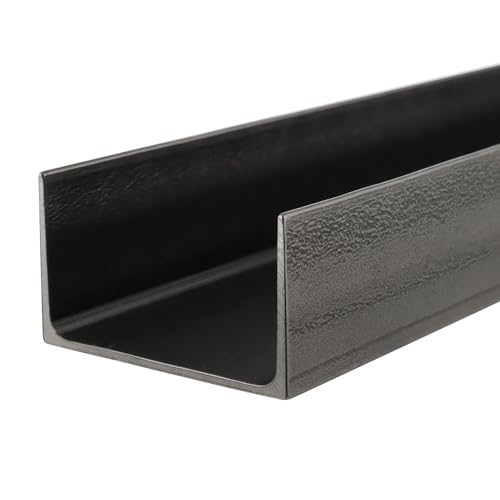
Material: Steel with a distinctive U-shaped cross-section. Depth 1.85″, flange width 1.2″, web thickness 0.1″, length 12″. Cut by automatic machines with a smooth, burr-free surface and rust-prepped finish. Best for compact structural supports and lightweight frames where a slim profile is beneficial. Choose this if you need a tight, non-heavy channel with consistent dimensions across short runs. Caution: Limited length options may require splicing for longer projects.
4″ C Channel (C4x5.4) Structural Channel

Material: A36 mild steel. Size: 4″ C Channel with a standard structural profile. This option is suitable for general structural framing and fabrication where ready availability and weldability are key. Best for users who need a robust channel for projects like supports, frames, or light-to-moderate load-bearing members. Limitation: Not a cold-rolled option, so tolerances and surface finish may be less uniform than true cold-rolled profiles.
Hot Rolled Steel ASTM A36 C Channel
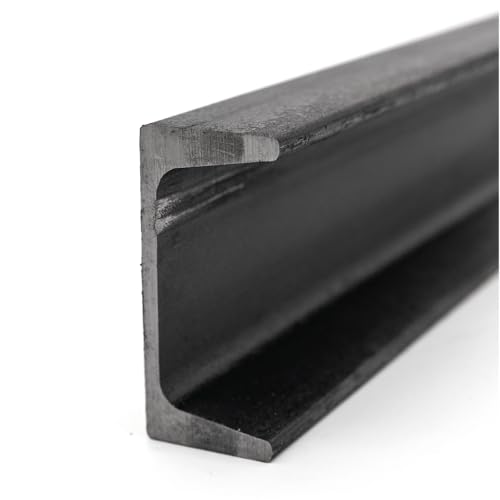
Material: ASTM A36 hot rolled carbon steel. Channel size and cut length vary by listing. This standard channel is commonly used in construction and fabrication for its good formability and strength. Best for projects where weldability and straightforward fabrication are priorities and tolerances are acceptable within hot-rolled standards. Caution: Finishes are less uniform compared with cold-rolled profiles.
Generic 1/8″ Thick x 1/2″ x 2″ Channel

Material: Mild steel. Size: 1/8″ thick, 1/2″ tall legs, 2″ overall width. Length: 48 inches. Best for lightweight framing, small brackets, and simple assemblies where cost and ease of cutting are priorities. Limitation: Thinner walls may be more prone to denting under higher loads; verify load expectations before use.
Buying Guide: Key Purchase Considerations
What should you check before buying a steel channel?
- Material type: Cold rolled typically offers tighter tolerances and a smoother finish; hot rolled provides easier welding and generally lower cost.
- Size and length: Confirm exact depth, flange width, and web thickness to match your design. Consider whether you need continuous lengths or if splicing is acceptable.
- Finish and tolerances: Cold rolled surfaces are smoother; check if you need rust protection or pre-treatment details from the supplier.
- Load and application: For structural framing, ensure the channel type supports the intended load path and anticipated forces.
- Fabrication needs: If welding or machining is required, verify that the material grade aligns with your equipment and processes.
How to compare models quickly?
- Best for precision: Alberts U-profile with cold rolled steel and tight tolerances.
- Best for compact spaces: Rocaris C Channel with a small footprint and smooth finish.
- Best for general framing: MSP Metals or 4″ C Channel with A36 mild steel is typically easier to weld and fabricate.
- Best for light loads and low cost: Generic 1/8″ thick channel is suitable for non-structural or decorative uses.
Installation and Handling Tips
- Protect edges when cutting to avoid burrs; wear proper safety gear and use clamps for accurate cuts.
- Welding temper and heat control matter—plan joints to minimize distortion, especially on thinner profiles.
- Store channels flat and off the ground to prevent bending or warping during long storage.
Frequently Asked Questions
- What is the difference between cold rolled and hot rolled steel channels?
Cold rolled steel channels are manufactured at room temperature, resulting in tighter tolerances, smoother finishes, and slightly higher strength in some cases. Hot rolled channels are formed at high temperatures, typically cheaper, and may have rougher surfaces and looser tolerances.
- Which channel should I choose for structural framing?
For structural framing where precision is important, consider a cold rolled option like Alberts U-profile. If easier welding and fabrication are the priority, an A36 hot rolled channel from MSP Metals or similar may be preferable.
- Are there length limitations I should worry about?
Yes. Some listings offer short fixed lengths (like 12″ or 36″), while others provide long continuous lengths. Determine whether you need splice-able lengths for your project.
- Can I weld these channels easily?
Weldability is generally good for mild steel and many carbon steels (including A36). If using cold rolled steel, ensure the heat treatment and finish won’t cause undesirable warping.
These selections prioritize channels with reliable dimensions and practical fabrication profiles. Use the Buying Guide to tailor your choice to the required precision, surface finish, and load needs for your specific project.