If you’re searching for an effective CNC oil mist collector, you want equipment that captures fine oil and water mist, minimizes vibration, and fits your machine setup. This guide presents five top-performing units suited for various CNC tools, mills, lathes, and grinding machines. It highlights who each model is best for, plus practical caveats to consider before you buy. A quick summary table of the featured products is included for fast comparison.
| Product | Best For | Key Benefit |
|---|---|---|
| EQCOTWEA 6″ 1100-1400 m³/h | High-output workshops | Strong filtration and compact footprint |
| EQCOTWEA 6″ 1000-1118 cfm | Smaller CNC setups with solid filtration | Drawer-style filter and stable performance |
| INTBUYING 1HP 650-824 CFM | Budget-conscious shops | Low energy, high efficiency filtration |
| INTSUPERMAI 650-824 CFM | Compact spaces needing effective capture | High filtration efficiency and turbine design |
| WYDDDARY 2HP 1000-1118 CFM | Medium-to-large CNC rigs | Large air volume with multi-stage filtration |
Buyer note: When selecting an oil mist collector, consider air volume (CFM), inlet size, filtration stages, power supply (single- vs three-phase), noise level, and how easily you can service the filters. The following sections summarize five models that balance filtration efficiency, space needs, and installation versatility.
EQCOTWEA 6″ 1100-1400 m³/h Oil Mist Collector

Best for: High-output CNC environments with multiple tools. This model is engineered to tackle oil mist, water mist, and dust from mechanical processing, keeping the workshop cleaner. The compact size supports installation on various small machine tools without crowding the workspace. It uses an optimized turbine design to reduce surface dust buildup and limit vibration, promoting longer operation between maintenance cycles.
Why selected: It combines strong air throughput with effective filtration in a compact form. The unit’s design minimizes downtime and is suited for shops that operate CNC mills or lathes with frequent mist generation.
Caution: As a 220V/1PH unit, ensure your electrical supply matches the specification and that installation clearances accommodate venting and service access.
EQCOTWEA CNC Oil Mist Collector 6″ 1000-1118 CFM

Best for: Workshops needing high filtration accuracy and multi-layer cleanup. It features high-efficiency filter elements that capture oil mist, water mist, smoke, and odors, with 98% efficiency for particles larger than 0.02 microns. The drawer-style filter and high-efficiency bucket enable stable, multi-layer purification.
Why selected: Its filtration stack targets a broad range of contaminants, delivering clean air while supporting longer filter life through a drawer and bucket system that simplifies maintenance.
Caution: An efficient 3PH supply is common for this unit; verify electrical compatibility and available space for filter access during service.
EQCOTWEA 4.3″ Centrifugal Oil Mist Purifier

Best for: Compact tool setups needing efficient capture without occupying extra space. This model emphasizes a multi-layer filter approach that intercepts small particulates and rapidly purifies air by separating and recovering oil and water mist.
Why selected: The turbine design minimizes dust deposition and vibration, preserving smooth operation in busy shops. Its compact form makes it a good fit for tops of small machines or tight tool bays.
Caution: Ensure adequate ducting length and clearance at the top for effective ventilation and easy filter changes.
Sentry Air Systems Industrial Mist Collector
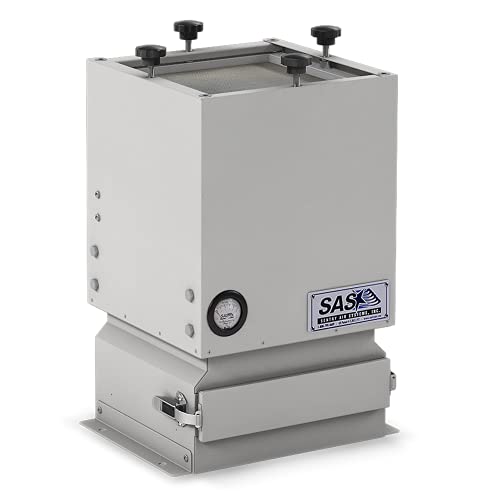
Best for: Larger shops needing a robust, freight-shippable mist collection solution. This unit supports a range of machines and includes a variable speed controller with 115/1/60 power, aiding precise airflow control.
Why selected: It provides a practical balance of airflow capacity and installability for medium-to-large CNC setups, with a focus on adapting to different tool configurations and room sizes.
Caution: Freight shipping requires proper handling; confirm installation space and duct routing before purchase to avoid fit issues in constrained areas.
INTBUYING 220V Oil Mist Collector 1HP
Best for: Shops seeking a cost-effective, energy-efficient option for CNC processing centers. This unit uses a 750W motor and high-efficiency filtration to capture particles down to sub-micron levels.
Why selected: The centrifugal and filter cotton design provides strong adsorption of oil and water mist, reducing the chances of re-release into the workspace, while maintaining reasonable noise and heat dissipation for daily operation.
Caution: Although efficient, its 1HP motor may deliver lower air volume than larger models; verify your machine’s mist load and room size to avoid undersized capture.
INTSUPERMAI Cyclone Oil Mist Collector

Best for: Small to mid-sized CNC centers needing a reliable 650-824 CFM airflow. It features a 4.3″ inlet and a filtration efficiency of 99% for 0.2 micron particles or larger.
Why selected: The cyclone design helps reduce surface dust buildup and keeps vibrations low, promoting smoother operation in busy workshops. It is adaptable to top-manding mounting on compact tool setups.
Caution: The unit’s three-phase power requirement means compatibility checks are essential for single-phase shops or limited electrical capacity.
WYDDDARY 2HP Oil Mist Collector

Best for: Medium-to-large CNC rigs with higher mist output and longer operation times. It offers a large air volume (1000-1118 CFM) and a 6″ inlet, suitable for milling and grinding centers.
Why selected: Its multi-stage filtration, conical filter structure, and drawer-type filtration system help pre-clean and capture a wide range of contaminants, reducing maintenance frequency and improving air quality.
Caution: The 2HP motor and 3PH configuration may require upgraded electrical service and careful room planning for venting and service access.
Buying Guide: Key Considerations And Comparisons
- Air Volume vs. Tool Load: Larger CNC operations generate more mist. Match CFM to your machines’ collective output to avoid under- or over-ventilation.
- Filtration Stages: Multi-layer filtration (drawer filters, high-efficiency buckets) prolongs filter life and improves air cleanliness. Consider ease of filter access for maintenance.
- Power And Phasing: Single-phase units are common in smaller shops; three-phase models often deliver higher sustained airflow. Ensure electrical compatibility with your shop.
- Inlet Size And Ducting: Inlet diameters (e.g., 4.3″ or 6″) influence ducting design. Plan duct routes to minimize bends and resistance.
- Noise Levels: Some models advertise low decibel operation. Assess whether the noise fits your workstation comfort and compliance needs.
- Footprint And Mounting: Space constraints matter. Some units attach to machine tops or sit near lathes/grinders; others require freestanding installation.
- Maintenance Accessibility: Drawer-style filters or bucket designs simplify cleaning. Consider ease of filter replacement and disposal of collected oil.
- Environmental And Health Impact: Effective mist collection reduces oil vapor exposure and improves general air quality for workers in metalworking environments.
Frequently Asked Questions
What is a good CFM for a CNC oil mist collector?
A suitable CFM depends on the number and type of machines. For a single mid-size CNC mill, 600–900 CFM is common; for multiple machines or larger centers, 1000–1400+ CFM may be needed.
Do I need a three-phase unit for my shop?
Three-phase units often provide higher sustained airflow, but single-phase models can meet smaller setups. Check your electrical panel and available phase options.
How often should filters be replaced?
Replacement frequency depends on use and contaminants. Drawer-style and bucket-filter designs typically offer easier access for replacement and cleaning.
Can I install an oil mist collector on a lathe or grinder?
Yes. Many models are designed for mounting atop machines or to be placed nearby. Proper ducting and secure mounting are essential for performance and safety.
What are common maintenance tasks?
Routine tasks include checking and cleaning pre-filters, inspecting ductwork for leaks, and replacing worn filter elements as needed to maintain filtration efficiency.