When selecting a CNC laser cutter for metal, you want power, precision, and reliable software compatibility. The following five models from trusted brands offer a range of wattages, working areas, and features suitable for metal engraving and cutting, from lightweight aluminum to stainless steel samples. This guide compares performance, usability, and installation considerations to help you choose the right machine for your workshop needs.
| Product | Brand | Laser Power | Working Area |
|---|---|---|---|
| Longer Ray5 20000mW CNC Laser Cutter | Longer | 20W | 400 x 400 mm |
| Longer Ray5 5W Laser Engraver | Longer | 5W | 400 x 400 mm |
| Longer Ray5 10000mW Engraver | Longer | 10W | 400 x 400 mm |
| ACMER S1 Laser Engraver | ACMER | 6W | 130 x 130 mm |
| Carverall K15 Pro 5W Laser Engraver | Carverall | 5W | 200 x 300 mm |
Longer Ray5 20000mW CNC Laser Cutter

The Longer Ray5 20000mW CNC laser cutter combines high output power with a large working area. Its 400 × 400 mm workspace supports sizable metalworking projects, and the 20W laser module enables deeper engraving and faster material processing. Features include a 0.08 × 0.1 mm laser spot for precision, color engraving capabilities, and a robust ESP32 chipset for multi-machine control. The machine supports USB, Wi-Fi, app, and TF card connections, with offline operation for flexible workflows. The upgraded 32-bit motherboard and ESP32 enable smooth performance and reliable 7×24-hour operation in demanding tasks.
Designed for versatility, this model handles stainless steel marks in repeated passes and works well with metals like coated steels and aluminum with appropriate technique. The included color engraving palette allows more artistic output, while the overall build emphasizes stability and repeatability for production-oriented projects. Users should consider adequate ventilation and laser safety measures when cutting or engraving metal, and ensure appropriate laser safety eyewear is used.
Longer Ray5 5W Higher Accuracy DIY Laser Engraving Machine

The Ray5 5W model from Longer emphasizes high-speed engraving and accuracy within a compact 400 × 400 mm area. Powered by a 5W diode, it delivers 0.08 × 0.08 mm laserSpot and 0.01 mm engraving precision, enabling fine detail on wood, acrylic, glass, and metal-coated surfaces. It supports offline operation and multiple connection modes, including USB and Wi-Fi, with a 3.5-inch touchscreen for intuitive control. This option suits hobbyists and small workshops seeking fast setup and reliable results on a variety of materials.
For metal-focused work, users typically apply proper marking on thin metal foils or coated pieces, paying attention to material properties and laser safety. The device’s compact footprint makes it suitable for desktop labs or makerspaces, while the open software compatibility with LaserGRBL and LightBurn helps integrate into existing workflows.
Longer Ray5 10000mW Engraver With Air Assist
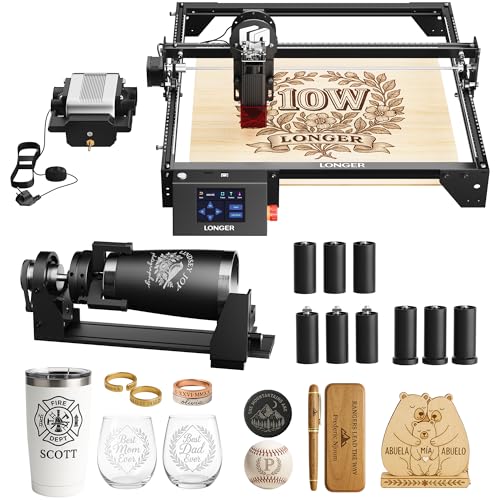
The Ray5 10000mW Engraver integrates a 10W laser module and a dual-beam architecture to boost engraving speed up to 10000 mm/min. A sizable 400 × 400 mm working area, a 3.5-inch touchscreen, and offline capabilities offer convenient workflow management. The package includes an air assist system, a rotary attachment, and risers, enabling versatile operations on metals like engraved cylinders and tumblers. The device emphasizes speed and accuracy, with a focus on higher throughput for workshop environments.
With metal engraving in mind, users should be aware of the limitations of diode-based systems on thick or hard metals. Proper eye protection, ventilation, and dust management are essential. Compatibility with mainstream software such as LaserGRBL and LightBurn enhances adaptability to various design pipelines.
ACMER S1 Laser Engraver

The ACMER S1 offers a compact 130 × 130 mm work area with a 6W laser module and a precise 0.04 mm laser spot. It emphasizes high-precision engraving with repeatable positioning accuracy around 0.01 mm and speeds up to 10,000 mm/min. This model is designed to suit beginners and hobbyists seeking a capable entry point for wood, acrylic, and thin metal layers. The S1 arrives mostly preassembled for quick setup, promoting a minimal learning curve and faster project starts.
For metal applications, consider materials with suitable coatings or thin sheets to optimize performance. The device supports dual-function engraving and cutting, and its compatibility with common software ecosystems helps integrate into established workflows. Always observe laser safety guidelines and safe handling practices when cutting or engraving metal materials.
Carverall K15 Pro 5W Laser Engraver
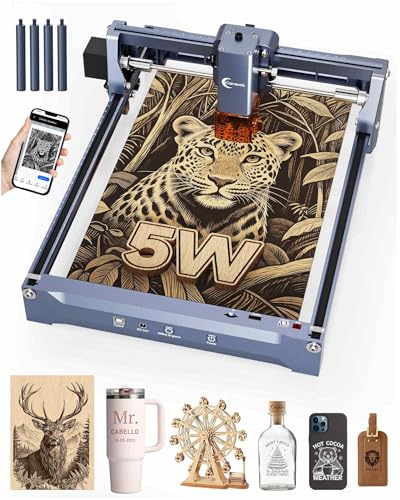
The Carverall K15 Pro delivers true 5W power with a 0.01 mm engraving precision and a 200 × 300 mm work area. It ships with a ready-to-use setup and supports a broad range of materials including wood, coated metals, and plastics. The device emphasizes user-friendly software compatibility with CutLabX, LightBurn, and LaserGRBL, making it accessible to beginners while offering enough flexibility for more complex projects. It includes safety glasses and essential accessories for a quick start.
In metal-focused tasks, the K15 Pro is best used on thin metal layers or coated surfaces. It is important to manage heat buildup and to verify material suitability before prolonged cutting sessions. Software compatibility and a straightforward setup process help reduce time-to-first-engrave while maintaining accuracy across projects.
Buying Guide: Key Purchase Considerations
Purpose and material range: Define whether you will mainly engrave or cut metal sheets, coatings, or alloys. Higher wattage generally improves capability on metal, but consider material thickness and the needed passage or multi-pass strategies.
Working area: Larger X-Y areas enable bigger parts and fewer piece joins. For metal engraving or cutting, ensure the area fits your typical project dimensions and allows for safe material handling.
Laser type and spot size: Diode-based systems with smaller spot sizes yield higher detail. Heat management matters for metal processing; look for air assist, good ventilation, and stable power delivery.
Control software and connectivity: Compatibility with LaserGRBL, LightBurn, and other software can simplify design-to-cut workflows. Check supported connections (USB, Wi-Fi, TF card) and offline capabilities for uninterrupted work.
Safety and safety features: Ensure your model has a clear safety path, emergency stops, eye protection considerations, and protective housings with appropriate certifications. Always follow local regulations for laser usage.
Ease of use and upgrade path: Preassembled units reduce setup time, while documented support and a robust ecosystem (rotary rollers, additional attachments) extend capability as your projects scale.
Cost of operation: Factor in consumables such as safety eyewear, replacement lenses, and ventilation requirements. Efficiency and maintenance can influence long-term costs as much as upfront price.