answering your search for a reliable CNC acrylic cutting machine, this guide highlights five top options ideal for small shops, hobbyists, and makers. Each section explains who benefits most, why the model was selected, and practical limits to consider. The buyer’s table below helps compare core specs at a glance.
| Product | Best For | Key Benefit | Limitations |
|---|---|---|---|
| Twotrees TTC450 Pro | Advanced hobbyists to small shops | Large work area with precision Z-axis | Learning curve for GRBL upgrades |
| FoxAlien Masuter Pro | Budget-conscious makers | All-metal, sturdy frame, multiple spindle options | Bulkier footprint |
| TTC3018 Pro | Beginners and classrooms | All-metal Z-axis, Wi‑Fi and offline options | Smaller working area |
| Genmitsu 3018-PROVer Ultra | Entry-level hobbyists | High precision, 20,000 rpm compatible | Limited spindle range for metals |
| Genmitsu 4040-PRO | Serious hobbyists to small workshops | Sturdy steel frame, upgraded control box | Heavier and larger footprint |
Twotrees TTC450 Pro All-Metal CNC Router

The TTC450 Pro combines a robust all-metal build with a large 460 x 460 x 80 mm working area and a precision Z-axis driven by a 57 stepping motor. It uses a 3.5-inch capacitive touch screen for intuitive control and offers a 4th-axis expansion port. This model is best for ambitious acrylic and wood projects, signage, and multi-layer reliefs. It is well suited for small workshops that plan to scale into more complex setups. Best for users who want programmable depth control and future upgrades to a multi-axis system.
Best for: Enthusiasts who want a desktop-ready CNC with potential to evolve into a four-axis production setup. Better for those who value a capacitive touch interface and precise Z-axis control.
Caution: The upgrade path relies on GRBL-compatible software and community resources; initial setup may require learning time.
FoxAlien Masuter Pro 3-Axis CNC Router

The Masuter Pro features an all-aluminum frame with a stable Z-axis guided by linear rails. It ships with dust-resistant controls and easy-to-reach emergency stop and home buttons. Its versatility shines with two spindle clamps (52 mm and 65 mm) and support for 60 W to 300 W spindles, plus upgrade options like 65 mm or 1.5 kW spindles. It’s best for hobbyists who want a durable machine that can grow into heavier-duty carving tasks for wood and acrylic. Best for: users prioritizing stability and upgrade potential over compact size.
Best for: Beginners who expect to upgrade spindles and want robust, all-metal construction. Better for those who need adaptable spindle options over time.
Caution: Larger footprint and weight may require a more substantial workspace and stable mounting surface.
TTC3018 Pro CNC Router Machine

The TTC3018 Pro offers an all-metal Z-axis with high precision (0.1 mm positioning accuracy) and supports a range of design software. It features built-in 2.4G Wi‑Fi, TF card offline engraving, and USB connectivity, making it flexible for classroom or maker-space use. With a compact footprint and a 300 x 180 x 40 mm area, it suits small projects and nameplates. Best for: students and makers who need wireless file transfer and offline capabilities. Better for: light-duty engraving and small-batch production.
Best for: Beginners learning GRBL-based workflows and those who want a simple, upgradeable desktop machine.
Caution: Smaller work area limits larger panels and thicker materials.
Genmitsu 3018-PRO Router Kit Ultra

The 3018-PROVer Ultra is an upgraded version of Genmitsu’s popular 3018 with an all-metal frame and raised base height for improved stability. It works with plastics, woods, acrylics, PCBs, and soft aluminum. It includes a drop-in 20,000 RPM spindle and uses Grbl control software. This kit is ideal for beginners who want a straightforward setup with abundant online support. Best for: entry-level projects that require reliable, easy assembly.
Best for: Users seeking a low-cost, beginner-friendly entry into CNC routing with solid community resources.
Caution: Limited capability with hard metals and thicker aluminum; may require gradual upgrades for heavier tasks.
Genmitsu 4040-PRO For Metal Acrylic Cutting
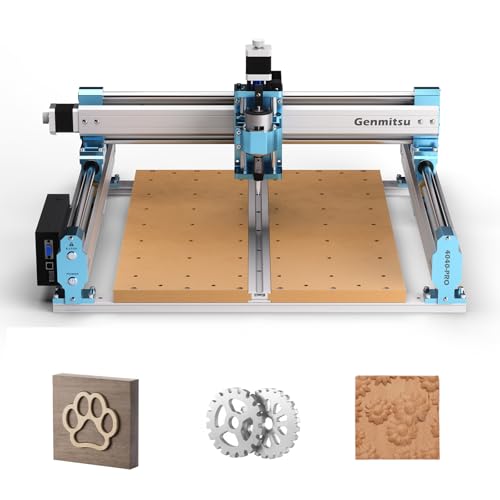
The 4040-PRO uses a steel HSS frame and dual Y-axis rails with a 42 mm and 52 mm spindle mount. It features a robust control box with a dust-proof metal housing and a Toshiba TB6S109 driver on a 32-bit system. It supports 300 W spindles and is compatible with larger spindles via additional mounts. This model is well suited for projects that demand durable construction and greater spindle versatility. Best for: more demanding hobbyists who want a stable, scalable desktop CNC for metal and acrylic work.
Best for: Users who value a rigid frame and expanded spindle compatibility for heavier tasks.
Caution: It has a larger footprint and higher initial investment compared with smaller desktop units.
Buying Guide: Key Considerations For CNC Acrylic Cutting Machines
What material and work area do you need? Consider acrylic thickness, panel size, and the number of parts you plan to produce. Larger work areas help with bigger signs and panels, while compact machines excel at small parts and nameplates.
How important is upgradeability? If you anticipate expanding to multiple axes or higher spindle power, choose models with expansion ports, multiple spindle clamps, or easily swappable spindles.
What software ecosystem matters? Open-source control like GRBL, compatibility with Fusion 360, Easel, or Carveco Maker can influence your workflow and available resources.
What about precision and stability? All-metal frames with robust Z-axis leadscrews and dual rails reduce wobble, delivering cleaner cuts and more consistent engraving depth.
Ease of use and safety features? Capacitive touch screens, dust-proof controllers, emergency stops, and offline engraving options help with daily use and safety in busy workspaces.
Maintenance and accessibility? Look for accessible lubrication points, serviceable spindles, and a readily available spare-parts ecosystem to minimize downtime.
Frequently Asked Questions
- What is the typical material these machines cut? – Most models cut wood, acrylic, plastics, and soft metals like aluminum in light to moderate thicknesses.
- Do these machines require a computer? – Some offer offline engraving and TF card transfer, while others connect via USB or Wi-Fi for live design transfers.
- Can these machines engrave detailed logos? – Yes, with proper bit selection and feed rate, fine details are achievable on acrylic and wood.
- Are higher spindle powers worth it for beginners? – Higher power is beneficial for thicker materials and faster cutting but adds cost and noise; start with what you need now and upgrade later if required.
- Is assembly difficult? – Most kits are designed for hobbyists, but some assembly and tuning are required. Check community guides and manufacturer manuals for help.
- Which model is best for classrooms? – Models with offline operation, easy setup, and strong safety features are ideal for teaching environments.