Choosing the right chemical feed pump is essential for maintaining safe, clean well water. This guide highlights five reliable options that balance adjustable chemical dosing, durability, and user-friendly features. Each entry provides core specs, compatibility notes, and practical use cases to help you compare pumps for well-water treatment, disinfection, and dosing of chlorine or similar chemicals.
| Product | Key Benefit | Typical Use |
|---|---|---|
| Stenner Peristaltic Pump 85mhp17 | Adjustable dosing with high- PSI capability | Chlorine injection for well systems |
| Precision Controls Diaphram Metering Chlorine Pump | High daily capacity, 150 PSI | Large-volume chemical dosing |
| Stenner Peristaltic Pump 4.3-85 GPD | Heavy-duty construction, versatile applications | General chemical dosing in wells |
| Stenner UCDBINJ Injection Check Valve 1/4″ | Quality injection valve, reliable sealing | Injection point integrity in dosing lines |
| Stenner UCINJ38 Injection Check Valve 3/8″ | Higher flow valve, robust performance | Injection line with larger tubing |
Stenner Peristaltic Pump 85MJH2A2S – Adjustable, 0.8–17 GPD

The Stenner 85mhp17 model offers adjustable metering with a wide dosing range (0.8 to 17 GPD) and a high-pressure capability up to 100 PSI. It uses a Santoprene tube and 20 feet of 1/4 inch tubing, which supports chlorine injection and other oxidizers in well-water systems. The design emphasizes reliable continuous operation, ease of maintenance, and compatibility with corrosive chemicals. This pump is suitable for small-to-moderate dosing applications where precise control is required and where tubing life and chemical compatibility matter.
Key aspects include a robust peristaltic mechanism that minimizes internal fluid contamination and simplifies maintenance. For well-water applications, ensure proper chemical compatibility with the selected disinfectant and confirm head pressure requirements align with your piping layout. The model’s adjustable output supports fine-tuning during installation and after maintenance cycles.
Use case notes: Ideal for chlorine injection and other additives in residential or small commercial wells where a compact, reliable pump is preferred. Consider spare tubing and fittings to reduce downtime during tubing wear or chemical changes.
Product Highlights
- Variable high-pressure output to 100 PSI
- GPD range from 0.8 to 17
- Santoprene tube with 20 ft of 1/4″ tubing
Precision Controls Diaphragm Metering Chlorine Pump – 31.6 GPD

The Precision Controls diaphragm metering pump delivers up to 31.6 gallons per day with a maximum of 150 PSI. It includes a 115V power cord and plug, with optional compatibility for 230V when hardwired. This pump is designed for steady, predictable metering of chlorine or other sanitizers in well-water treatment systems, offering a compact footprint and straightforward adjustment controls. It is well-suited for larger residential systems or small commercial setups where higher dosing accuracy is required alongside reliable electrical compatibility.
Performance considerations include voltage readiness, tubing material choice, and pump head construction. Inputs and outputs should be arranged to prevent backflow or air entrapment, and routine inspections should focus on seals and diaphragm wear. The unit is a strong choice for users needing a robust, mid-range capacity pump with broad electrical compatibility.
Use case notes: Good for elevated chlorine demand scenarios and larger dosing requirements where a dependable diaphragm pump is preferred over smaller metering units.
Product Highlights
- Maximum 31.6 GPD dosing
- 150 PSI capability
- 115V cord; 230V compatible when hardwired
Stenner Peristaltic Pump 4.3-85 GPD

This Stenner model provides a wide dosing range from 4.3 to 85 GPD with a compact design and heavy-duty construction. The pump is engineered for smooth, consistent output and supports a broad variety of applications, including chemical dosing in well-water systems. Its reliability makes it a practical option for both preventive maintenance and scaled dosing scenarios.
When integrating into a well system, consider flow rate compatibility with your injection point and the chemical’s solubility and compatibility with tubing materials. Routine upkeep of the tubing and seals will extend service life, particularly in challenging well-water chemistry. This pump balances durability with dosing flexibility for mid-to-large residential or light commercial installations.
Use case notes: Suitable for chlorine injection or other liquid additives in medium-flow applications where durable, long-life pumping is required.
Product Highlights
- Heavy-duty construction
- Wide dosing range
- Consistent output and broad application support
Stenner UCDBINJ Injection Check Valve 1/4″

The UCDBINJ 1/4″ injection check valve is designed to ensure precise chemical injection and maintain line integrity in dosing setups. Manufactured to high standards, this valve helps prevent backflow and contamination, supporting reliable metering for chlorine and other additives. It is a practical replacement or upgrade component within a well-water dosing system.
Key considerations include compatibility with 1/4″ tubing, seal material compatibility with chosen chemicals, and installation orientation. Using a quality check valve reduces cross-contamination risk and helps maintain consistent dosing performance over time. This valve is a cost-effective, durable option for improving dosing reliability in residential or light commercial well setups.
Use case notes: Ideal as a maintenance or upgrade part in a Stenner-based dosing system or any line requiring a reliable injection check valve.
Product Highlights
- 1/4″ injection check valve
- High-quality manufacture
- Value-oriented upgrade choice
Stenner UCINJ38 Injection Check Valve 3/8″

The UCINJ38 3/8″ injection check valve is built for higher-flow applications, providing robust sealing and reliable injection performance. This larger valve is appropriate for dosing configurations where 3/8″ tubing is used or where higher flow rates are involved. It adheres to Stenner’s quality standards and supports consistent chemical delivery with reduced risk of backflow.
Consider pairing this valve with pumps handling greater GPD or higher system pressures. Ensure proper installation alignment with tubing and fittings, and verify chemical compatibility of seals and materials with your chosen additive. The UCINJ38 offers durability and dependable operation in more demanding well-water dosing setups.
Use case notes: Best suited for systems using 3/8″ tubing or requiring higher injection flow without compromising seal integrity.
Product Highlights
- Injection check valve 3/8″
- High standard manufacturing
- Suitable for higher-flow dosing
Whale GP0550 Gusher Galley Pump

The Whale GP0550 is a manual freshwater pump designed for galley applications, featuring a foot pedal operation and a multi-directional inlet/outlet configuration. While primarily used in marine or compact spaces, its simple operation and flexible installation make it a potential backup or supplementary option for well-water systems needing an auxiliary water transfer capability or a secondary dosing interface.
Key considerations include portability, ease of use, and space requirements. This pump is not a primary chemical doser but can complement a well-water treatment setup by handling dedicated transfer tasks or bypass scenarios when other dosing equipment is servicing maintenance. It is best viewed as a utility pump rather than a primary dosing solution for chemical injection.
Use case notes: Useful in small spaces or as a manual backup in multi-equipment dosing configurations where occasional transfer is needed.
Product Highlights
- Foot pedal operation
- Multi-directional connections
- Compact galley-style versatility
Dodoam 0.4%–4% Adjustable Fertilizer Injector
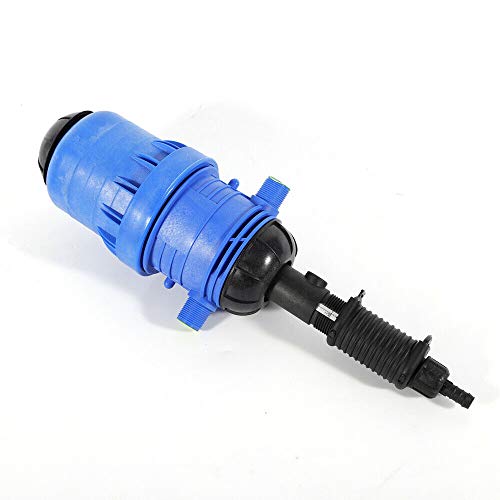
The Dodoam adjustable fertilizer injector demonstrates a water-powered doser concept, using proportional injection without relying on electrical power. Although marketed for fertilizer dosing, the proportional injection principle applies to other liquid dosages in well-water systems, especially when ensuring the dose remains proportional to water flow. This can be advantageous for specific treatment scenarios where electrical power is limited or undesired.
Operational notes include ensuring compatibility with your piping, preventing clogs, and monitoring dilution ratios as water flow varies. This device emphasizes proportional dosing relative to flow, which can simplify field adjustments in variable well conditions. It is most applicable for non-electrical dosing requirements or supplementary dosing duties alongside a primary pump.
Product Highlights
- Water-powered proportional dosing
- Adjustable concentration range
- Suitable for non-electrical dosing tasks
Hayward CL2002S In-Line Automatic Chemical Feeder
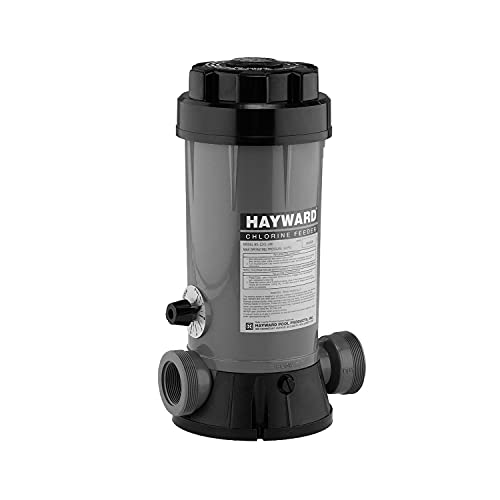
The Hayward CL2002S is an in-line automatic chemical feeder designed for pools and spas but serves as a reference point for inline chemical dosing in water treatment systems. It accepts trichlor tablets or bromine sticks and provides automatic release, reducing manual dosing frequency. While primarily used in pool environments, its inline design and automated behavior offer a comparative perspective for well-water dosing setups that require a simple, hands-off approach to sanitization or oxidizer introduction.
Key considerations include compatibility with your chemical form, tablet size, flow path configuration, and security features for accidental discharge. For well-water systems, evaluate whether an inline feeder aligns with your dosing strategy and whether integration with a separate metering pump is necessary for precise control. This device illustrates the trade-off between automation and control granularity in chemical dosing.
Product Highlights
- Inline automatic chemical dosing
- Tablet or stick compatibility
- Security features for safe operation
Buying Guide: Key Considerations for Well-Water Chemical Dosing
- Desired dosing rate and range: Match GPD capacity and PSI tolerance to your well’s flow and pipe layout. Higher GPD models suit larger volumes; smaller models work for residential use.
- Chemical compatibility: Ensure tubing and valve materials (Santoprene, elastomers, seals) are compatible with chlorine, chlorine blends, or other oxidizers; check corrosion resistance and life expectancy.
- Power requirements: Consider voltage compatibility (115V vs 230V) and whether the system can operate with or without continuous power, especially in remote locations.
- Injection check valves: Use reliable check valves (1/4″ or 3/8″) to prevent backflow and cross-contamination. Valve material should tolerate chosen chemicals.
- Maintenance footprint: Look for units with wear-resistant tubing and diaphragms, easy-toboot maintenance, and availability of spare parts like tubing and diaphragms.
- System integration: Assess compatibility with existing pumps, regulators, and filters. Ensure proper calibration, anti-siphon features, and secure connections to prevent leaks.
- Installation environment: Consider exposure to heat, humidity, and water exposure. Choose components designed for water treatment environments.
- Automation vs. manual control: Decide whether you need fully automated dosing or a combination of a metering pump with inline feeders for flexibility and redundancy.
- Warranty and support: Prioritize brands with solid warranties and accessible support for field repairs and spare parts.
- Cost of ownership: Factor in tubing replacements, diaphragm changes, and valve replacements over time to gauge long-term costs.