Answer: For overhead lifting, choose a manual or electric chain hoist with solid construction, load capacity aligned to your needs, and safety features like load brakes and secure hooks. This guide highlights five strong options suited for garages, workshops, warehouses, and automotive work. It helps buyers pick the right model based on capacity, lifting height, and easy operation. The top picks emphasize clear control, durability, and practical use cases such as regular maintenance, construction, or vehicle lifting tasks.
Summary of selected products
- SPECSTAR Hand Chain Hoist 1 Ton – 10 ft lift, 1.25 Ton max, dual hooks, ASME B30.16 compliant
- Glorousamc Manual Chain Hoist – 1 Ton, 20MN2 chain, 360° hook rotation
- SPECSTAR Hand Chain Hoist Black – 1 Ton, 10 ft lift, safety-certified
- VEVOR Hand Chain Hoist – 2 Ton, 20 ft lift, galvanized G80 chain
- TOYO Lever Chain Hoist – 3,500 Lbs, 10 ft, double brake, G80 chain
SPECSTAR Hand Chain Hoist 1 Ton 2200 Lbs Capacity

Best for lightweight to medium overhead lifting in small shops or automotive bays. Capacity reaches 1 Ton with a 1.25 Ton maximum, and a 10-foot forged chain with 8.5-foot effective lift height. The hoist uses industrial-grade steel gears for stable performance and includes a mechanical load brake and 360° rotating forged steel hooks for secure load management. Suitable for routine lifting of engines, transmission parts, and light machinery components. A caution: ensure the hook rotates freely and the chain is not twisted before lifting.
Who it’s best for: shop owners needing a compact, reliable hand chain hoist for regular 1-ton lifts without bulky equipment. Why selected: strong compliance with ASME B30.16 standards and a durable build that resists wear in daily use.
SPECSTAR Hand Chain Hoist Black 1 Ton

Best for general maintenance and workshop lifting with a focus on durability. It mirrors the 1-ton capacity with a similar 10-foot forged chain and 8.5-foot effective lift height. Safety features include a mechanical load brake and 360° rotating forged steel hooks to lock loads. The all-steel construction and forged chain contribute to a long service life in shop environments. Limitation: keep the chain lubricated and inspect for wear before every use.
Who it’s best for: facilities needing consistent 1-ton capacity hoists in a black, unobtrusive finish. Why selected: identical core specs to the other SPECSTAR model with updated aesthetics and reliable performance in daily tasks.
VEVOR Hand Chain Hoist, 2 Ton
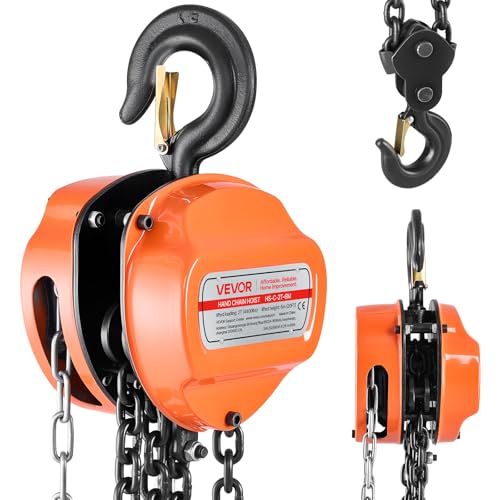
Best for heavier lifting in garages, warehouses, or light industrial settings. It offers up to 4,400 lbs (2 tons) capacity with a 20 ft lifting height. The dual pawl brake enhances load security, and the chain is galvanized, helping resist corrosion. Pull force remains manageable at around 340 N when fully loaded. Caution: taller installations may require extra clearance for full lift without obstruction.
Who it’s best for: users needing higher capacity without stepping up to a powered hoist. Why selected: strong load capacity, long reach, and proven brake design suitable for frequent use in automotive or shop environments.
TOYO Lever Chain Hoist 3500Lbs 10ft

Best for precise, controlled lifting with a lever mechanism. It supports up to 3,500 lbs (about 1.75 tons) with a 10-foot lift, and uses G80 galvanized manganese steel chain for strength and corrosion resistance. A double brake system provides extra protection during lifting and lowering. This model is well-suited for automotive work and small machinery setups where lever control is preferred. Limitation: lever action may be slower for very frequent, high-volume lifting tasks.
Buying Guide
What capacity do you need? Match the hoist’s maximum load to the heaviest item you plan to lift, plus some safety margin. For occasional engine work, a 1-ton unit is often sufficient; for heavier components or frequent use, consider 2-ton or 3.5-ton options.
Which lifting height matters? Consider your ceiling height and the maximum lift height required. If overhead clearance is limited, a shorter lift height can help you work safely without needing extra equipment.
What about safety features? Look for a mechanical load brake, dual pawl brakes, and rotating hooks. These features minimize load drift and prevent accidental drops. Verify chain material (G80) and the overall durability of the frame and gears.
Power vs. manual operation: Do you prefer all-manual control or a powered option? Electric chain hoists offer faster lifting and remote control but are more complex and require wiring, while manual units are simpler, cheaper, and maintenance-friendly for intermittent use.
Environment and durability: Galvanized or coated chains resist corrosion in humid or workshop environments. A full steel frame and milled gears indicate robust construction suitable for daily use.
Ease of use and maintenance: Check for 360° hook rotation to prevent load twisting, and ensure regular inspection of gears, chains, and hooks. A high-quality brake system reduces the risk of load drops.
FAQ
- What lifting capacity should I choose for auto shop work? Choose a hoist with at least 1 ton capacity for typical engine or component lifting; consider 2 tons for larger parts or frequent use.
- Is a manual hoist safer than an electric one? Safety depends on use case. Manual hoists have fewer failure points but require more physical effort; electric hoists are faster and suitable for frequent lifts but need proper installation.
- What chain material is best? Look for G80 manganese steel chains for high strength and wear resistance.
- How high should a hoist lift? Select a model with a lift height that accommodates your typical loads and ceiling height to avoid interference.
- Are there maintenance tips for longevity? Regularly inspect chains, hooks, and brakes; lubricate moving parts per manufacturer guidelines; store in a dry environment.
- Can I use these hoists for vehicles? Yes, for lifting vehicle components or small assemblies, provided the load stays within rated capacity and proper safety measures are followed.