Answering the right question for buyers seeking high-pressure carbon fiber tanks: these tanks provide reliable 4500 psi fills for PCP airguns, paintball markers, and airsoft gear. The best options balance light weight, durability, and certification. This guide highlights five well-suited choices for different player needs—from ultralight backpacking to field-long sessions. The summary table below compares key attributes to help you choose quickly.
| Product | Capacity | Material | Regulator / Output | Best For |
|---|---|---|---|---|
| HK Army HSTL 68ci | 68 ci | Carbon Fiber | 850 psi regulator | Paintball & Airsoft players seeking dependable output |
| Orcair 3L / 183ci | 183 ci / 3 L | Carbon Fiber | Dual gauge, high-capacity | Long sessions, field refills |
| Empire 68/4500 | 68 ci | Carbon Fiber | Integrated regulator technology | USA-made reliability, safety-focused users |
| Orcair 98ci / 1.6L | 98 ci / 1.6 L | Carbon Fiber | Dual gauge valve, 4500 psi | Compact, versatile field use |
| Pautaca 2L / 122ci | 122 ci / 2 L | Carbon Fiber | M18x1.5, dual gauge | Budget-friendly yet capable option |
Below are five detailed product sections to help you compare specifics, understand why each tank might suit you, and identify any potential limitations to consider before purchasing.
HK Army HSTL 68ci 4500psi Tank

The HK Army HSTL air system delivers a lightweight 68ci/4500psi carbon fiber bottle with a robust regulator for consistent output. This tank weighs about 2lbs 2oz, making it suitable for players who value speed and mobility. The regulator supports an output around 850 psi, enabling stable shot performance across many markers. Best for players who want reliable performance without added weight on the field. A potential limitation is the balance between ultra-light weight and the need for precise regulator tuning in varying temperatures or humidity.
Orcair 3L / 183ci Carbon Fiber Tank

The Orcair 3L/183ci tank combines a large capacity with carbon fiber construction for long field sessions. Rated at 4500 psi, it features a dual-gauge valve for real-time pressure monitoring and efficient refills. Best for players who need extended air supply between fills or want to run multiple markers without frequent recharges. A noted limitation is that it is not DOT-certified, which affects storage and transport in some regions or situations requiring DOT labeling.
Empire Paintball Basics 68/4500 Tank

The Empire 68/4500 tank is lightweight and DOT & TC certified, with Pure Energy technology regulators designed for stable output and efficiency. It includes dual safety provisions and is made in the USA. This option is best for players prioritizing safety certifications, repeatable performance, and domestic manufacturing. It may be slightly heavier than ultralight race-only options, so consider this if weight is a critical factor for you.
Orcair DOT 98ci / 1.6L Tank

This DOT-certified Orcair 98ci/1.6L tank offers a compact yet capable option with a 4500 psi rating and dual gauge valve. The carbon fiber wrap reduces weight compared to steel cylinders while maintaining durability. Best for players who want a more compact setup for travel or mounted play. A caution: ensure compliance with local DOT regulations when transporting this tank in carry-on or checked luggage, as rules vary by jurisdiction.
Orcair DOT 98ci / 1.6L Dual Gauge Tank
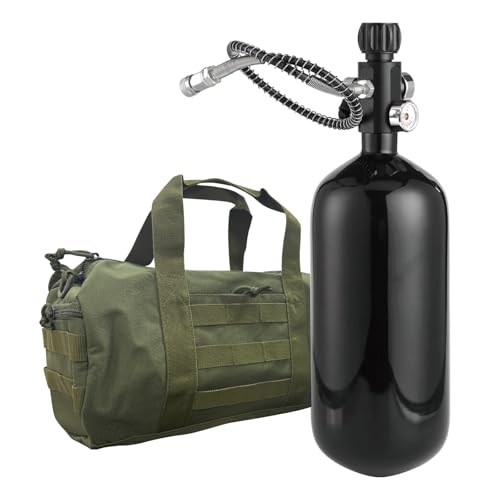
The Orcair DOT 98ci/1.6L dual gauge setup provides ongoing pressure visibility during inflation, with a 4500 psi rating for PCP and paintball use. Best for field refilling efficiency and real-time monitoring. Choose this if you value accurate gauge readings during a fill. Limitation: the product notes emphasize DOT certification, but you should verify local transport rules where you play or travel with compressed gas tanks.
Pautaca 2L / 122ci Carbon Fiber Tank

The Pautaca 2L/122ci tank offers a CE/EN-certified, lightweight carbon fiber solution with 4500 psi service pressure and M18x1.5 threading. It includes an integrated filling system with dual gauge valve fittings for input and output. Best for buyers seeking a balance of lower capacity and cost with solid safety certifications. A limitation is that it is CE/EN certified but not explicitly listed as DOT, which may impact certain transport or storage requirements.
Buying Guide: Key Considerations For 4500 Psi Carbon Fiber Tanks
What capacity should you choose? Higher capacity tanks (e.g., 3L / 183ci) reduce refill frequency but add weight. Lighter options (68ci) are easier to carry and maneuver, ideal for skirmish play or quick sessions. How important is certification? DOT certification matters for transport and some venues; CE/EN focuses on safety standards in production. Do you need dual gauge valves? Dual gauges help track current pressure and fill pressure, reducing overfill risk. Consider regulator output: higher stability equals consistent shots, though some markers respond better to a specific psi range. Materials and manufacturing location can influence weight, durability, and warranty expectations. Finally, confirm compatibility with your marker threads (M18x1.5 is common) and fill equipment compatibility for field refills.
FAQ
- Q: What does 4500 psi mean for a paintball or PCP tank? A: It indicates the maximum service pressure the tank can safely hold and deliver for fills and use with compatible equipment.
- Q: Is DOT certification required for all tanks? A: Not always, but DOT certification affects transport and storage rules in many regions. Check local requirements before travel.
- Q: What is dual gauge valve useful for? A: It shows current tank pressure and fill pressure, helping you manage refills more accurately on the field.
- Q: Can I use a 68ci tank for long sessions? A: Yes, if you’re refilling less often or using multiple markers; higher-capacity tanks reduce refills but add weight.
- Q: Are these tanks compatible with all markers? A: Most high-pressure tanks use common threading like M18x1.5, but always verify the marker’s input requirements and regulator compatibility.
- Q: How should I transport these tanks safely? A: Use a dedicated tank case, avoid dropping, and follow any local regulations for compressed gas transport.