Finding the right bolt on tooth bar can dramatically increase digging efficiency, protect your bucket, and extend equipment life. This guide highlights highly-rated bolt on tooth bars designed for skid steers, tractors, and loaders. Each option emphasizes bolt-on installation, robust construction, and compatibility with common bucket sizes. Read on to compare quality, capacity, and installation ease to choose the best bolt on tooth bar for your worksite.
| Product | Bucket Width (Approx.) | Teeth | Load Capacity |
|---|---|---|---|
| VEVOR Bucket Tooth Bar, 48” | 48 inches | 6 teeth | 4560 lbs |
| VEVOR Bucket Tooth Bar, 60” | 60 inches | 7 teeth | 4560 lbs |
| VEVOR Bucket Tooth Bar, 72” | 72 inches | 9 teeth | 4560 lbs |
| Titan Attachments 72″ Custom Toothbar Kit | 72 inches | 9 teeth | Not specified |
| Neat Attachments Heavy Bolt On 46″ Wide | 46 inches | 5 teeth | Not specified |
Note: Capacity figures vary by model and bucket configuration. Always verify compatibility with your specific skid steer or loader bucket before purchase.
VEVOR 48-Inch Bucket Tooth Bar

Designed for heavy-duty performance, the VEVOR 48-inch bucket tooth bar features a curved shank that pairs with most digging buckets for improved efficiency. It supports a load capacity up to 4560 lbs, enabling easier handling of dense materials and tough soil. The bolt-on design simplifies installation and provides a secure, shake-free connection via rivet fastening reinforced with bolts. Fully automated welding minimizes weld fractures and ensures joint stability during extended, high-intensity use. The combination of curved shanks, robust construction, and bolt-on reliability makes this option a solid choice for demanding skid steer tasks.
VEVOR 60-Inch Bucket Tooth Bar

This 60-inch VEVOR tooth bar expands the same core benefits—high-strength 230 curved shanks, a 4560 lbs load capacity, and a bolt-on installation for secure mounting. The 7-tooth arrangement increases digging bite while maintaining bucket protection. Its automated welding process reduces the risk of fractures under heavy use, promoting longer service life in frequent excavation and material handling work. The bolt-clamping design helps ensure a tight, shake-free fit across a wide range of loader types, making it a versatile upgrade for mid-sized skid steers.
VEVOR 72-Inch Bucket Tooth Bar

The 72-inch VEVOR tooth bar expands coverage for wide-bucket configurations, offering 9 teeth for deeper penetration and faster material movement. It retains the same heavy-duty 230 curved shanks, bolt-on installation, and fully automated welding as the shorter models, ensuring consistent strength and performance across sizes. The large width makes it well-suited for extensive digging tasks and bulk material handling in heavy construction and agricultural applications. This model balances reach with durability for sizable skid steer operations.
Titan Attachments 72″ Custom Toothbar Kit

The Titan Attachments toothbar kit offers a DIY-friendly approach with a 72-inch length, 9 teeth, and shanks designed to be welded onto a bar after cutting to length. The package includes mounting hardware and side mounts, making it easy to adapt to various excavator or skid steer buckets. This kit emphasizes customization for operators who want precise tooth spacing and fitment, while still improving digging power and edge protection after installation. Shore up worn edges and extend bucket life with a tailored toothbar solution.
Neat Attachments Heavy Bolt On 46-Inch Bar

The Neat Attachments 46-inch bolt-on tooth bar is designed for tighter spaces where inside bucket width measures around 46 inches. With five teeth, it provides solid digging capability and edge protection for standard loader buckets. Its bolt-on design simplifies installation without sacrificing stability. This option is a practical match for smaller skid steers or tractors working in confined sites where maneuverability is essential and frequent tooth replacement is anticipated.
Hasopy 60-Inch Bucket Tooth Bar
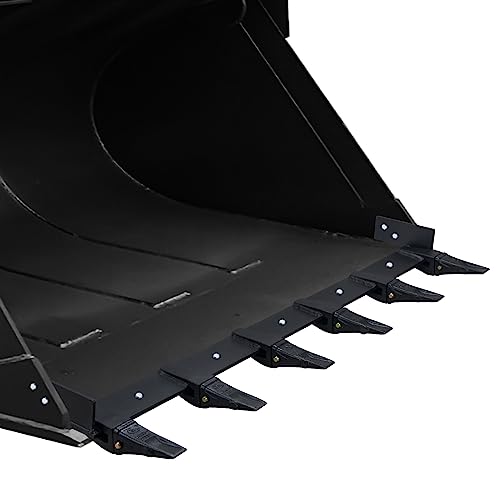
Hasopy’s 60-inch bucket tooth bar is built to fit a broad range of loaders with standard bucket thicknesses, featuring six teeth and a replaceable wear pattern. The kit’s replaceable tooth design is complemented by a bolted connection for secure mounting and straightforward maintenance. The Q345 steel alloy construction underscores durability and impact resistance, making it a reliable choice for ongoing excavation and site cleanup tasks where frequent tooth maintenance is expected.
Buying Guide: Key Purchase Considerations
Engineers and operators should weigh several factors when selecting a bolt on tooth bar:
- Bucket compatibility: Confirm interior width, cutting edge thickness, and mounting style to ensure a proper fit. Widths from 46 to 72 inches cover most skid steer buckets, but precise measurement is essential.
- Teeth configuration: More teeth offer greater bite and faster digging; however, they may reduce space for heavier loads. Choose tooth counts (5, 6, 7, or 9) based on soil type and material density.
- Shank design and material: Curved shanks improve fit and efficiency, while high-strength steel (such as alloy or Q345) boosts durability under impact and vibration.
- Installation method: Bolt-on or rivet-then-bolt designs impact installation time and long-term stability. Fully automated welding reduces fracture risk and improves joint integrity.
- Durability and maintenance: Look for replaceable teeth options and easy tooth replacement to minimize downtime. Automated manufacturing processes support consistent quality across seasons.
- Warranty and support: Check manufacturer guarantees and availability of replacement teeth, shanks, and mounting hardware.
- Cost versus value: Higher upfront cost may translate to longer service life and reduced maintenance over time. Evaluate total cost of ownership for your operation.
When comparing models, prioritize compatibility with your bucket and typical workload. For heavy excavation and frequent use in tough soils, models with six to nine teeth and automated welding generally offer the best balance of strength and reliability. If you frequently replace teeth or work in tight spaces, consider replaceable-tooth configurations and shorter widths to maximize control and uptime.