If you need a reliable fuel transfer pump for aviation refueling, farm, or heavy equipment tasks, this guide helps you choose the right pump for your needs. The top picks cover 12V and 24V systems, as well as 110V electric options, so you can match power source to your setup. Best for mobile operations, fixed tanks, or on-site service, these pumps move diesel, kerosene, and gasoline efficiently.
| Product | Power (Volts) | Flow (GPM) | Best For |
|---|---|---|---|
| GPRO V25 Series (12V) | 12 | 25 | Mobile trucks or trailers with 12V systems |
| GPI M-150 Series | 12 | 15 | Direct-mount, compact mobile transfers |
| FEEDRON Automatic Pump | Battery or USB powered | 3.8 | Portable can pumping with auto-stop |
| CALENON 110V | 110 | 18 | Stationary, workshop, farm tanks |
| GPRO V25 Series (24V) | 24 | 25 | Higher-voltage mobile or fleet setups |
GPRO V25 Series Fuel Transfer Pump, 12V DC, 25 GPM

Reference: V25-12PO includes a 12V DC pump with 25 GPM and modular fittings. It supports gasoline blends up to E15, diesel blends up to B20, and kerosene. It’s designed for mobile operation from trucks or trailers powered by a 12V battery. A Safe Stop timer prevents unattended running beyond a 30-minute duty cycle, with a reset by cycling power. Best for: mobile refueling tasks where a compact 12V setup is needed. Caution: ensure the vehicle provides proper 12V power to avoid tripping the over-voltage sensor when used with higher-voltage sources.
GPI M-150 Series Fuel Transfer Pump, 12V

Reference: M-150S pump with 15 GPM, direct-mount design, and nozzle holder. Compatible with gasoline blends up to E15, diesel up to B20, and kerosene. Designed for mobile use from 12V battery systems, it features a rotary gear design for reduced wear. Best for: compact, on-vehicle transfers where space is limited and reliability is needed. Caution: rotary gear pumps may require periodic inspection for wear in high-dirt environments.
FEEDRON Automatic Fuel Transfer Pump
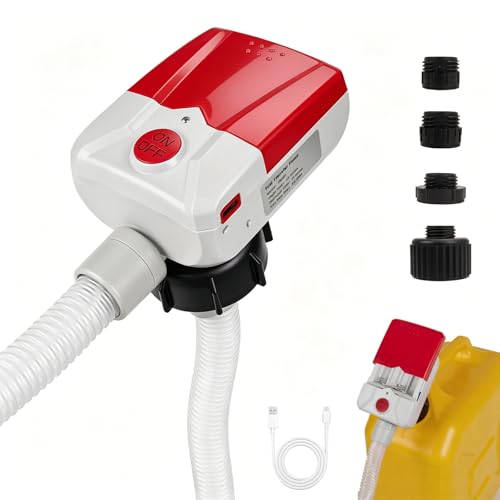
Reference: Auto-stop feature with leak protection and sensor beeper. Uses a two-way power supply via AA battery or USB-C for power. Includes four adapter sizes and a long 51″ hose. Best for: portable cans and on-site topping with minimal supervision. Caution: batteries and some adapters are not included; plan for compatible power sources. Ideal for: quick, safe transfers from portable cans to equipment or vehicles.
CALENON 110V Fuel Transfer Pump, 18 GPM

Reference: 1/2 HP electric pump rated up to 18 GPM, self-priming with up to 49 ft lift. Fittings include 3/4″ NPT and a built-in strainer. Best for: stationary operation in workshops, farm tanks, or garages where 110V power is available. Caution: designed for diesel, kerosene, biodiesel, and light fuel oils; compatibility should be verified for jet fuel blends before use.
GPRO V25 Series Fuel Transfer Pump, 24V DC

Reference: V25-24PO 24V DC pump with 25 GPM and modular fittings. It includes a tank adapter, fuse assembly, and manual. Compatible with gasoline blends up to E15, diesel blends up to B20, and kerosene. Features Safe Stop to limit unattended operation. Best for: higher-voltage mobile setups or fleets that operate on 24V systems. Caution: ensure the vehicle or trailer electrical system can safely supply 24V to the pump to avoid triggering the over-voltage sensor.
Buying Guide: Key Purchase Considerations
- Power source compatibility: Choose 12V for mobile trucks or trailers, 24V for higher-voltage fleet setups, or 110V for workshop installations. Verify your power availability and duty cycle needs (short-term pumping vs. continuous use).
- Fluid compatibility: Look for pumps rated for gasoline blends (up to E15), diesel blends (up to B20), and kerosene. If aviation-grade kerosene or AVGAS compatibility is required, ensure the model explicitly states kerosene compatibility and check local regulations.
- Flow rate: Higher GPM speeds transfers but may increase heat and wear. Match GPM to your tank size and transfer distance to balance speed with durability.
- Safety features: Auto-stop timers, over-voltage protection, and leak safeguards help prevent spills. Consider pumps with clear shutoff and reset procedures to reduce operator error.
- Portability vs. fixed installation: Portable can pumps (with long hoses and adapters) suit fieldwork, while direct-mount or fixed installations suit permanent setups and fleet operations.
- Adapters and fittings: Ensure modular fittings, tank adapters, and hoses are compatible with your existing tanks and containers. Availability of spare parts can extend pump life.
- Maintenance needs: Pumps with fewer moving parts, like rotary gear designs, may require less frequent service but still need regular inspection for wear and leaks.
Frequently Asked Questions
- Can these pumps transfer aviation fuel or AVGAS?
- Which pump is best for a mobile truck setup?
- Is a 24V system necessary for higher performance?
- What safety features should I look for?
- Are these pumps suitable for diesel and kerosene in addition to gasoline?
- Do these pumps require additional equipment?
Most listed pumps are designed for gasoline blends, diesel, and kerosene. Check each product’s fuel compatibility; if AVGAS or other aviation-specific fuels are required, confirm with the manufacturer before use.
A 12V DC pump, such as the GPRO V25 Series (12V) or GPI M-150, is well-suited for mobile trucks and trailers because it runs from a standard vehicle battery.
Yes, 24V systems can deliver similar or higher flow with different electrical requirements. They are best for fleets or installations with 24V power supplies and space for mounting.
Auto-stop, timer-based shutdown, over-voltage protection, and leak-prevention sensors help prevent spills and equipment damage.
Most listed pumps support gasoline blends, diesel blends, and kerosene. Always verify the specific model’s compatibility with your target fuels and environmental conditions.
Most come with fittings, tank adapters, and manuals, but you may need extra hoses, nozzle assemblies, or mounting hardware depending on installation needs.