When buying an argon CO2 tank, the goal is reliable gas delivery, proper certification, and suitability for your welding or dispensing needs. This guide highlights five top options and clarifies who each is best for, plus practical cautions. Ideal for MIG welding with Argon/CO2 blends, TIG welding with pure Argon, or beverage dispensing with CO2, these selections cover common American setups and safety standards.
| Product | Best For | Key Benefit |
|---|---|---|
| 80 cu/ft 75% Argon 25% CO2 Welding Gas Cylinder Tank CGA 580 | MIG welding (mixed gas) | Balanced blend for versatile arc stability |
| PrimeWeld 75% Argon 25% CO2 Bottle 80CF | Professional MIG welding | DOT 3AA certification; full & ready to use |
| PrimeWeld 100% Argon Gas Welding Tank Full 80CF | TIG welding | Pure Argon for inert weld environment |
| 80 cu ft Steel Inert Gas Cylinder CGA580 | Commercial inert gas needs | Multi-gas compatible with CGA580 |
| 125 cu/ft 75% Argon 25% CO2 Welding Gas Cylinder Tank CGA 580 | Large MIG projects | Large capacity for extended use |
80 cu/ft 75% Argon 25% CO2 Welding Gas Cylinder Tank CGA 580 – FULL

Best for: MIG welding with a general-purpose Argon/CO2 blend. This tank is filled and ready for use, offering a mid-range size suitable for shop tasks. It is designed to meet DOT and ISO regulations, and includes a 10-year hydrotest date stamped, keeping compliance visible for inspections.
- Ideal for mixed gas MIG welding on mild steel and nonferrous metals.
- Consider this if you want a ready-to-weld option without rental fees.
Caution: Ensure regulator compatibility with CGA580 and verify hydrotest date validity before use. Tank volume is substantial, so secure handling is advised.
PrimeWeld 75% Argon 25% CO2 Bottle 80CF

Best for: Professional MIG welding with a reliable all-purpose gas blend. This tank is DOT 3AA certified and arrives full and ready to use, reducing downtime. It offers a balance of cost-efficiency and performance for a broad range of metals.
- Better for: Shops that want a dependable blend without rental dependency.
- Choose this if you need a ready-to-weld option with strong arc stability and puddle control.
Caution: While versatile, this blend may not be ideal for very aluminum-intensive TIG applications; for TIG, consider 100% Argon.
PrimeWeld 100% Argon Gas Welding Tank Full 80CF

Best for: TIG welding requiring a pure inert environment. 100% Argon minimizes contamination and yields a highly stable arc, essential for precision welds on aluminum and other nonferrous metals.
- Better for: Welders focusing on high-purity Argon usage and demanding TIG applications.
- Choose this if you need maximum weld cleanliness and arc control.
Limitation: Pure Argon is not the universal choice for MIG on mixed metal types; use Argon/CO2 blends when appropriate for metal variety.
80 cu ft Steel Inert Gas Cylinder CGA580 Valve
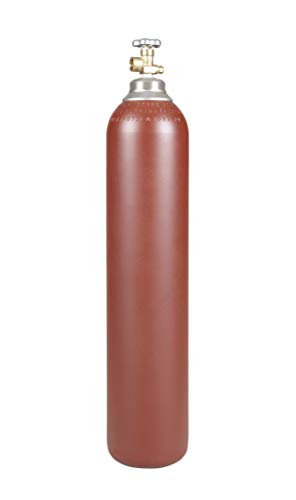
Best for: Commercial operations requiring a versatile inert gas cylinder, compatible with nitrogen, argon, helium, neon, and mixed gases. It combines a sturdy steel build with DOT approval and a multi-gas valve system.
- Better for: Businesses with multiple gas needs seeking a single cylinder type for various applications.
- Choose this if you need cross-compatibility with different gas mixes and regulators.
Limitation: This cylinder is inert gas friendly but may be heavier and less nimble for small home workshops; ensure you have proper handling equipment.
125 cu/ft 75% Argon 25% CO2 Welding Gas Cylinder Tank CGA 580 – FULL
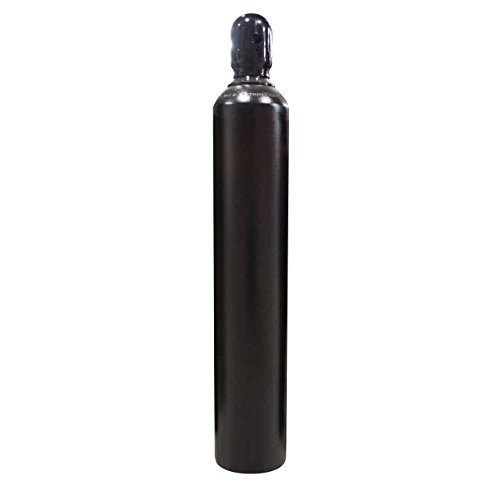
Best for: Large MIG welding projects and shops that require extended use between refills. The 125 cu ft capacity reduces the frequency of cylinder replacements in busy environments.
- Better for: High-output welding tasks where downtime must be minimized.
- Choose this if you want a larger tank to reduce refill interruptions.
Caution: Handling and storage require appropriate equipment due to the increased size and weight; verify regulator compatibility with CGA580.
Buying Guide
Gas type considerations: Choose 100% Argon for TIG welding where purity and inertness matter. Use 75/25 Argon/CO2 blends for MIG welding on mild steel and mixed metals. For broader metal compatibility, select a larger mixed-gas tank or a multi-gas cylinder if needed.
Tank size and usage: Smaller tanks (20-40 cu ft) are easier to maneuver but require frequent refills; larger tanks (80-125 cu ft) suit ongoing production but demand proper handling and storage.
Certification and compliance: Look for DOT 3AA or ISO-rated cylinders and a clear hydrotest date. Ensure valves (like CGA580) match your regulators and that the tank is designed for your intended gas type.
Regulators and fittings: Confirm the regulator type (CGA-580 vs CGA-320) matches the cylinder valve. Adapters exist but add potential leakage points; aim for direct compatibility where possible.
Storage and safety: Store upright in an area with adequate ventilation, away from heat sources. Use protective caps and valve guards, and transport with appropriate carts or dollies to prevent damage.
FAQ
- What is the difference between 100% Argon and Argon/CO2 blends? – 100% Argon provides a stable, inert welding environment ideal for TIG; blends are versatile for MIG on various metals.
- What does CGA 580 refer to? – It is the valve standard used on many welding gas cylinders, compatible with many regulators and hoses.
- Do I need a DOT-certified tank? – Yes, DOT certification ensures the cylinder meets safety and pressure standards for transport and use.
- Can I connect a CO2 regulator to an Argon cylinder? – Only with appropriate adapters designed for the valve type; otherwise, use a regulator intended for CGA580 ports.
- How long does a full tank last in MIG welding? – This depends on the flow rate and project duration; larger tanks last longer but require appropriate handling.
- Is a larger tank always better? – Not always. Consider your workshop space, portability needs, and refilling accessibility before choosing size.