Answering the common question buyers have: which fuel tank sealants provide reliable, aviation-grade or automotive-grade performance for metal tanks and fuel lines? This guide focuses on sealants and repair kits suited for aircraft and other fuel systems. It highlights five products that balance seal integrity, ease of use, and resistance to fuels and temperatures. The intended buyers range from aviation hobbyists seeking non-hardening sealants to professional restorers needing durable repair kits. Below is a quick summary table of the selected products.
| Product | Best For | Notes |
|---|---|---|
| Permatex 80019 Aviation Form-A-Gasket No. 3 | Aviation and automotive sealant users | Non-hardening, gasoline and oil resistant |
| J-B Weld 8217 TankWeld Gas Tank Repair | Quick metal tank repairs | Epoxy putty, sets in 5 minutes |
| POR-15 Fuel Tank Sealer (8 oz) | Permanent fuel tank sealing | Stops rust, resists all fuels |
| Gasoila Thread Sealant for Ethanol E10 & E85 | Thread sealing for fuel lines | Non-hardening, pliable |
| Hzutloer Instant Fuel & Water Tank Repair Adhesive Kit | High-temp, waterproof repairs | Strong bond, broad temp range |
Permatex 80019 Aviation Form-A-Gasket No. 3 Sealant

Best for: Aviation and automotive applications that require a slow-drying, non-hardening sealant. This product resists gasoline, oil, and grease, making it suitable for gasket joints in fuel systems where flexibility and reliance on a flexible seal are needed.
Why selected: Its non-hardening nature reduces the risk of cracking with thermal cycling in metal tanks and fittings. It provides a dependable barrier against leaks when used on gaskets and small joints.
Careful use: Do not rely on it for structural repairs or large gaps. It is best on gasket interfaces where movement or vibration occurs. It may require surface prep for optimal adhesion.
J-B Weld 8217 TankWeld Gas Tank Repair

Best for: Quick, on-the-spot metal tank repairs and rebuilds. This hand-mixable, steel-reinforced epoxy putty is designed for gas tanks, radiators, and other metal surfaces prone to leaks.
Why selected: It cures rapidly and provides a strong, durable repair with a high tensile strength. It is suitable for repairs without removing the tank in many cases, depending on access and hole/crack size.
Limitation: Full cure takes time before under-vehicle or high-stress fuel line areas are put back into service; follow curing guidance and respect application limits (holes up to 3/8″ and cracks up to 4″ long).
POR-15 Fuel Tank Sealer (8 oz)
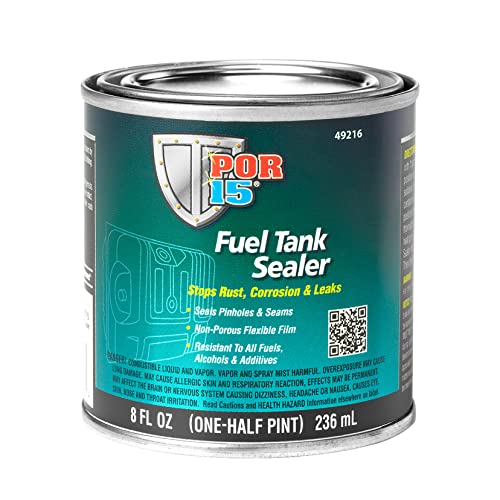
Best for: Metal fuel tanks requiring a durable, rust-resistant seal. This non-porous sealant stops rust and is resistant to all fuels and additives.
Why selected: POR-15 is designed for long-lasting corrosion resistance and a permanent seal when used with proper prep work and surface cleaning. It is well-suited for tanks subject to ethanol blends and higher fuel corrosiveness.
Caution: Proper tank cleaning and degreasing are essential; sealant failure is common if the tank isn’t properly prepped before applying.
Gasoila Thread Sealant for Ethanol E10 & E85

Best for: Thread sealing of fuel line fittings and pipes. Designed to handle ethanol blends, including E10 and E85, while remaining pliable.
Why selected: Its non-hardening, non-toxic formula helps maintain a flexible seal with temperature changes and vibration. It supports long-term reliability across multiple material types such as brass, copper, and aluminum.
Limitation: It is a thread sealant, not a tank sealant; use it for threaded connections rather than large tank surfaces.
Hzutloer Instant Fuel & Water Tank Repair Adhesive Kit

Best for: High-temperature resistant repairs on fuel and water tanks across cars, motorcycles, and trucks. It provides fast bonding for ruptures, cavities, and rust damage.
Why selected: The kit emphasizes durable, long-lasting bonding suitable for high-heat environments. It’s a practical option for emergency field repairs when access to more specialized sealants is limited.
Caution: Although strong, it may require surface prep and curing time; follow the kit instructions to achieve optimal performance.
Buying Guide: Key Purchase Considerations
What should you evaluate when selecting a fuel tank sealant or repair product?
- Application scope: Is the product designed for tank sealing, gasket sealing, or thread sealing? Choose accordingly to avoid using a product outside its intended use.
- Chemical resistance: Look for compatibility with gasoline, ethanol blends, oils, and additives. Aviation-grade or automotive-grade compatibility helps prevent breakdown.
- Temperature range: Ensure the product withstands the temperature extremes commonly encountered in engines and fuel systems.
- Cure time and handling: Some products cure quickly; others require longer setup. Consider downtime and safety when planning repairs.
- Compatibility with metals: Verify if the product works with the metals in your system (steel, aluminum, brass, copper) to avoid adhesive or sealant failure.
- Prep requirements: Surface cleaning, drying, and degreasing often impact sealant performance. Do not skip prep steps.
- Repair scope: For leaks, determine hole size or crack length to determine whether a putty, patch, or full sealer is needed.
Usage Scenarios And Comparisons
- Best overall for aviation projects: Permatex Aviation Form-A-Gasket No. 3 provides flexible, non-hardening sealing in gasket interfaces exposed to fuels and oils.
- Best for quick metal tank repairs: J-B Weld TankWeld offers fast-setting epoxy putty for holes and cracks in metal tanks.
- Permanent tank sealing with rust protection: POR-15 Fuel Tank Sealer creates a durable barrier against all fuels and oxidation when applied with proper prep.
- Best for threaded connections in fuel lines: Gasoila provides a reliable non-hardening sealant ideal for ethanol-blended fuels on threads.
- All-around high-temp bonding: Hzutloer offers a high-temperature repair option for tanks in demanding environments.
Frequently Asked Questions
- Q: Can I use these products on any fuel tank material? A: Most are formulated for common metals used in tanks (steel, aluminum, brass). Always check the product label for material compatibility.
- Q: Do these sealants work with ethanol-blended fuels? A: Many are designed to tolerate ethanol blends; always confirm compatibility with your specific fuel mix.
- Q: Is preparation essential before applying sealer? A: Yes. Thorough cleaning, degreasing, and drying improve adhesion and longevity.
- Q: How long does curing take before the tank can be pressurized? A: Cure times vary; follow the manufacturer’s instructions for safe reassembly and use.
- Q: Can I use a sealant on a pressurized system without removing the tank? A: Some products allow in-tank repairs, but always consult the product guidance and safety precautions.
- Q: Are there any hazards or disposal considerations? A: Follow local regulations for disposal of chemical sealants and putties; use gloves and work in a ventilated area.