When handling chemicals, workplace safety and organized cleanup rely on high-performance absorbent pads. This guide highlights top options designed for oil, solvents, acids, bases, and mixed spills. Each product offers distinct strengths in absorbency, durability, and compatibility with hazardous liquids, helping facilities stay compliant and reduce slip hazards.
| Product | Main Benefit | Best Fit |
|---|---|---|
| Raxwell Oil Absorbent Pads | Heavy-Duty 8-layer polypropylene with dimpled surface | Oil, coolant, water, and chemical spills in garages |
| Brady SPC MRO100 Pads | Low-lint, multi-purpose gray pads; heavy weight | Continuous leaks and larger spills |
| FLASHDRY Chemical Spill Pads | High absorbency for hazardous liquids; chemical-resistant | Industrial, lab, and workplace chemical spills |
The following five products are selected for broad coverage of chemical, oil, and industrial spill scenarios. Each section provides a concise overview, key features, and usage considerations to help buyers compare effectively.
Raxwell Oil Absorbent Pads 200 Pack

Raxwell’s 8-layer polypropylene pads are designed for heavy-duty absorption, capable of handling oils, coolants, solvents, water, and various chemicals. The dimpled surface accelerates wicking, helping to lock in leaks quickly and reduce slip hazards. The durable, lint-free construction minimizes residue on floors and equipment, making cleanup faster in high-volume spill environments. This option is well-suited for garages, workshops, and industrial bays where multiple liquid types may be present.
Brady SPC MRO100 Premium Absorbent Pads
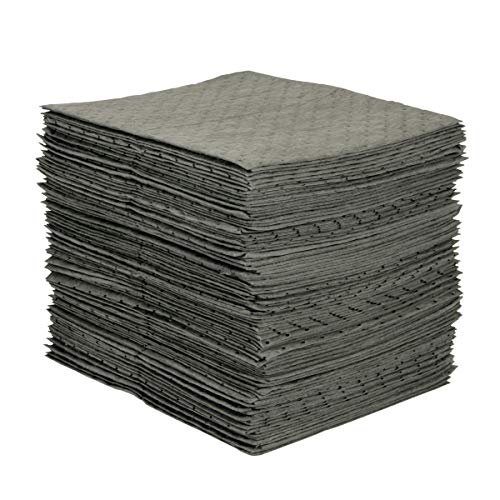
Brady’s SPC MRO100 pads are a heavy-weight, non-linting option designed for multi-fluid absorption. The 3-ply meltblown polypropylene construction supports continuous leaks and larger spills, reducing material use while maintaining performance. The gray, low-lint design makes them suitable for general industrial applications where cleanliness and reduced debris matter, including maintenance bays and production floors.
FLASHDRY Chemical Spill Absorbent Pads
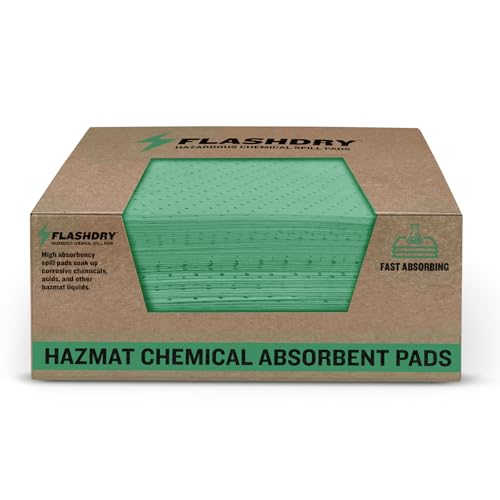
These 100-pack pads excel at absorbing hazardous liquids, including strong acids and bases. They are chemical-resistant and thermally bonded with eight layers of polypropylene for strength even when saturated. The pads are designed to minimize chemical reactions and keep workers safe during cleanup, making them a solid choice for labs, manufacturing, and maintenance facilities dealing with aggressive spills.
FLASHDRY Universal Spill Absorbent Pads

FlashDry Universal Pads are dimpled for rapid absorbency and are designed to tackle a wide range of liquids, including oils, solvents, greases, paints, coolants, and chemicals. Packaged in a sturdy dispensing box, they offer quick access for busy workspaces. The all-purpose design makes them suitable for factories, warehouses, and schools where different spill types may occur.
PIG Hazmat Chemical Absorbent Mat Pads

PIG Hazmat pads are lightweight and designed for small leaks and drips of hazardous liquids. They absorb a wide range of acids, bases, corrosives, and unknown liquids, including high-concentration chemical spills. The pads are well-suited for bench-top cleanup, chemical storage areas, and workstations where quick access to absorbent material is helpful for ongoing operations.
Buying Guide: Key Considerations For Choosing Absorbent Pads
- Liquid compatibility: Match pad composition to the expected spills (oils, solvents, acids, bases, water-based fluids). Some pads are optimized for hazardous chemicals, while others handle general-purpose spills.
- Absorbency and thickness: Higher GSM or multi-layer designs offer greater absorbency per pad but may be bulkier. Consider the typical spill size and the number of pads needed per shift.
- Durability and lint: For floors and equipment, low-lint and tear-resistant pads reduce cleanup time and avoid leaving debris that could contaminate surfaces.
- Quick response features: Dimpled or textured surfaces can speed up absorption and containment, minimizing slip hazards.
- Packaging and accessibility: Dispensing boxes or convenient assorted packs support fast deployment in busy environments like labs, workshops, and warehouses.
- Safety and compliance: For hazardous materials, select pads that resist chemical reactions and offer clear disposal guidance aligned with local regulations.
- Cost-per-use: While price matters, evaluate pad lifespan, number of uses per pad, and waste generated to determine total cost of cleanup.
- Environmental impact: Look for eco-conscious options, including recyclable packaging and pads designed to minimize environmental harm after use.
All products listed above provide non-personalized, objective performance data based on typical industrial use. When selecting pads, consider the specific spill profiles of your facility, the frequency of cleanups, and storage space for dispensing and disposal. A layered approach—combining universal pads for routine leaks and specialty pads for hazardous spills—often yields the best safety and efficiency outcomes.