Finding the right 60-gallon air compressor means matching capacity with reliability, power, and maintenance needs. These units are ideal for pro workshops, manufacturing setups, and serious DIY shops that demand extended run times. The top picks below prioritize large tanks, robust motor power, and durable construction. They are best for heavy-use environments, long air runs, and tasks like sanding, painting, and running multiple tools without frequent refills.
| Product | motor / power | tank | max PSI | best for |
|---|---|---|---|---|
| VEVOR 60-Gallon Heavy-Duty (4HP, 125 PSI) | 4 HP | 60 gal | 125 | Industrial tasks with oil-free air |
| Quincy 60-Gallon Vertical (3.5 HP) | 3.5 HP | 60 gal | 145 | Professional shop users |
| DEWALT 60-Gallon Vertical (3.7 HP) | 3.7 HP | 60 gal | 155 | Durable, versatile garage/workshop |
| VEVOR 60-Gallon Heavy-Duty (3.7HP, 155 PSI) | 3.7 HP | 60 gal | 155 | High pressure tasks, belt-driven |
| POLAR AIR 60-Gallon Silent (5HP, 230V) | 5 HP | 60 gal | — | Quiet operation in industrial settings |
The table above highlights representative 60-gallon models found in the market. Each option serves different workflow needs, from the quiet operation of a Polar Air unit to the higher-pressure capabilities of Quincy and DEWALT, and the belt-driven efficiency seen in several VEVOR models. Use this guide to narrow down choices based on noise, maintenance, and run-time requirements.
VEVOR 60 Gallons Heavy-Duty Air Compressor, 4HP
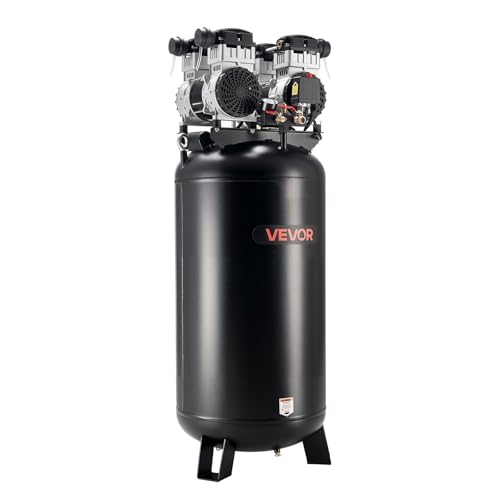
Best for demanding industrial tasks requiring consistent air flow. This model delivers 10 SCFM at 90 PSI with a 125 PSI max, making it well-suited for continuous operation in light manufacturing or large shops. The oil-free motor reduces maintenance and helps keep air clean for sensitive tools. The 60-gallon tank provides extended air supply with fewer interruptions.
Who it’s for: professional workshops that need reliable, lower-maintenance air delivery. Why chosen: strong flow at moderate PSI with oil-free operation minimizes upkeep. Caution: oil-free does not mean zero maintenance; monitor the system to prevent leaks and ensure proper cooling during long runs.
Quincy Single-Stage 60-Gallon Vertical (3.5 HP)

Best for professional shops that require a proven vertical tank design with ample CFM at moderate PSI. With 12.4 CFM @ 100 PSI and a max of 145 PSI, this unit supports continuous operation for a range of tools. The 230-volt single-phase setup aligns with typical workshop electrical services.
Who it’s for: installers and electricians in mid-size shops seeking a trusted brand. Why chosen: robust vertical design saves floor space; ceiling-to-floor air systems benefit from reliable performance. Caution: 12.4 CFM at 100 PSI may be lower than some high-demand tools; plan tool usage accordingly.
DEWALT 60 Gallon Vertical, 3.7 HP

Best for professionals seeking durability and high-output performance. This 240V unit features a 155 PSI max and a reliable oil-lubricated pump. The vertical design optimizes space in compact shops while providing steady air supply for a range of tasks from framing to finishing.
Who it’s for: contractors and serious hobbyists who value a proven, long-lasting compressor. Why chosen: high PSI supports demanding tools; steel construction improves longevity. Caution: oil-lubricated pumps require routine maintenance to prevent leaks and ensure seal integrity.
VEVOR 60 Gallons Heavy-Duty (3.7HP, 155 PSI)

Best for heavy-duty operations needing higher pressure and solid build. This 3.7 HP model delivers up to 155 PSI with a belt-driven pump for efficient air delivery and smooth operation. The 60-gallon tank and carbon steel construction offer durability in industrial environments.
Who it’s for: manufacturers and large workshops that demand higher-pressure performance. Why chosen: belt-driven pumps typically provide stable performance and lower belt wear. Caution: belt-driven systems may require periodic belt tension checks and maintenance.
POLAR AIR 60-Gallon Silent 5HP (PS05V060Y1)

Best for noise-sensitive environments where a 60-gallon unit is still required. This 5 HP, 60-gallon vertical unit emphasizes energy efficiency and lower noise, making it suitable for shared workshops or studio spaces with sound constraints. It uses a splash-lubed pump and isolator pads for reduced vibration.
Who it’s for: quiet-heavy users and studios that operate in noise-restricted areas. Why chosen: best-in-class noise performance for a 60-gallon size. Caution: higher horsepower may translate to greater initial energy draw; ensure electrical supply can support it.
Buying Guide
What to consider when choosing a 60-gallon air compressor
- Power and flow: Compare horsepower, SCFM at specified PSI, and maximum PSI to match your tool requirements. Higher SCFM at lower PSI is better for sustained air delivery.
- Tank design: Vertical tanks save floor space; belt-driven pumps can offer efficiency, while oil-free designs reduce maintenance but may produce different air cleanliness profiles.
- Duty cycle and reliability: Look for durable construction (steel tanks, reinforced frames) and components designed for continuous operation in shop settings.
- Noise and vibration: If you work in noise-sensitive spaces, consider ultra-quiet models or those with isolator pads and low-RPM twin-motor configurations.
- Maintenance needs: Oil-lubricated pumps require regular oil checks; oil-free options minimize maintenance but may have different costs over time.
- Space and layout: Vertical tanks maximize room, while belt-driven or quieter models might justify the extra space for belt systems or sound-dampening features.
FAQ
- What makes a 60-gallon compressor suitable for a large workshop? – It provides extended air supply, enabling continuous use of multiple tools without frequent refills.
- Is oil-free better than oil-lubricated for shop air? – Oil-free reduces maintenance and keeps air cleaner, but oil-lubed pumps can offer longer lifespans under heavy use with proper maintenance.
- Do I need a 230V or 240V supply for these units? – Many 60-gallon models use 230V or 240V single-phase; check your electrical panel capacity before purchase.
- Should I choose a vertical or horizontal tank? – Vertical saves floor space and is common in tight shops; horizontal may be easier to move and access.
- What is the benefit of a belt-driven pump? – Belt-driven systems typically deliver smoother operation and can improve efficiency during heavy use.
- Can these units operate quietly in a shared space? – Quiet models exist (e.g., POLAR AIR) with lower decibel levels, suitable for shared environments.