Searching for a 3500–4000 lb mini excavator? This guide focuses on compact, diesel-powered, or pilot-controlled models that balance power and maneuverability for digging, trenching, landscaping, and small construction tasks. The picks below are suited for contractors, landscapers, and serious homeowners needing real jobsite stability in a trailerable package. A quick comparison table follows the introductions to help you decide at a glance.
| Product | Engine/Power | Approx. Weight | Best For | Limitation |
|---|---|---|---|---|
| MACHPRO 4000lb Mini Excavator with Kubota — Diesel Engine | Kubota Z482, 12.3 HP | 4,000 lb | Contractors needing true 2-ton class stability | Heavier for trailer towing in some setups |
| DigMaster 2650lb Mini Excavator with 13.5HP Gas Engine | 13.5 HP Gas | 2,650 lb | Midsize yards and tight spaces | Gas engine may have higher fuel costs vs diesel for long days |
| MMS 1.7 Ton Mini Excavator with 23HP Two-Cylinder RATO | 23 HP Gas | 1,700 kg (~3,748 lb) | Side swing and precise control in confined spaces | Gas engine may require available fuel type and service |
| DS-180 1.8 Ton New Pilot Control Kubota Engine Mini Excavator | Kubota-based, 11.4 HP | ~1,800 kg | Pilot-control precision in small jobs | Smaller fleet availability in certain regions |
| DigMaster 4000 lb Mini Excavator — Kubota Diesel Power | Kubota Z482, ~13.3 HP | 4,000 lb | Heavy-duty yard and landscape work | Same caveat as other heavy compact units: trailer requirements |
MACHPRO 4000lb Mini Excavator with Kubota — Diesel Engine
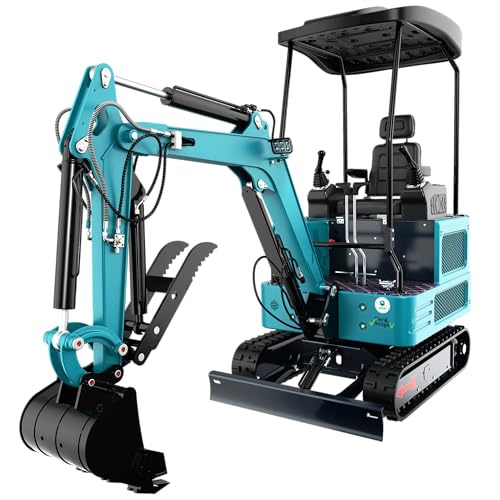
Best for contractors needing a true 2-ton class feel in a compact footprint. Powered by a Kubota Z482 twin-cylinder diesel engine, this 4,000 lb machine delivers stable torque with lower fuel consumption. It emphasizes long-term ownership with nationwide parts support and solid resale value. The reinforced one-piece chassis minimizes vibration and tipping risk during trenching and lifting, making it ideal for heavier digging tasks on job sites. The full hydraulic pilot control offers smoother operation and real-time system monitoring, reducing operator fatigue.
Who this is for: professionals performing medium-to-heavy trenching, landscaping, and prepped foundations who require stability and powerful hydraulic control. Caution: heavier units can impose higher trailer and transport considerations and may require proper licensing for highway travel in some regions.
MACHPRO 4000lb Mini Excavator with Kubota — Diesel Engine (Variant)

This variant mirrors the core features of the 4,000 lb class with Kubota power, reinforced chassis, and full hydraulic pilot control. It’s best for buyers who want identical capability and durability with slight model-year or configuration differences. Choose this if you want consistent 2-ton-class stability for trenching, digging, and lifting heavy loads in medium-scale projects. Limitation: similar transport considerations apply as for the 4000 lb base model.
DigMaster 2650lb Mini Excavator

Best for gardeners and small contractors needing compact power with a stable 2,650 lb operating weight and a 13.5 HP gas engine. The DigMaster offers 90% pre-assembled delivery with a wooden crate and forklift/lift-gate support, simplifying setup and reducing transit risks. It uses dual-joystick pilot control for smoother handling and better precision in trenching or around obstacles. Caution: gas engines may incur higher fuel costs over long periods compared to diesel options.
MMS 1.7 Ton Mini Excavator with Side Swing Boom

Best for projects in tight spaces thanks to a side swing boom that enables digging parallel to obstacles like walls or foundations. The 23 HP two-cylinder RATO engine provides strong digging power, while the compact 1.7 ton frame keeps maneuverability high. It suits landscape edges, trenching near structures, and garden installations. Limitation: fuel and service logistics for a 23 HP gas engine might be a consideration on longer jobs.
DS-180, 1.8 Ton Mini Excavator

Best for precise pilot control in small jobs. The DS-180 uses a 11.4 HP dual-cylinder Kubota-derived engine and a low-pressure pilot circuit for fine control. It is designed for easy handling in narrow construction sites and delicate landscaping tasks. Caution: availability and regional support for this model may vary; check local service coverage before purchase.
ATT327 1.8 Ton Mini Excavator with Side Swing

Best for versatile motion with a side-swing boom and pilot controls. The 14 HP Kubota diesel engine and quick coupler with multiple attachments enhance productivity for projects near fences and foundations. It includes a range of attachments, which is advantageous for varied tasks. Caution: ensure compatibility with attachments you plan to use and confirm service availability in your area.
Buying Guide
- Engine type and power: Diesel engines tend to run cooler and offer higher torque for longer shifts. Gas engines can be cheaper upfront but may incur higher fuel costs for extended use.
- Operating weight vs. maneuverability: Heavier models provide stability on uneven terrain but require proper transport planning. Lighter models maneuver easier in tight spaces but may lack deep digging power.
- Hydraulic control: Full hydraulic pilot control typically delivers smoother, more precise operation than mechanical systems. This reduces operator fatigue on long days.
- Chassis and durability: Look for reinforced, one-piece chassis or robust frames to minimize vibration and tipping risk during trenching and lifting.
- Attachments and versatility: Side swing booms, quick couplers, and a range of attachments expand utility in trenches, around obstacles, and in landscaping tasks.
- Transport and storage: Consider trailer size, weight distribution, and local permit requirements for moving the machine between sites.
- Support and parts availability: Nationwide parts networks and dealer support help protect your investment over time.
Frequently Asked Questions
- What causes a 4,000 lb mini excavator to feel unstable? A reinforced chassis and robust hydraulic system generally improve stability; ensure proper ballast and transport setup for the job.
- Do I need a diesel or gas mini excavator? Diesel engines are typically preferred for longer hours and tougher digging, while gas engines can be easier and cheaper upfront for light, occasional work.
- Is a side swing boom important? Side swing helps in confined spaces by reducing the need to reposition the whole machine, improving efficiency in trenching near walls or foundations.
- What attachments are essential for a 1.7–2.0 ton excavator? A hydraulic thumb, quick coupler, and various buckets are common essentials; compatibility depends on the model and brand.
- How do I estimate transport requirements? Check the machine’s overall width and weight, then confirm trailer capacity and local road regulations for heavy haulage.
- Where can I find parts and service? Look for models with nationwide parts support and a local dealer network to minimize downtime.