Looking for a reliable 3 HP electric motor to power an air compressor? This guide highlights five solid options that balance performance, frame size, and installation options. Each choice targets common buyer types: DIY hobbyists, workshop professionals, farm-and-field operations, and equipment upgraders. Read on to compare which motor fits your voltage needs, rotation direction, and mounting compatibility. A quick buying table follows to summarize core specs at a glance.
| Product | Frame | RPM | Voltage | Rotation | Notes |
|---|---|---|---|---|---|
| VEVOR 3HP Air Compressor Electric Motor | 56 | 3450 | 230V | CW/CCW | Open drip-proof; best for clean, dry environments |
| VEVOR 3 HP Electric Motor, 1750RPM | 184T | 1750 | 230V | CW/CCW | TEFC cooling; rugged frame |
| EliteEdge 3HP SPL Air Compressor Motor | 56 | 3450 | 230V | CW/CCW | Wide ventilation for heat dissipation |
| TINVHY 3HP SPL 3450 RPM | 56 | 3450 | 115/230V | CCW | 1.88″ shaft; robust shell |
| GCCSJ Air Compressor Motor, 115/230V | 56 | 3450 | 115/230V | CCW | Open Drip Proof (ODP); suitable for dry workspaces |
VEVOR 3HP Air Compressor Electric Motor (56 Frame, 230V)

Best for: hobbyist workshops that need straightforward installation with reversible rotation. This model runs at 3450 RPM and uses a 56-frame housing with a 5/8″ keyed shaft. It operates on a 230V single-phase supply and draws about 15.5A at full load. Open drip-proof construction suits clean, dry environments, and the frame design supports reliable service life in typical shop settings.
Why selected: The 56-frame size is a common fit for mid-sized air compressors, and the CCW/CW options reduce wiring complexity during setup. The included shaft length and keyed shaft support secure coupling with standard compressor components.
Caution: Use in environments free from excess dust or moisture to protect the open drip-proof motor internals.
VEVOR 3 HP Electric Motor, 1750RPM (184T Frame)
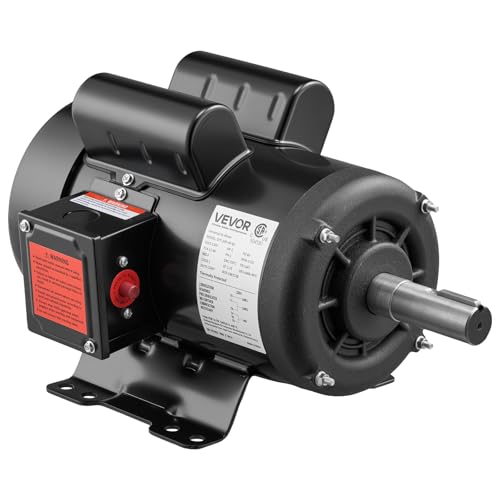
Best for: applications needing higher torque at lower speed, such as larger air compressors or equipment that benefits from a slower, stable run. This motor delivers about 12 N·m of torque at 230V, 60Hz, 1750 RPM, and uses a rugged 184T frame with a 1.125″ shaft diameter.
Why selected: The TEFC cooling and robust frame improve longevity in demanding shop environments. Reversible CW/CCW rotation adds flexibility for wiring and layout changes.
Caution: Ensure proper wiring and protection for the dual-voltage capability to avoid miswiring during installation.
EliteEdge 3HP SPL Air Compressor Motor (56 Frame)

Best for: users needing straightforward installation with quick setup and solid heat management. This motor runs at 3450 RPM, had a 56-frame housing with a 5/8″ keyed shaft and a 1.88″ shaft length. It supports CW/CCW rotation for flexible wiring.
Why selected: Notable for its designed cooling openings that enhance safety and service life by dissipating heat efficiently, which helps maintain steady performance under load.
Caution: Circuit capacity must support a 17–18A current draw to avoid tripping on startup or heavy use.
TINVHY 3HP SPL 3450 RPM Electric Motor

Best for: buyers needing a versatile 115/230V option with a 5/8″ shaft, suitable for both single-phase power setups and more compact compressors. It runs 3450 RPM at 60Hz with CW/CCW rotation available.
Why selected: The shell and mounting are designed for durability, and the dual voltage option provides flexibility in different regions or setups.
Caution: Check shaft coupling compatibility with your drive pulley or coupler to ensure proper alignment and avoid wear from misalignment.
Cuilvu 3HP Farm Duty 184T, 230V, 1750/3450 RPM

Best for: farm environments and continuous-duty applications where a robust single-phase motor is needed. The 184T frame supports larger, sturdier builds and long service life in field conditions.
Why selected: This motor is suited for farm-duty cycles, offering reliable operation under continuous duty while maintaining CW/CCW rotation for simple wiring.
Caution: Farm environments can introduce dust and debris; ensure adequate enclosure and ventilation to prevent overheating.
Buying Guide: Key Considerations For 3 HP Air Compressor Motors
- Voltage and frequency: Choose 115V vs 230V and confirm compatibility with your power source and local utility frequency (60 Hz).
- Frame size and shaft: Match the 56-frame or 184T frame to your mounting and coupler; verify shaft diameter (5/8″ or 1.125″) and shaft length (1.88″) requirements.
- Rotation direction: CW vs CCW rotation matters for existing drive belts and wiring layouts; many motors offer reversible CW/CCW.
- Protection and cooling: TEFC (totally enclosed fan-cooled) is common for dusty environments; ODP (open drip-proof) suits clean, dry spaces but requires protection from moisture.
- Duty cycle: Farm-duty or continuous operation models are designed for longer run times; consider enclosure and ventilation for heat management.
- Installation considerations: Check mounting pattern, clearance for airflow, and whether a speed control or soft-start is needed for your compressor.
Frequently Asked Questions
- What is the difference between 56 frame and 184T frame motors?
Frame size affects mounting footprint and shaft dimensions; 184T is larger and typically used for heavier loads or longer service life. - Do I need a specific rotation direction for my air compressor?
Yes. Many compressors expect a particular rotation; look for CW/CCW options to ensure correct wiring and belt alignment. - Can I use a 115V motor with a 230V system?
Not safely. Most 3 HP motors are dual-w voltage on a per-model basis; verify voltage requirements on the label before wiring. - What environmental considerations matter for motor longevity?
Open drip-proof designs need dry environments; TEFC designs tolerate dust better and offer longer life in harsher settings. - Is higher RPM always better for air compressors?
Not always. Higher RPM can increase wear; choose RPM based on your compressor’s design and desired duty cycle. - What maintenance is typical for these motors?
Regular lubrication (if applicable), belt/coupler checks, and electrical connections inspection help sustain performance.