Finding the right 3/4 solenoid valve depends on your fluid, temperature, and pressure needs. This guide highlights five reliable options, each suited to different use cases—from drinking-water-safe systems to high-temperature fuels. Use these summaries to compare suitability for home projects, industrial setups, or DIY irrigation and automation tasks.
Summary table of selected products
| Product | Best For | Key Material | Voltage | Notes |
|---|---|---|---|---|
| U.S. Solid 3/4″ Brass Electric Solenoid Valve | Non-potable liquids, high-temp or corrosive media | Brass with Viton seal | 110V AC | Not for drinking water |
| TAILONZ PNEUMATIC 3/4″ 12V Brass Valve | Compact 12V DC control | Brass | DC 12V | Pneumatic note; controls not included |
| U.S. Solid NPT 3/4″ 12V DC Valve | Durable general purpose | Brass with Viton | 12V DC | Not for drinking water |
| Beduan 3/4″ 12V Valve | Water, air, gas, oil in tight spaces | Brass | DC 12V | Normally closed |
| U.S. Solid 3/4″ Stainless Steel Valve | Drinking water and high-pressure needs | Stainless steel with Viton | 110V AC | Sealing material Viton |
U.S. Solid 3/4″ Brass Electric Solenoid Valve 110V AC

Best for projects involving non-potable liquids or fuels and where high-temperature tolerance matters. Constructed of industrial-grade brass, this valve resists corrosion and works well with welding processes. It uses a Viton seal for chemical resistance. The valve responds rapidly, opening or closing in under one second when energized or de-energized. This model is designed for long life, with engineers estimating a lifecycle well over a million cycles under proper conditions. Not suitable for drinking water or potable-water systems.
- Best for: Non-potable water, diesel, kerosene, gasoline, natural gas, air, and similar fluids.
- Better for: Higher temperature and chemically demanding environments.
- Limitations: Not approved for drinking water.
TAILONZ PNEUMATIC 3/4 Inch 12V Brass Electric Solenoid Valve

Designed for 12V DC control, this 3/4″ valve suits compact setups where a small, reliable valve is required. Made from brass, it’s suitable for general purpose use with water, air, and light fuels. The data highlights its nominal size and 12V operation; users should consider compatible actuation devices and sealing for required media. It’s a solid choice when a space-saving, straightforward installation is essential.
- Best for: Small irrigation lines, automated water systems, and light-duty air/fuel lines.
- Better for: DC-controlled applications where 12V is available.
- Limitations: Requires compatible actuator hardware and may not match high-temperature or potable-water needs.
U.S. Solid NPT Brass Electric Solenoid Valve 12V DC Normally Closed
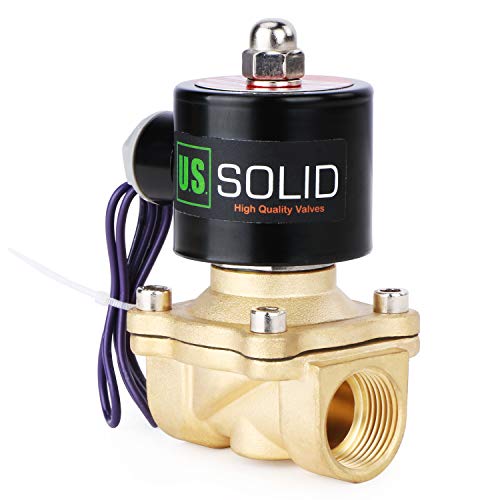
Best for general-purpose duty with a focus on reliability and quick action. This valve uses brass with a Viton seal, supporting resistance to high temperatures and chemicals such as fuels and lubricants. It opens or closes in under one second, ideal for automation sequences requiring precise timing. The valve is not suited for drinking water systems due to its brass composition and application notes.
- Best for: Fuel lines, pneumatic or hydraulic lines, and other non-potable fluid control.
- Better for: Applications needing fast actuation and durable construction.
- Limitations: Not for potable-water use.
Beduan Brass Electric Solenoid Valve, 3/4″ 12V

Best for compact installations where a robust 12V DC valve is needed for water, air, gas, fuel, or oil lines. The Beduan model uses a durable brass body with copper coil assembly for reliable operation. The 3/4″ NPT port size supports standard fittings. It’s a solid choice where space is tight and a normally closed configuration is desired. Watch for media compatibility beyond water, and ensure proper sealing for your fluid type.
- Best for: Small to medium lines in water, air, and light fuels.
- Better for: Tight spaces with standard 3/4″ fittings.
- Limitations: Verify media compatibility with non-water fluids.
BACOENG Brass Electric Solenoid Valve 3/4″ AC110V

Best for straightforward AC-powered control in a Normally Closed configuration. The BACOENG valve uses brass with NPT threading and operates at 110V AC, making it compatible with common household and industrial control systems. It’s a practical choice for non-potable fluid control. The listing notes a focus on easy installation and universal polarity for power wiring. Consider the compatibility of your media and ensure proper electrical safety when wiring.
- Best for: Non-potable liquids and simple AC-powered automation projects.
- Better for: Easy installation with standard NPT threading.
- Limitations: Not intended for drinking water unless specified by product details.
Buying guide: 3/4 solenoid valve considerations
What fluid will you control?
Choose materials based on media. Brass with Viton seals is versatile for fuels and oils but is not for drinking water in most models. Stainless steel offers corrosion resistance and is safer for potable water in many cases but check the manufacturer’s notes.
What voltage and power are available?
Valves come in AC (110V) and DC (12V). DC valves save energy in battery-powered systems, while AC models are common in stationary setups. Ensure your control circuit matches the valve’s voltage.
Normally Closed vs Normally Open
Most 3/4″ solenoid valves are Normally Closed (N.C.), meaning they start off closed and open when energized. This is common for safety and leak prevention. Choose NC for fail-safe behavior in water and fuel lines.
Seals and temperature handling
Vitons seals provide chemical resistance and temperature tolerance, improving life in challenging media. If you’re working with drinking water, verify that the valve construction and seals are approved for potable use where applicable.
Durability and lifecycle expectations
Industrial-grade brass or stainless steel bodies paired with high-cycle ratings indicate longer service life. Look for statements about cycle life and maintenance requirements to estimate long-term costs and downtime.
Installation and compatibility
Check port size (3/4″ NPT or other standards) and coil voltage. Ensure fittings, power supply, and control wiring are suitable for your system. Consider space constraints and the ease of mounting.
FAQ
- What does 3/4″ refer to on these valves? It indicates the nominal pipe connection size, typically 3/4″ NPT in most listings, which helps match fittings and tubing.
- Can I use these valves for drinking water? Some models are explicitly non-potable; others may be approved for water with Viton seals. Always verify the manufacturer’s guidance for potable use.
- Do these valves require special tools to install? Basic plumbing fittings and standard wrenches are usually sufficient. Some installations may need thread sealant appropriate for the fluid and seal material.
- Are 12V DC valves better than 110V AC valves? It depends on your power source. DC valves are common in battery-powered or DC-controlled systems; AC valves are common in fixed installations with AC mains.
- What should I consider for media compatibility? Check chemical resistance of seals (often Viton) and the body material. Avoid mixing metals that react with certain fluids unless specified by the manufacturer.
- Is there a risk of leakage over time? Proper sealing, installation, and maintenance reduce leakage. Replace seals if you observe swelling, cracking, or degradation, especially with harsh chemicals.