This guide helps buyers find reliable 24-inch hydraulic cylinders for industrial, construction, and agricultural applications. It highlights five well-rounded options and explains who each product is best for, based on bore size, mounting style, and port configuration. Whether you need a welded, cross-tube, or tie-rod design, these selections balance strength, durability, and ease of maintenance for demanding outdoor conditions. The top picks are suitable for workshops, fabrication shops, and equipment fleets seeking consistent performance.
| Product | Bore / Stroke | Ports / Connection | Rated PSI | |
|---|---|---|---|---|
| 2×24 Hydraulic Cylinder – AMRAP HYDRAULICS | 2″ bore, 24″ stroke | SAE #6 ports | 3500 PSI | Compact, rugged weld-made units for general purpose lifting |
| WEN Cross Tube Hydraulic Cylinder WT-2026 | 2″ bore, 24″ stroke | SAE-6 port | 3000 PSI | Balanced choice for standard machines with cross-tube mounts |
| 3×24 Hydraulic Cylinder – AMRAP HYDRAULICS | 3″ bore, 24″ stroke | 1/2″ NPT ports | 2500 PSI | High-load industrial presses and tooling |
| 2×24 Hydraulic Cylinder – AMRAP HYDRAULICS (Cross Tube, SAE #8) | 2.5″ bore, 24″ stroke | SAE #8 ports | 3500 PSI | Heavy-duty cross-tube cylinders for rugged outdoor duty |
| 2.5×24 Hydraulic Cylinder – AMRAP HYDRAULICS (Tie Rod) | 2.5″ bore, 24″ stroke | 3/8″ NPT ports | 2500 PSI | Versatile tie-rod design for industrial systems |
2×24 Hydraulic Cylinder — AMRAP Hydraulics

Bore 2″ (OD 2.38″), Stroke 24″, Rod 1 1/4″. Retracted 32″, Extended 56″, Pin holes 1″. Welded double-acting design with SAE 6 ports. Rated at 3500 PSI and a column load capacity of 8,370 lbs. Built with heavy-duty steel and high-strength seals to resist corrosion and outdoor exposure.
Best for: Small to mid-size lifting tasks where a compact, high-pressure cylinder is needed. This model suits workshop rigs and light-to-medium hydraulic systems. Caution: The all-welded construction may require precise mounting alignment to prevent side load damage.
WEN Cross Tube Hydraulic Cylinder WT-2026

Double-acting welded design, 2-inch bore, 24-inch stroke, 1.25-inch rod diameter. SAE-6 port (9/16 inch-18UNF) connects to hydraulic hoses easily. Maximum working pressure up to 3000 PSI.
Best for: Budget-conscious shops needing a reliable cross-tube cylinder with good integration ease. Caution: Lower PSI rating than some 3-inch or 2.5-inch options limits maximum load in peak conditions.
3×24 Hydraulic Cylinder — AMRAP Hydraulics
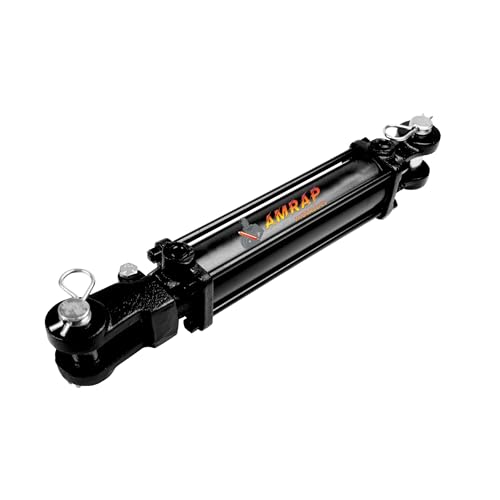
Bore 3″ (OD 3.38″), Stroke 24″, Rod 1.25″. Retracted 34.25″, Extended 58.25″, Pin holes 1″. Double-acting cylinder with 1/2″ NPT ports. Rated at 2500 PSI and a column load capacity of 8,420 lbs. Tie-rod end cylinders known for robustness across industrial machinery.
Best for: Heavy-duty presses and tools requiring higher load support and easier maintenance. Caution: Higher bore can demand more hydraulic flow and space for mounting.
2.5×24 Hydraulic Cylinder — AMRAP Hydraulics (Cross Tube)

Bore 2.5″ (OD 2.88″), Stroke 24″, Rod 1.5″. Retracted 32″, Extended 56″, Pin holes 1″. Double-acting welded cross-tube cylinder with SAE #8 ports. Rated at 3500 PSI and a column load capacity of 14,720 lbs. Heavy-duty cross-tube construction offers strong mounting and stability.
Best for: Applications demanding higher load tolerance and a compact cross-tube design. Caution: Larger bore increases required clearances around mounts.
2.5×24 Hydraulic Cylinder — AMRAP Tie Rod

Bore 2.5″ (OD 2.88″), Stroke 24″, Rod 1.125″, Retracted 34.25″, Extended 58.25″, Pin holes 1″, Ports use 3/8″ NPT (Female Pipe). Rated at 2500 PSI with a column load capacity of 5,300 lbs. Tie-rod design is known for easy adaptation to existing frames and plates.
Best for: Retrofit projects and equipment that require ease of installation and field maintenance. Caution: Lower PSI than some welded options may limit peak lifting performance in certain tasks.
Buying Guide: Key Considerations For 24-Inch Hydraulic Cylinders
- Mounting style: Welded versus tie-rod versus cross-tube affects installation, alignment, and load distribution. Choose based on your frame design and service life expectations.
- Bore size and stroke: Larger bores provide higher force; longer strokes extend reach. Balance bore with available space and required force to avoid over-sizing.
- Port size and type: SAE ports and NPT/NPTF options impact hose compatibility and leak risk. Ensure port threads match your hydraulic hoses and fittings.
- Rated pressure and load capacity: Higher PSI ratings enable heavier lifting but may increase system demand. Check the cylinder’s rated PSI against your hydraulic pump and valves.
- Material and construction: All-welded designs offer ruggedness and corrosion resistance; tie-rod and cross-tube styles provide modularity and replacement ease. Consider outdoor exposure and maintenance routines.
- Seal quality and leakage prevention: High-quality seals reduce rust particles and fluid loss. Inspect seals for compatibility with hydraulic fluids used in your system.
- Environmental suitability: Outdoor, dusty, or corrosive environments favor cylinders with protective coatings and robust seals. Consider rod hardening and surface finish.
Practical Comparison Questions
- Which cylinder is best for high-load vertical lifting? The 2.5″ bore cross-tube and 3″ bore options provide strong load support, depending on stroke and mounting.
- What design suits frequent field maintenance? Tie-rod models typically offer easier replacement in the field than welded designs.
- Which option has the best balance of size and capacity? The 2×24 and 2.5×24 cross-tube cylinders present a middle ground between compact fit and high capacity.
- Do I need a corrosion-resistant option for outdoor use? All-welded designs with heavy-duty steel construction and robust seals are favored for harsh environments.
- Is a 2-inch bore enough for my task? For lighter loads or shorter cycles, a 2″ bore is often adequate; for higher forces, consider 2.5″ or 3″ bores.
FAQ
- What is the difference between welded and tie-rod hydraulic cylinders? Welded cylinders are solid, compact, and suited for fixed installations; tie-rod cylinders are easier to repair or customize and can be disassembled for maintenance.
- What does PSI indicate in hydraulic cylinders? PSI indicates the maximum hydraulic pressure the cylinder is designed to withstand; higher PSI means greater force capacity.
- Do I need a cross-tube or a tie-rod cylinder? Cross-tube models are typically more rigid for side loads and compact mounts; tie-rod models are better for easier field disassembly and longer service life in some setups.
- How do I size the stroke for a given task? The stroke should cover the full range of motion required by your application, plus a small allowance for retraction/extension to avoid bottoming out.
- Are there compatibility concerns with ports? Ensure the port size (SAE or NPT) matches your hoses and fittings to minimize leaks and ensure proper flow.
- What maintenance is recommended for 24-inch cylinders? Regular inspection of seals, rod surface, and mounting hardware, plus leak checks and cleaning to prevent contamination.