Answering your search for a 20hp vertical shaft engine, this guide highlights five compatible options that fit common 20hp-class requirements. The selections span direct 20hp units and closely matched higher-horsepower vertical shafts for riding mowers, Z-turns, and heavy-duty outdoor equipment. Each entry notes who it’s best for and why it stands out, plus a practical caveat to consider before purchasing. Ideal buyers include lawn-care pros needing reliable replacements, DIYers upgrading aging engines, and operators seeking easier starting and durable construction.
| Product | Approx. Power | Best For |
|---|---|---|
| Briggs & Stratton 40N777-0027 | 20 HP | Mowers and Z-turns needing a common 1″ x 3-5/32″ crankshaft |
| Briggs & Stratton 44S977-0032-G1 | 25 GHP | Heavy-duty vertical shaft applications with durable OHV design |
| Briggs & Stratton 49T877-0049-Z1 | 27 HP | Commercial-grade vertical engines for tougher debris and workload |
| Briggs & Stratton 33S877-0043 | 19 HP | Smaller-mitted 19–20 HP class with smooth operation |
| Briggs & Stratton 44S977-0033-G1 | 25 GHP | Another 25 GHP option for dual-compatibility setups |
Briggs & Stratton 40N777-0027 20HP Intek Series

Features include a 20hp Intek V-Twin Engine and a common replacement footprint for consumer riding mowers and Z-turns. It lists several crankshaft options, so verify your old crankshaft size before ordering. Best for users replacing an existing 1″ x 3-5/32″ setup and needing straightforward installation. Caution: check crankshaft compatibility across models if upgrading from a different 1-1/8″ variant.
Briggs & Stratton 44S977-0032-G1 25 GHP Vertical Shaft
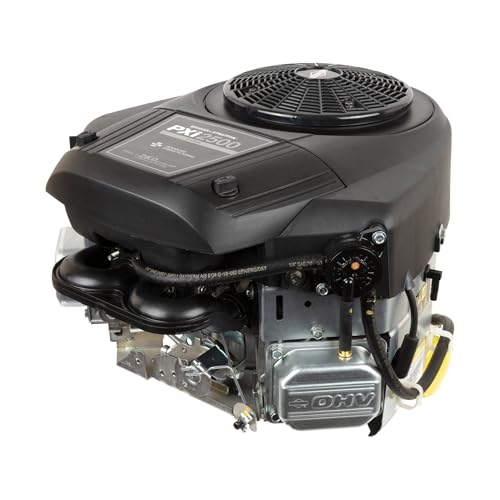
Best for heavy-duty vertical shaft setups that benefit from OHV design and a sturdy cast-iron sleeve. It offers full-pressure lubrication and a 16-amp charging system, making it suitable for operators who require reliable electrical support. Choose this if your project demands robust longevity and cooler operation; avoid if you need a true 20hp class engine and strictly require exact horsepower rather than a higher-capacity option.
Briggs & Stratton 49T877-0049-Z1 Commercial Series

Best for commercial-grade workloads with a Debris Management System and cyclone air filtering. This engine is designed for durability under heavy debris conditions and outdoor wear. It suits operators who need extended life in rough environments. Limitation: it is a higher-power unit, so ensure your equipment can accommodate the extra power and mounting requirements without overloading existing systems.
Briggs & Stratton 33S877-0043 19 HP

Best for compact 19–20 HP class needs with cast-iron sleeve and a patented balancing system for smoother operation. It includes a muffler and is designed for reliable starting with a 9-amp electric start option. Choose this if your mounting space is limited and you want proven vertical-shaft performance; avoid if you specifically require a 20hp rating rather than a very close 19 HP class.
Briggs & Stratton 44S977-0033-G1 25 GHP Vertical Shaft

Best for dual-compatibility setups needing a dependable 25 GHP vertical engine with OHV features. It emphasizes durable components and robust performance in vertical configurations. Limitation: horsepower exceeds a strict 20hp target, so verify if your equipment can safely handle the higher output and if mounting clearance supports the added power.
Buying Guide: Key Considerations for 20hp Vertical Shaft Engines
- Horsepower target: Confirm whether you need exact 20hp or a closely matching higher-horsepower option is acceptable for your mower or equipment.
- Crankshaft and mounting: Check shaft diameter and length (common sizes include 1″ x 3-5/32″ and 1-1/8″ variants). Verify mounting pattern and PTO alignment with your machine.
- Lubrication and filter systems: Look for full-pressure lubrication, cast-iron sleeves for life, and dual-element air filters for extended life in dusty environments.
- Electrical start and charging: If you rely on electric start, ensure the engine provides a compatible starting system and charging (e.g., 16-amp or similar).
- Debris and durability: For commercial or debris-heavy settings, prioritize debris management, cyclonic air filters, and robust construction.
- Application fit: Match engine displacement and vertical-shaft configuration to your mower, tiller, or compressor, and confirm compatibility with existing controls.
- Installation considerations: Note fuel type, oil requirements, and any adapters needed for a seamless swap.
FAQ
- Q: Is a 25 GHP engine always a better choice than a 20hp engine? A: Not necessarily; higher horsepower can mean more torque and power, but it may exceed your equipment’s capacity or space. Choose based on fit and long-term reliability for your application.
- Q: How important is crankshaft size when replacing an engine? A: Very important. Mismatched shaft size or offset can prevent proper mounting and drive alignment, leading to starting or timing issues.
- Q: Do vertical-shaft engines require different mounting hardware? A: Yes, mounting patterns and PTO alignment vary. Always verify the mounting footprint matches your equipment before purchase.
- Q: Should I prioritize an OHV design? A: OHV generally offers cooler operation and longer valve life, which is beneficial for frequent use and durability.
- Q: Can I use a higher-horsepower engine on a small mower? A: It may be possible but can cause deck, belt, and frame strain. Check manufacturer guidelines and capacity limits before upgrading.
- Q: Are there common issues to watch for after installation? A: Pay attention to starting, fuel mix, and lubrication levels; improper setup can affect performance and longevity.