Direct answer: For robust, reliable double-acting 2″ bore, 8″ stroke hydraulic cylinders, look for models with 2500–3500 PSI ratings, heavy-duty welded or tie-rod designs, and compatible ports and mounting options. This guide highlights five well-suited options across tie-rod, welded, and cross-tube designs, each chosen for durability, industry relevance, and clear buyer benefits. Best for industrial machinery, lifting, pressing, and material handling in construction and manufacturing settings.
Buyer typology:
– Builders and fabricators needing easy maintenance and standard porting: Tie-rod cylinders (AMRAP HYDRAULICS, Delavan).
– Heavy outdoor or harsh-environment applications: Welded cross-tube designs (AMRAP HYDRAULICS, KINGWAY).
– General purpose shop use and equipment retrofits: Welded clevis and cross-tube variants (AMRAP HYDRAULICS, Wen).
Summary table of selected products follows.
- Best overall balance of durability and mounting options
- Best for outdoor and rugged environments
- Best value with high thrust potential
- Best for compact installation with strong seals
- Best all-around welded cross-tube design
Product Summary
| Product | Style | Port Type | PSI | Stroke | Best For |
|---|---|---|---|---|---|
| 2×8 Hydraulic Cylinder – 2 Bore 8 Stroke (AMRAP HYDRAULICS) | Tie-Rod | 3/8″ NPT | 2500 | 8″ | General industrial use, reliable maintenance |
| Delavan PML2008-112ASAE PowerMAX | Tie-Rod | 3/8″ FNPT | 2500 | 8″ | ASAE-certified, standard mounting |
| RHKING 2×8 Hydraulic Cylinder | Welded | 3/8″ JIC | 2320 | 8″ | Rugged outdoor/heavy-duty |
| Wen Cross Tube Hydraulic Cylinder WT-2008 | Cross Tube | SAE-6 | 3000 | 8″ | Higher pressure, compact setup |
| 2×8 Hydraulic Cylinder – 2″ Bore 8 ASAE Stroke (AMRAP HYDRAULICS) | Tie-Rod | 3/8″ NPT | 2500 | 8″ | ASAE-compatible, robust tie-rod |
2×8 Hydraulic Cylinder – 2 Bore, 8 Stroke (AMRAP HYDRAULICS)
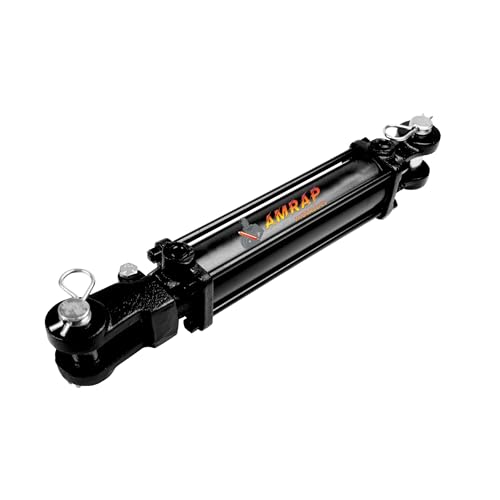
Bore 2″ (OD 2.38″), Stroke 8″, Rod 1.125″, Retracted 18.25″, Extended 26.25″, Pin holes 1″. Double acting with 3/8″ NPT ports. Rated pressure 2500 PSI. Column load 7850 lbs. Tie-rod end. Suitable for hydraulic presses, machine tools, and material handling. Best for shops needing standard tie-rod mounting and solid maintenance access.
Best for: medium-duty industrial setups that require straightforward install and service. Limitation: longer retracted length may affect compact spaces.
Delavan PML2008-112ASAE PowerMAX 2×8

ASAE certified tie-rod cylinder with 2,500 PSI working pressure, 2.0″ bore, 8″ stroke, 1.25″ rod diameter, and 3/8″ FNPT ports. Retracted 20.25″ and extended 28.25″. Clean mounting compatibility and ASAE certification make it a strong choice for standardized tooling and agricultural machinery. Best for: facilities requiring ASAE-standard components. Limitation: no exotic porting; standard ports apply.
RHKING 2×8 Hydraulic Cylinder

Welded double-acting cylinder rated at 2320 PSI. Bore 2″, OD 2.36″, Stroke 8″. Rod 1.1″, Retracted 17.32″, Extended 25.2″. 0.78″ pin holes. Features solid chrome-plated rod and high-quality seals for durability and anti-deflection. Best for: rugged outdoor use with welded construction. Limitation: slightly lower maximum PSI compared to higher-pressure models.
Wen Cross Tube Hydraulic Cylinder WT-2008

Double-acting cross-tube design with 2″ bore, 8″ stroke, 1.25″ rod diameter. Features SAE-6 port (9/16″–18UNF). Capable of pressure up to 3000 PSI. Best for: setups needing higher pressure tolerance and flexible mounting via cross-tube. Limitation: cross-tube style may have different mounting considerations compared to tie-rod.
2×8 Hydraulic Cylinder – 2″ Bore 8″ ASAE Stroke (AMRAP HYDRAULICS)

2″ bore, 8″ ASAE stroke, tie-rod, 3/8″ NPT ports, 2500 PSI, 1″ pin holes, retract 20″, extended 24″ with SAE 6 ports option. Best for: ASAE-compliant installations and standardized tooling. Caution: limited to ASAE-style mounting if specific compatibility is needed.
Buying Guide
Key purchase considerations for 2×8 hydraulic cylinders:
- Mounting style: Tie-rod, welded, or cross-tube. Tie-rod offers easy field shortening/length adjustment; welded variants are generally more rugged and compact; cross-tube provides strong sideways stability and easier alignment in certain machines.
- Operating pressure: Common ranges are 2320–3500 PSI. Choose a model that matches your system’s hydraulic pressure and duty cycle.
- Port type and size: Ensure port standard (NPT, FNPT, SAE) matches your hoses and fittings. Common choices are 3/8″ ports and SAE 6 for cross-tube variants.
- Stroke and retracted length: Consider available space. Some models have longer retracted lengths that may affect installation footprint.
- Material and finish: Welded cylinders often feature hard chrome rods and corrosion-resistant bodies for outdoor use; consider environmental exposure when selecting.
- Load capacity: Column load and thrust/pull ratings indicate capability to handle loads without bending or buckling. Match to your application’s force requirements.
- Certifications: ASAE or equivalent certifications can matter for agricultural or standardized machinery applications.
Frequently Asked Questions
- What does “2×8” refer to on these cylinders?
Answer: It indicates a 2-inch bore and an 8-inch stroke, the core dimensions governing force and travel distance. - Which cylinder is best for outdoor use?
Answer: Welded cross-tube or welded clevis variants with robust seals and chrome rods are typically preferred for harsh environments. - Are tie-rod cylinders easy to service?
Answer: Yes, they generally offer easier disassembly and length adjustments in field setups compared to welded units. - Do these cylinders require ASAE certification?
Answer: Not always, but ASAE-certified models are advantageous when matching standards for agricultural equipment. - What port type should I look for?
Answer: Common options are 3/8″ NPT or FNPT and SAE #6 ports. Choose based on your hose/adapter compatibility. - Can I use any 2×8 cylinder with same stroke in different machines?
Answer: Not without verifying mounting compatibility, bore tolerance, rod end type, and overall length for fit and function.