Looking for a reliable 120V TIG welder for light fabrication, hobby projects, or small repairs? This guide highlights five strong 120V-focused welders that are suitable for beginners and DIY enthusiasts. Each product prioritizes ease of use, portability, and stable arc performance on common metals like mild steel and stainless. The top picks are best for home garages, small shops, or on-the-go projects where a dual-voltage capability isn’t required. Below, compare features, ideal buyers, and practical trade-offs to help you choose confidently.
Summary table of selected products:
| Product | Best For | Key Benefit | Limitations |
|---|---|---|---|
| YESWELDER 135A 3-in-1 | Beginners to hobbyists | 3 processes in one compact unit | Light gauge welding only |
| YESWELDER 205A TIG Welder | Advanced hobbyists | High power for 120/220V with HF start | Heavier than entry models |
| ARCCAPTAIN iControl TIG 205 Pro | DIY pros | App control and 5-in-1 versatility | Includes learning curve with app |
| Weldpro 200A AC/DC TIG | Aluminum work | Aluminum capable AC TIG with high precision | More features equals higher cost |
| YESWELDER MP200-PRO 9-in-1 | All-around versatility | 9 welding modes plus cut and spool gun | Spool gun sold separately |
YESWELDER 135A 3-in-1 MIG/Stick/Lift TIG Welder
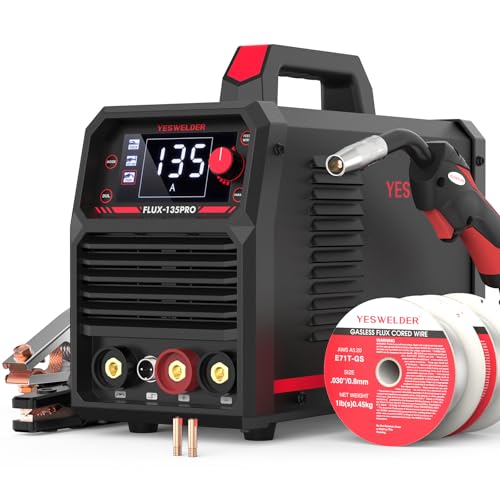
Type: 3-in-1 MIG/Stick/Lift TIG with synergic control and LED display. This budget-friendly unit supports gasless flux core MIG, stick welding, and lift TIG with an optional TIG torch. Best for beginners and hobbyists who want versatility in a single, compact machine.
- Best for entry-level welders who need multiple welding modes in one device
- Welding capacity: up to 3/32 inch (2.5 mm) mild steel
- Synergic control auto-matches wire feed to voltage for easier setup
Caution: Lift TIG requires an additional TIG torch; ensure you have the correct accessories before starting detailed TIG work.
YESWELDER 205A TIG Welder With Pulse

Type: 3-in-1 TIG/STICK with pulse capability and large LED display. Runs at 110V/220V dual voltage for versatile work environments. Suitable for hobbyists who need support for thicker metals and stable arc starting.
- Best for Welders seeking a larger output in a 120V-friendly package
- HF non-contact arc starting for cleaner ignition
- Auto memory saves settings for quick restart
Caution: High power can generate more heat; practice on scrap metal to dial in parameters before critical projects.
ARCCAPTAIN iControl TIG 205 Pro

Type: 5-in-1 DC TIG, Stick, and more with APP control. It uses a mobile app for status, parameter adjustments, and result sharing. Best for tech-savvy users who want remote monitoring and precise control.
- Best for users who value app-based control and data tracking
- Note: Not suitable for aluminum since it’s DC-only
- Includes large LED display for quick viewing at a glance
Caution: App reliability depends on connectivity; ensure your phone and welder are compatible before relying on control features.
ARCCAPTAIN iControl TIG 205P Pro

Type: 5-in-1 DC TIG/Pulse/Lift/Spot TIG & Stick with APP control and dual voltage. This model emphasizes precise metal finishing and remote parameter recall, ideal for professional DIY projects requiring consistent results.
- Best for precise DC TIG work and multi-mode flexibility
- Includes 2T/4T operation with a smart LED display
- Limitations: DC-only; no AC TIG for aluminum
Weldpro 200A AC/DC TIG With Pulse
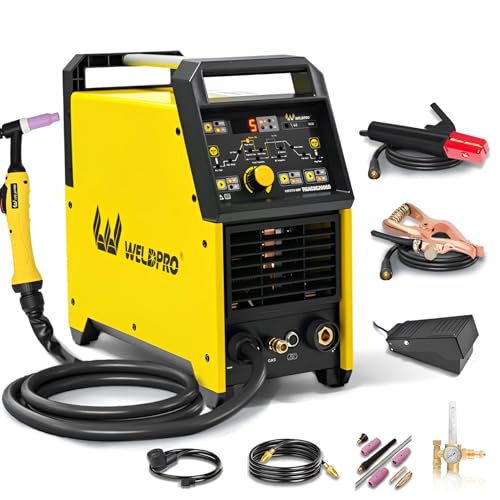
Type: 5-in-1 multiprocess TIG/AC/DC plus pulse and stick. Supports aluminum work via AC TIG with adjustable balance and frequency. Best for shops needing aluminum capability alongside steels.
- Best for aluminum projects and precise TIG control
- 110V/220V dual voltage for flexibility
- Note: Aluminum welding requires setting up AC balance and HF start
Caution: The feature set is broad; mastering aluminum settings takes practice, especially on delicate alloys.
YESWELDER 200A AC/DC Aluminum TIG with Pulse

Type: 200A AC/DC TIG with pulse, large LED display, dual voltage, and HF start. Targeted at aluminum and mixed-metal jobs. Best for users prioritizing aluminum capability in a 120V/240V capable unit.
- Best for aluminum-focused projects and high-precision welds
- High-frequency arc starting supports smoother ignition
- Limitations: Heavier and more expensive than basic models
Buying Guide: Key Considerations For 120V TIG Welders
What will you weld most often?
Consider metal type and thickness. If you mainly weld mild steel up to about 2–3 mm, many 120V TIG machines will suffice. For aluminum or thin-walled parts, look for AC TIG capability and HF start.
Voltage compatibility and portability
120V machines are common for home garages. Dual-voltage options extend versatility, but weigh portability and heat output. If you travel to jobsites, a lighter unit with a carrying handle is advantageous.
Process versatility vs. price
3-in-1 or 5-in-1 machines offer broad functionality but can be more complex. For beginners, a simpler model with clear controls may reduce setup time and improve consistency.
Control features and user interface
Large LED displays, auto memory, and app control can simplify operation. Ensure the interface is intuitive and that you can quickly recall or adjust settings while wearing PPE.
Accessories and setup
Check included consumables and whether additional items such as TIG torches, foot pedals, or spool guns are included or sold separately. Verify compatibility with your preferred welding wire and electrodes.
Maintenance and safety
Good ventilation, proper grounding, and regular cleaning extend welder life. Select models with protective features like overheat protection and safe start mechanisms to reduce accidental arcing.
What if you’re undecided?
For a balanced starter option with strong support and broad capability, consider a 3-in-1 or 5-in-1 machine that covers MIG, TIG, and Stick. If aluminum work is a priority, prefer models with AC TIG and HF start.
FAQ
- Is a 120V TIG welder enough for most home projects? Yes, for thin metals up to a few millimeters, a 120V TIG welder provides adequate power and control.
- Do I need a TIG torch or pedal with these machines? Some models include a TIG torch; a foot pedal may be sold separately or included for advanced control.
- What does DC vs AC TIG mean for beginners? DC TIG is common for steel; AC TIG is required for aluminum. Many 120V machines offer DC only or AC/DC capabilities.
- Can I use these welders for automotive repair? Yes, for light automotive tasks on steel parts, these machines can be suitable, especially if they offer steady arc control and 120V/240V compatibility.
- What maintenance helps extend welder life? Regular cleaning, accurate gas/flux settings, and keeping cables, connections, and clamps in good condition.
- Are app-controlled welders worth it? They offer convenience and data recall but require smartphone compatibility and reliable connectivity.