The best 10 inch stroke hydraulic cylinder options balance stroke length, bore size, and mounting method for common industrial and DIY tasks. This guide highlights five reliable models ideal for general machinery, presses, and material handling. Each product suits different setups: small-bore units for compact equipment, larger-bore cylinders for higher force, cross-tube and tie-rod designs for easy mounting, and clevis or welded ends for robust integration. Read on to find the best fit for your project, workspace, and maintenance preferences.
Summary of selected products
| Product | ||||
|---|---|---|---|---|
| 1.5×10 Hydraulic Cylinder — Welded Cross Tube | 1.5″ bore, 10″ stroke | 3500 | Compact installations, heavy-duty outdoor use | |
| 2×10 Hydraulic Cylinder — Welded Cross Tube | 2″ bore, 10″ stroke | SAE 6 | 3500 | Higher lifting force, robust cross-tube setup |
| 1.5×10 Hydraulic Cylinder — Clevis End | 1.5″ bore, 10″ stroke | 3/8″ NPT | 3000 | Clevis mounting, easier field mounting |
| 2×10 Hydraulic Cylinder — Tie Rod | 2″ bore, 10″ stroke | SAE 6 | 3000 | Versatile industrial applications, easy maintenance |
| 2.5×10 Hydraulic Cylinder — Welded Cross Tube | 2.5″ bore, 10″ stroke | SAE 8 | 3500 | High force, rugged outdoor duty |
1.5×10 Hydraulic Cylinder — Welded Cross Tube

Bore: 1.5″ (OD 1.88″), Stroke: 10 inches, Rod: 1″, Retracted: 18″, Extended: 28″, Pin holes: 3/4″.
Features a welded double-acting hydraulic design with SAE 4 ports and a 3500 PSI rating. It uses a heavy-duty steel, all-welded construction with high-strength seals to prevent leakage and rust. Best for compact assemblies where a strong, corrosion-resistant cylinder is needed. Limitations include a smaller bore, which reduces maximum force compared with larger-bore models.
Who it’s best for: small-to-medium equipment where space is tight but a reliable 10″ stroke is required, such as compact presses or loader attachments.
2×10 Hydraulic Cylinder — Welded Cross Tube
Bore: 2″ (OD 2.38″), Stroke: 10″, Rod: 1 1/4″, Retracted: 18″, Extended: 28″, Pin holes: 1″.
Rated at 3500 PSI with a robust all-welded design and higher load capacity (9420 lbs). This model is well suited for projects needing more lifting force while maintaining a cross-tube mount. A potential limitation is the heavier weight and larger footprint compared to smaller-bore options.
Who it’s best for: mid-to-large machinery that requires greater push force and sturdy cross-tube mounting.
Note: Best choice when higher load capacity is a priority, and space permits a bigger cylinder.
1.5×10 Hydraulic Cylinder — Clevis End

Bore 1.5″ (OD 1.88″), Stroke 10″, Rod 3/4″, Retracted 20 1/4″, Extended 30 1/4″, Pin holes 3/4″, Ports: 3/8″ NPT. Rated 3000 PSI, load capacity 3740 lbs.
The clevis end provides a straightforward mounting option. This cylinder is better for installations that require easy attachment to frames or machinery. A limitation is the slightly lower PSI rating and load capacity relative to larger models.
Who it’s best for: builders needing quick, field-friendly mounting with decent stroke and compact size.
2×10 Hydraulic Cylinder — Tie Rod
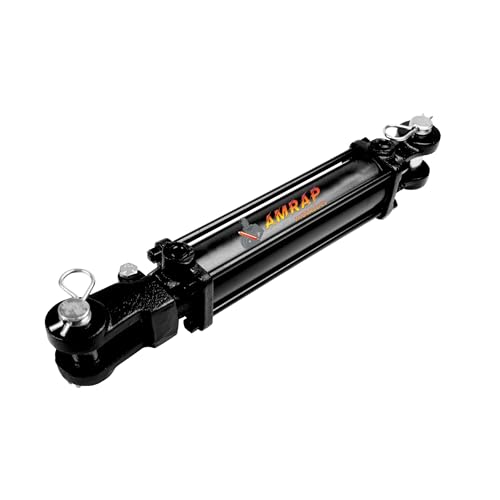
Bore 2″ (OD 2.38″), Stroke 10″, Rod 1.125″, Retracted 20.25″, Extended 30.25″, Pin holes: 1″, Ports: SAE#6 (Female). Rated 3000 PSI, load capacity 9420 lbs.
Tie-rod design is widely used for industrial machines due to its robustness and ease of maintenance. It is better for larger machines that require straightforward replacement and alignment. A caution: installation requires precise threading and alignment for best performance.
Who it’s best for: production lines and heavy equipment where long life and serviceability matter most.
2.5×10 Hydraulic Cylinder — Welded Cross Tube
Bore: 2.5″ (OD 2.88″), Stroke: 10″, Rod: 1 1/2″, Retracted: 18″, Extended: 28″, Pin holes: 1″, Ports: SAE 8. Rated 3500 PSI, load capacity 14720 lbs.
Best for high-force applications in rugged outdoor environments. The larger bore delivers more thrust and the cross-tube design offers solid mounting. Limitation: higher weight and footprint—check fit in tight spaces.
Who it’s best for: demanding industrial setups where maximum push force is needed and room allows bigger components.
Buying Guide
What should you prioritize when choosing a 10 inch stroke hydraulic cylinder?
- Larger bore increases the force capacity. Match the bore to the required load without over-specifying to avoid unnecessary weight and cost.
- Cross-tube, tie-rod, clevis, or welded ends affect install ease and serviceability. Choose based on your machine frame design and maintenance preferences.
- SAE ports vs NPT ports determine hose compatibility and leak risk. Confirm port size matches your hydraulic system fittings.
- All-welded vs tie-rod cylinders differ in rigidity and resilience to corrosion and impact. Outdoor or harsh environments benefit from all-welded, sealed builds.
- Ensure the cylinder’s load rating and operating pressure align with your system to avoid overstress or leakage.
- A larger bore or longer extended length can impact space. Measure retracted and extended positions to ensure clearance.
FAQs
- What is the advantage of a cross-tube cylinder? It provides a compact footprint with high rigidity for mounting in tight spaces.
- When should I choose a tie-rod cylinder? For industrial applications needing easy field maintenance and longer service life.
- How important is port size? Port size affects hose compatibility and flow; mismatches can cause leaks or flow restrictions.
- Is a higher PSI rating always better? Not necessarily. It should match your hydraulic system’s operating pressure to avoid excess wear.
- Can I replace a cylinder in the field? Clevis and tie-rod designs are typically easier to replace in the field than welded units.
- What mounting type is best for outdoor use? All-welded, corrosion-resistant builds with seals designed to resist dust and moisture are preferable.